
Livraison le jour même ou le lendemain

Qualité garantie

Débloquez vos offres de bienvenue: Livraison GRATUITE | Jusqu'à -80 % | 30 jours d'essai gratuits à JoyPlus
Téléchargez l'application
PETG filament is often presented as the sweet spot, the perfect compromise between the ease of printing of PLA and the robustness of ABS. This versatility makes it a material of choice for a myriad of projects, from functional parts to purely decorative objects. But here's the catch: the market is flooded with options, and not all spools are created equal. A few classic issues are all it takes to turn a promising print into a real headache, leading to frustration and wasted plastic.
To avoid falling into this trap, it's crucial to know how to spot a quality filament and dodge the most common pitfalls. Here are the key points to watch out for.
Navigating the jungle of PETG 3D printer filament isn't always straightforward. Keep an eye out for these three recurring problems that can sabotage the quality of your prints.
1.75mm PETG spool with a diameter that fluctuates by more than 0.05 mm is the perfect recipe for clogged nozzles, under-extrusion, or over-extrusion. These variations ruin the precision of your parts and can spell the crushing failure of a multi-hour print.For flawless prints and functional parts that hold up, here are the technical specifications to scrutinise.
The consistency of the filament's diameter is non-negotiable. A standard tolerance is ±0.05 mm, but premium filaments aim for ±0.03 mm or even ±0.02 mm. A constant diameter ensures a steady flow of material, which is an essential prerequisite for limiting warp-free PETG filament and achieving perfectly uniform layers. Always remember to check this data before making a purchase.
A good PETG filament must arrive at your door perfectly dry. The industry standard is vacuum-sealed packaging, complete with a desiccant packet (silica gel). This precaution ensures the filament hasn't absorbed moisture during storage and transport. This allows you to use it right out of the box, without needing a preliminary drying step.
Each filament has its own unique formula and, therefore, its ideal temperature range. For PETG, the nozzle temperature generally ranges from 220°C to 250°C, and the heated bed temperature from 70°C to 85°C. Verify that the manufacturer's recommended temperatures are compatible with your 3D printer. A filament that prints at a lower temperature will often be easier to tame if you're just starting out with this material.
To help you sort through the options, we've selected filaments that check all the boxes and matched them with typical user profiles.
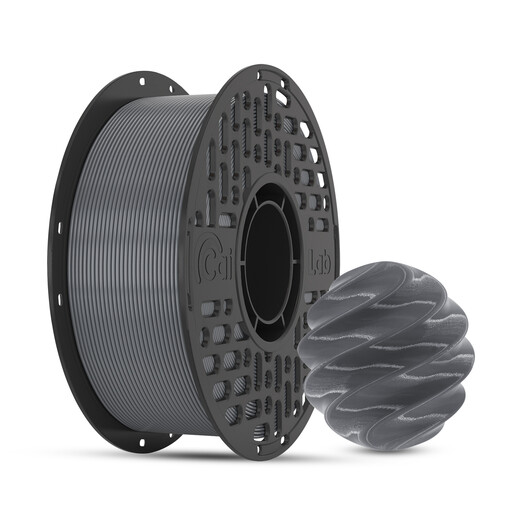
Why it's a great choice: Perfect for engineers and makers designing mechanical parts and enclosures. Its neutral colour and the renowned strength of `durable PETG` make it an ally for functional prototypes, where precision and durability take precedence over aesthetics.
This filament focuses on high dimensional accuracy and low shrinkage (warping), directly countering the issues of inconsistent diameter and deformation that often plague technical parts.
It combines excellent impact and chemical resistance, making it suitable for real-world applications. Its formulation is designed to minimise warping and ensure a more stress-free printing experience.
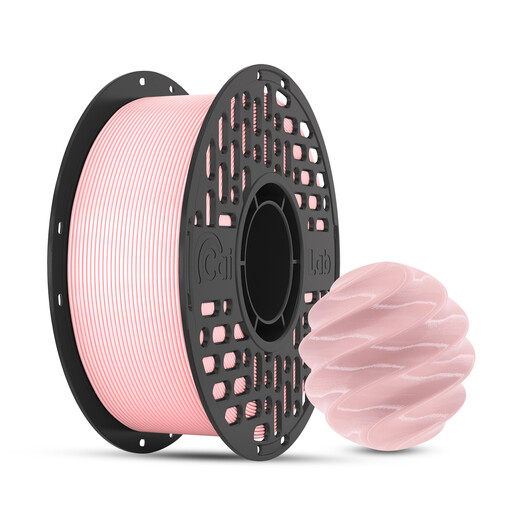
Why it's a great choice: For creators of vases, figurines, and other decorative objects. This `pink PETG filament` offers a vibrant hue and a glossy finish that enhances details, without sacrificing the inherent strength of PETG.
Neat winding and a consistent diameter are essential for a flawless surface finish. This filament is specifically designed for a smooth flow, preventing defects that could ruin a decorative object.
It produces smooth surfaces with beautiful translucency and a lustrous finish. Its balanced formulation makes printing easier while offering durability far superior to that of PLA.
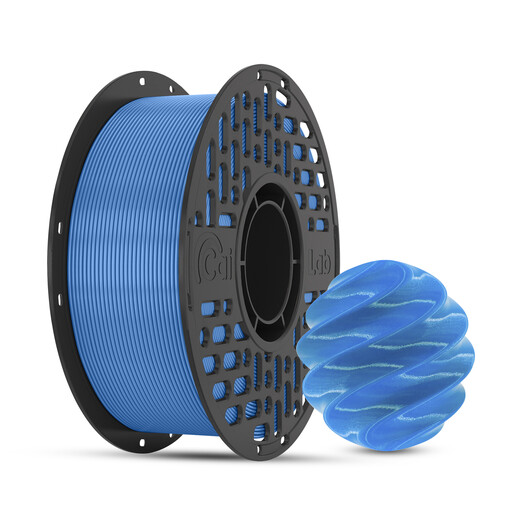
Why it's a great choice: For makers accustomed to the simplicity of PLA who want to upgrade to a stronger material without facing the difficulties of ABS. This `cyan PETG` offers an excellent compromise between ease of use and performance for a smooth transition.
Its formula is optimised to limit shrinkage and ensure good inter-layer adhesion. This minimises the risk of prints detaching from the bed (warping), one of the main hurdles when moving from PLA to PETG.
It offers a more forgiving printing experience than many other PETGs and has broad compatibility with FDM printers on the market. It's an excellent starting point for taming this material.
We have compiled a complete and up-to-date list of products that meet our demanding selection criteria and safety standards.
Storage is key. Once the vacuum-sealed bag is open, place your spool in an airtight storage box with several desiccant packets. Some makers even invest in dedicated dry boxes that maintain a very low humidity level at all times. If your filament has absorbed moisture, don't panic: you can dry it in a convection oven (at a very low temperature, around 65°C, for several hours) or in a dedicated filament dryer before starting a new print.
Yes, and in several ways. PETG surpasses standard PLA in terms of impact, flex, and temperature resistance. While PLA begins to soften around 60°C, PETG holds up to 80°C. It is also more resistant to many chemicals. This is what makes it the go-to material for mechanical parts, jigs, or any object intended for outdoor use or subject to stress.
No, the vast majority of modern FDM 3D printers can handle PETG without any issues. The only two prerequisites are: a nozzle capable of reaching at least 240-250°C and a heated bed that can get up to between 70 and 85°C. Almost all machines sold today, including entry-level ones, meet these conditions. An enclosure is generally not necessary, unlike with ABS.