Households with carpets and long-haired pets
If hair gets caught in the fibres, look for a main vacuum with test results specifically for carpets. Also check which brush comes with it and how easy it is to remove tangled hair.


For regular cleaning of carpets where pet hair gets embedded in the fibres, start by comparing test results for carpet fibres across cylinder vacuums fitted with a suitable brush. A stick vacuum may be suitable for spot cleaning, provided it performs well and has enough battery life at the setting you use. A robot can help with routine cleaning, but you should check how the exact model performs on carpets. UFC-Que Choisir’s tests assess fibre removal from carpets separately from cleaning other floor types, so a ‘pet’ label alone won’t answer this question.
If hair gets caught in the fibres, look for a main vacuum with test results specifically for carpets. Also check which brush comes with it and how easy it is to remove tangled hair.
A stick vacuum can make it easier to clean around pet beds and upholstery. For carpets, check how well it removes embedded fibres and how long the battery lasts at the setting you’ll need, rather than relying on its maximum claimed runtime.
A robot can keep accessible areas clean between more thorough cleans. According to UFC-Que Choisir, performance varies by floor type, so check the results for carpets separately, along with how well it reaches edges and how easy it is to maintain the bin and brushes.
First decide what role the vacuum will play in your home, then compare each model against tests on carpet fibres and the practicalities of everyday use.
Consider it: for deep cleaning a large area of carpet or rugs, provided the specific model delivers convincing results on carpet fibres.
Bear in mind: you’ll need to move a corded appliance around, and replace the bags if you choose a bagged model.
Consider it: for frequent spot cleaning, if the model removes carpet fibres at the setting you’ll use.
Bear in mind: check the battery life at that setting, particularly if the carpeted area needs several passes.
Consider it: for scheduled cleaning of accessible areas between more thorough cleans.
Bear in mind: results vary by floor type, and you’ll still need to check the bin and brushes regularly, even with an auto-empty dock.
| What to consider | What to check | Think about your needs |
|---|---|---|
| Hair removal | Compare tests on fibres embedded in carpet, check which brush comes with the exact model and, where stated, how many passes are needed. UFC-Que Choisir’s test protocols assess carpet fibres for cylinder, stick and robot vacuums. | I want to remove hair caught in the carpet, not just what’s visible on the surface. |
| Maintenance | Check how to remove hair from the brush, access the filter and empty the bin or replace the bag. For a robot, also check how to maintain the dock, if one is included. | Hair can fill the bin and get tangled around the brush, so I’d like to know what I’ll need to clean after each use. |
| Repeated cleaning | For a stick vacuum, compare battery life at the setting you need for carpets. For a cylinder vacuum, consider its weight and operating radius. For any type, think about how noisy it will be during the intended use. | If I’m cleaning several carpets in one go, the runtime, manoeuvrability and noise level need to suit my routine. |
| Areas a robot can reach | Check the model’s results on carpet fibres, edges and corners, then look at what’s involved in emptying it. UFC-Que Choisir notes that robot performance varies according to floor type. | I’d like to automate cleaning between bigger cleans, without assuming the robot will reach every spot where my pet leaves hair. |
UFC-Que Choisir points out that a stick vacuum’s wattage, voltage or air watts alone don’t tell you how well it performs on different floor types. A product range name also says nothing about how well it removes embedded hair.
Look for a carpet-fibre test of the exact model and check which brush comes with the version on sale.
A runtime quoted at low power won’t necessarily reflect how long it will last on carpet at the setting you need.
Compare battery life at the setting you’ll use on carpets with the area you need to clean before relying on a stick vacuum for all your cleaning.
Automatic bin emptying won’t remove hair left on the brushes, or tell you how well the robot performs on carpets.
Check carpet-fibre test results, how the dock works and how easy it is to access the parts that need cleaning.
Bags, filters and brushes all need attention, depending on the vacuum you choose. With a cordless model, the battery is another thing to check before buying.
Check that the right parts are available for the exact model. In France, the government departments responsible for ecological transition say that vacuum cleaners are covered by the repairability index, which is displayed on the product or its packaging.
A product range or an appearance in a comparison can help you find models to consider, but you’ll still need to check each one’s performance on carpets.
The ProAnimal range includes several types of vacuum. On its French website, Bosch lists the BGB41PET1 bagged cylinder vacuum with an AirTurbo Pro turbo brush and a 4.0 l bag.
The Rowenta X-Force Flex 14.80 Kit Animal is one of the stick vacuums listed in UFC-Que Choisir’s French comparison.
The Dyson V11 Advanced is among the recently tested stick vacuums mentioned by UFC-Que Choisir.
iRobot is one of the robot vacuum brands covered in UFC-Que Choisir’s French comparison.
If you’re considering a Roborock robot for regular cleaning, compare the exact model with the carpets and accessible areas in your home.
This selection includes a stick vacuum for spot cleaning and two robots for automated cleaning between more thorough cleans. For each one, check its performance on carpet fibres before relying on it as your main vacuum for carpets.
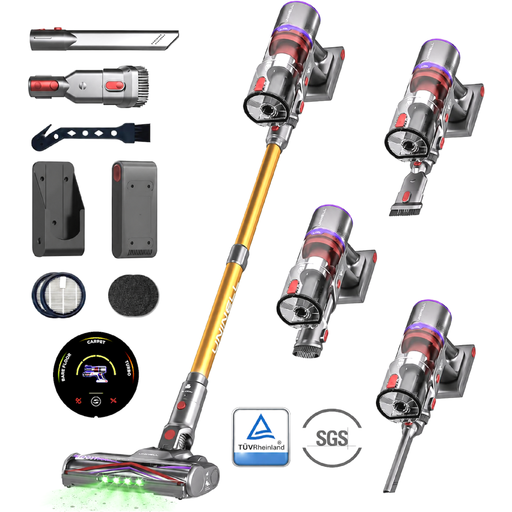 Image unavailable
Worth considering for spot cleaning carpets and upholstery: the product description mentions an anti-tangle brush and suitability for pet hair. It claims up to 65 minutes of runtime, but this doesn’t tell you how long the battery will last at the setting you use on carpet. Check for a carpet-fibre test of this model before relying on it for a deep clean.
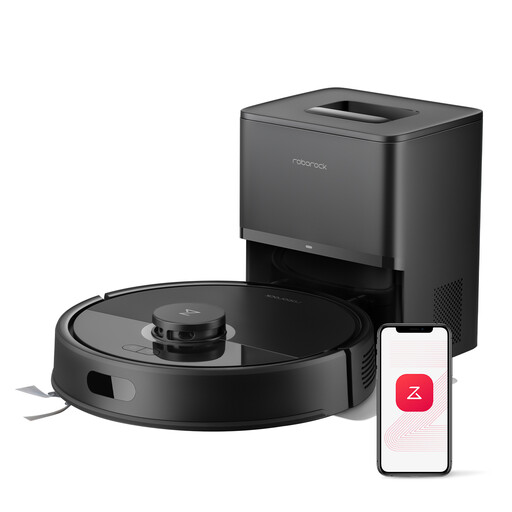 Image unavailable
Worth considering for scheduled cleaning between more thorough cleans. The product description lists LiDAR navigation, an auto-empty dock and an anti-tangle system. These features don’t tell you how much fibre it removes from a carpet: look for a test of the Q7 L5+ on this surface and check how to maintain its brush and dock.
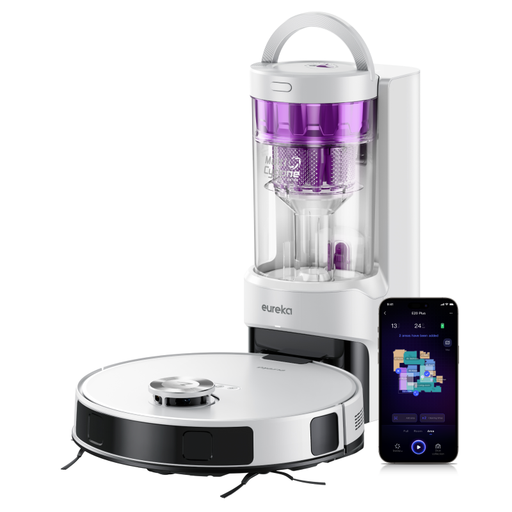 Image unavailable
Worth considering for automated cleaning of accessible areas: the product description mentions an auto-empty dock and navigation with mapping. Check for a carpet-fibre test of the E20 Plus, as well as the specifications of the version on sale, before relying on its stated power or emptying features.
Look for a test that measures how well it removes fibres embedded in carpet, separately from dust pick-up on hard floors. UFC-Que Choisir’s test protocols use fibres designed to mimic pet hair; for stick vacuums, they also record how many passes are needed. Then compare the results for the exact model and check which brush is included.
Don’t assume so just because it has scheduling features or an auto-empty dock. UFC-Que Choisir says robot performance varies by floor type. A robot can help keep accessible areas clean; before relying on it as your main vacuum for carpets, check the model’s results on fibres, edges and corners, as well as how much maintenance it needs.
A bagged cylinder vacuum is worth considering if you’re concerned about emptying the dust container: UFC-Que Choisir says bagged cylinder vacuums have better suction than bagless models and release less dust. However, you’ll need to replace the bags. To remove embedded hair, also compare carpet-fibre test results and the brush supplied with each model.
Check how to remove hair tangled around the brush, access the filter and empty the bin or replace the bag. If you’re considering a robot with a dock, also check what you’ll still need to empty and clean by hand; automatic emptying doesn’t mean you can skip checking the brushes.