Homes with rugs or carpets
If pet hair gets caught in the fibres, look for a test that measures how well a vacuum removes it from carpets. UFC-Que Choisir assesses this separately in its test protocols for canister and stick vacuums.


For pet hair embedded in carpets, start by comparing test results for fibre removal. A canister vacuum is well suited to thorough cleaning sessions, while a cordless stick can handle frequent quick cleans if its runtime at the required power is long enough. A robot can help maintain accessible floors, provided you check its results on carpets and fibres separately.
The surfaces you need to clean and how often you vacuum should guide your choice before you look at the advertised features.
If pet hair gets caught in the fibres, look for a test that measures how well a vacuum removes it from carpets. UFC-Que Choisir assesses this separately in its test protocols for canister and stick vacuums.
A cordless stick vacuum can be handy for picking up visible pet hair regularly. To find out whether it will last for a full cleaning session, compare its runtime at the power level your carpets need, not just its maximum advertised runtime.
A robot can keep accessible areas clean between manual sessions. Check the model’s performance on fibres and carpets, its edge cleaning and how it navigates around obstacles before relying on it for more.
To choose between a canister, stick or robot vacuum, start with the cleaning task that takes up most of your time. Then check independent test results and the practical considerations for the specific model.
Consider it: for larger areas or carpets that need a thorough clean.
Bear in mind: it needs to be plugged in and is less manoeuvrable than a cordless stick vacuum. UFC-Que Choisir reports that, under its test conditions, bagged canister vacuums perform better than bagless models. Even so, compare the chosen model’s results on fibres.
Consider it: for frequent pick-ups of visible pet hair without getting a canister vacuum out every time.
Bear in mind: using it at higher power on carpets reduces its runtime. UFC-Que Choisir reports an average runtime of around ten minutes at full power in its tests of stick vacuums.
Consider it: as a complement, for regular cleaning of accessible floors.
Bear in mind: a docking station or mopping function alone tells you nothing about how well it collects fibres from carpets. UFC-Que Choisir’s tests assess fibres, carpets and navigation separately, among other things.
| Priority | What to check | How it applies to me |
|---|---|---|
| Fibres on carpets | Look for a test of fibre removal from carpets for the exact model. Check which brush was used and how many passes were needed, particularly for a stick vacuum. | Pet hair stays caught in my carpets, so I want to assess performance on this surface, not just the advertised power. |
| Dust container and maintenance | Check performance as the bag or bin fills up, and see how easy it is to access the brush roll, filters and dust container. If it’s a bagged model, also check that compatible bags are available. | I vacuum up pet hair often, so I need to be able to remove hair wrapped around the brush and maintain the dust container without too much hassle. |
| Stick vacuum runtime | Compare runtime at the power level you’ll actually use on carpets, and check the recharging options. The maximum advertised runtime is usually measured on a lower setting. | If I move from hard floors to carpet, my stick vacuum needs to last long enough to clean the areas I have in mind without interrupting the session. |
| Noise and manoeuvrability | Compare the measured noise level in the mode you’ll use. Also consider the weight and how easy it is to move around the rooms you need to clean. | For frequent cleaning, I want a vacuum that’s easy to get out and move around, with a noise level I can live with at home. |
| Robot’s cleaning route | For the specific model, check results on fibres and carpets, as well as edge cleaning and navigation around obstacles. | I’d like to keep accessible floors clear of build-up, without relying on the robot to remove embedded pet hair from my carpets on its own. |
These figures alone don’t tell you how much fibre a vacuum removes from a carpet. The brush and the results on that surface matter directly for this task.
Compare fibre test results, the number of passes needed and brush maintenance for the model you’re interested in.
A higher power setting shortens a stick vacuum’s runtime. According to UFC-Que Choisir, its tests show an average of around ten minutes at full power.
Check the runtime at the setting you need for your carpets and compare it with the length of a typical cleaning session.
Pet hair can wrap around the brush, while a full bin or bag can also affect vacuuming performance.
Before choosing, check how to access the brush roll, filters and dust container, and make sure compatible consumables are available.
A docking station, mopping mode or the word ‘Pet’ doesn’t prove how well a robot handles embedded fibres or navigates your home.
Check test results for the specific robot on carpets, fibres and edges, as well as around obstacles. Keep a manual option for thorough carpet cleaning if you still need it.
A product range or model name can help narrow your search, but you should check how well the exact model and accessories on sale deal with embedded pet hair.
The X-Force Flex range and Green Force canister vacuums offer two formats to consider, depending on whether you prefer quick clean-ups or a more thorough clean.
The BGS41PET1 ProAnimal Série 6 is a canister model worth considering if this format suits your floors.
The IW3612EU Detect and IZ380EUT PowerPro Pet stick vacuums are distinct models, so check their results and included accessories separately.
The VS20B95C43W Bespoke Jet Plus Complete is a stick vacuum to consider in light of its specific equipment and how you’ll use it.
Roomba models are an option if you’re looking for a robot to help maintain accessible areas regularly.
This selection includes three cordless stick vacuums to consider for frequent clean-ups, and a robot that could complement them on accessible floors. For carpets, compare fibre test results and the practical considerations for each model before choosing.
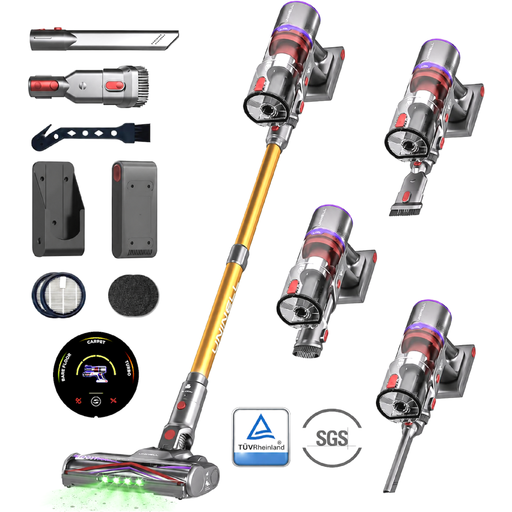 Image unavailable
Worth considering for regular cleaning of floors and carpets. The product listing states that it has an anti-tangle brush and up to 65 minutes’ runtime. Check how long it lasts at the setting you need on your carpets and look for fibre test results for the specific model.
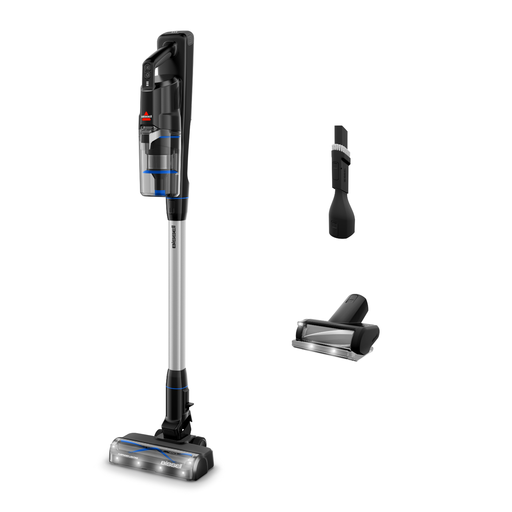 Image unavailable
This stick vacuum is worth considering for picking up pet hair between thorough cleans. If carpets are your main challenge, compare fibre test results for this model and check its runtime at the power level you’ll use.
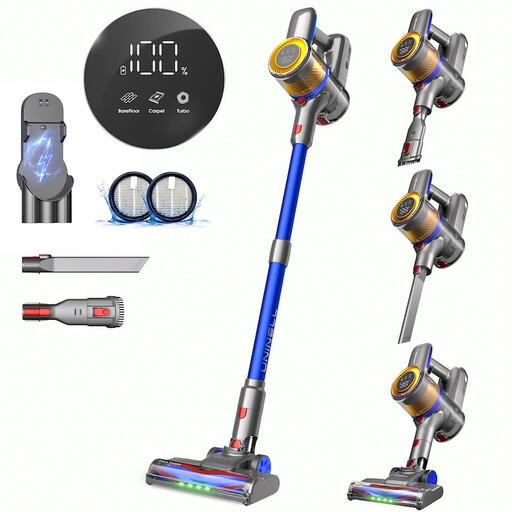 Image unavailable
This format could suit targeted cleaning of floors and carpets. The product listing states that it offers up to 60 minutes’ runtime and a removable battery, but this doesn’t tell you how long it lasts at high power. Check the UV1’s results on fibres and its runtime at the setting you need at home.
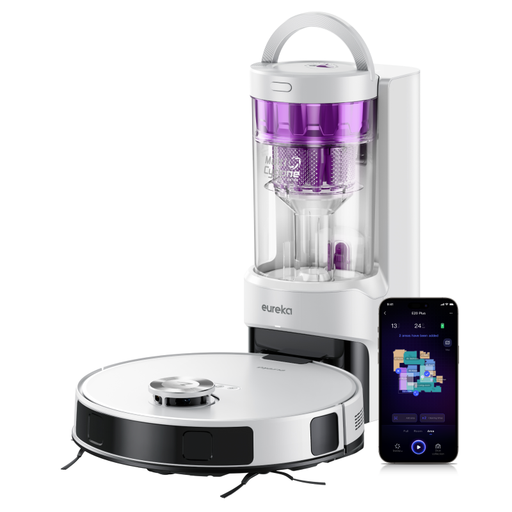 Image unavailable
Worth considering to complement manual cleaning on accessible floors. Check its performance on fibres, carpets and edges, as well as how it navigates around obstacles in your home. The power figures differ between the product title (8 000 Pa) and description (10 000 Pa), so don’t base your choice on this figure.
Look for a test measuring fibre removal from carpets for the specific model. UFC-Que Choisir’s stick vacuum test uses fibres comparable to pet hair; an advertised power figure is no substitute for actual results.
No. Compare the runtime at the power level your carpets need with the time you usually spend cleaning. UFC-Que Choisir reports that, in its tests, the average runtime of stick vacuums falls to around ten minutes at full power.
Don’t assume it can. A robot can help clean accessible floors, but how well it removes fibres from carpets depends on the model. Check its results on carpets and fibres, as well as its navigation and edge cleaning.
You can take a used vacuum to a collection point or recycling centre, as advised by the French ministry responsible for ecological transition for electrical and electronic equipment. Before replacing it, check whether it can be repaired.