
Livraison le jour même ou le lendemain

Qualité garantie

Débloquez vos offres de bienvenue: Livraison GRATUITE | Jusqu'à -80 % | 30 jours d'essai gratuits à JoyPlus
Téléchargez l'application
Bathing your four-legged friend is one thing. Drying them is another. Between the roar of the hairdryer, escape attempts, and shared stress, at-home grooming can often turn into a nightmare. The pet drying cabin emerges as a game-changing solution, promising to transform this chore into a moment of calm and efficiency.
But be warned: not all cabins deliver on their promises. The market is a jungle where marketing claims can easily lead to a regrettable purchase. Before you pull out your credit card, here are the pitfalls you absolutely must avoid.
To avoid falling for the hype, focus on objective criteria, not marketing speak.
To make the right choice, there's no secret: you need to look closely at the technical features that make all the difference for your pet's comfort and the machine's effectiveness.
For a quiet pet dryer, silence isn't an option—it's the number one criterion. Aim for a model that operates between 40 and 55?dB (decibels). To give you an idea, 40?dB is the background noise of a library. A machine in this sound range minimizes the pet's stress, makes acceptance much easier, and turns drying into a relaxation session.
A good smart pet dryer doesn't just blow hot air: it masters it. The presence of multiple temperature sensors is a hallmark of a reliable product. They constantly monitor the heat at several points to maintain a consistent and safe temperature. Paired with efficient ventilation that circulates the air several times per minute, they eliminate any risk of overheating and ensure a healthy atmosphere.
The size of the pet drying box must match your pet's size. They should be able to stand up and lie down comfortably, but without being lost in a vast space. A well-designed volume, combined with 360-degree airflow, is the guarantee of uniform drying, even in difficult areas like the belly or paws. This is a crucial point for a dog dryer for long-haired breeds or a cat dryer for felines with a thick undercoat.
Enough theory, let's get practical. Rather than an endless list, we've selected models that meet specific needs, based on the key criteria we've just covered.
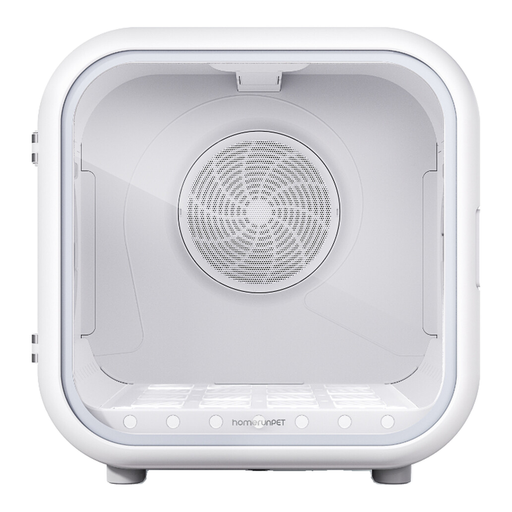
Why we recommend it: Its 50L capacity is perfectly calibrated for cats and small-breed dogs. Its main advantage: nearly silent operation (advertised at 40 dB), ideal for anxious pets and apartment living.
It tackles the noise pitfall head-on with a very low sound level, ensuring a calm and stress-free environment for the pet.
Its silent operation and smart safety features, for total peace of mind.
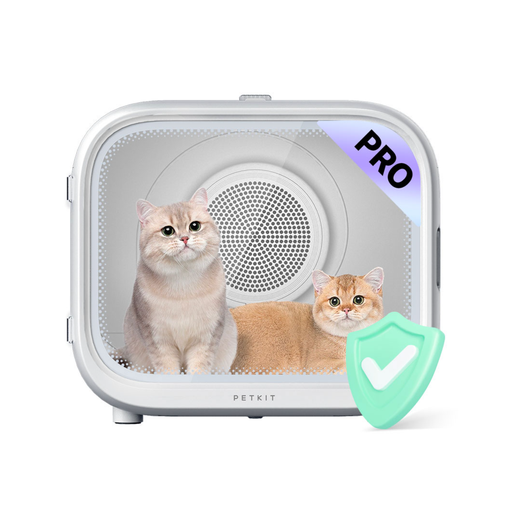
Why we recommend it: For those who want the best in technology. App control, negative ion diffusion for a silky coat, and its generous volume make it a premium choice for professional-grade grooming at home.
It addresses the pitfall of inadequate safety with no fewer than 8 safety modules that, according to PETKIT, monitor the temperature in real-time for maximum protection.
Precise control via the mobile app and ionic technology for a visibly softer, shinier coat.
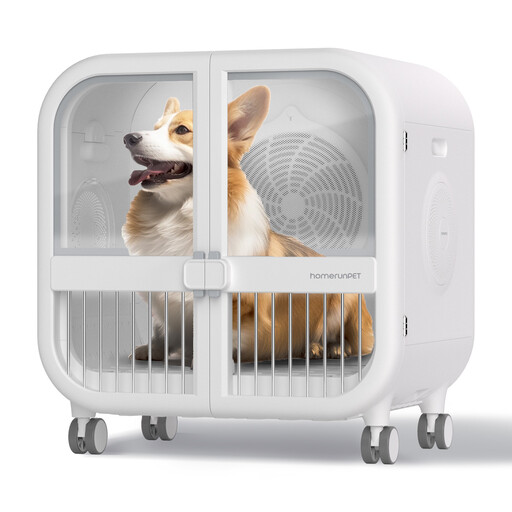
Why we recommend it: Its XXL 135L capacity is designed for medium-sized dogs or for drying two small companions at the same time. The practical bonus: a system that captures loose hair, making cleanup much easier.
It bypasses the pitfall of improper sizing by offering a very generous interior space, which prevents any feeling of confinement for larger animals and ensures their comfort.
XXL capacity (135L) and an integrated hair collector for easy maintenance.
Discover our selection of accessories designed for your companion's comfort and safety.
Absolutely, provided you choose a quality model. Prioritize devices equipped with multiple temperature sensors, overheat protection, an automatic shut-off, and efficient ventilation. We also recommend always keeping an eye on your pet during the first few uses until they get accustomed to it.
The duration depends on the pet's size, the nature of its coat, and the cabin's power. On average, expect between 30 and 45 minutes for a short-haired cat, and up to an hour (or more) for a medium-sized, long-haired dog. Models with 360° airflow are generally faster.
The key is a gradual and positive introduction.