
Livraison le jour même ou le lendemain

Qualité garantie

Débloquez vos offres de bienvenue: Livraison GRATUITE | Jusqu'à -80 % | 30 jours d'essai gratuits à JoyPlus
Téléchargez l'application
Personal protective equipment should not be chosen based on its appearance or brand name alone. On a building site, in a workshop, while painting or on a ski slope, an ill-fitting size, an unsuitable standard or use beyond the intended purpose can make equipment uncomfortable or even completely ineffective.
Before buying professional PPE or a protective accessory, there are three pitfalls to avoid:
For FFP2 respiratory protection, the FFP2 class mainly concerns particles. The 3M valve mask shown below specifies that it does not protect against gases and vapours or oxygen-deficient atmospheres. Before placing an order, you should therefore begin by identifying the risk precisely.
The 3M FFP3 mask, meanwhile, is intended for environments heavily laden with dust and mist, according to the information provided for this product. Model 9332 states compliance with EN 149:2001 + A1:2009, FFP3 NR D. It is still disposable and must not be reused.
For coveralls, the designations Type 4, Type 5 and Type 6 do not mean that they protect against all chemicals. They correspond respectively to protection against liquid sprays, hazardous particles and certain limited splashes, under the conditions set out in the model’s certification.
A mask should cover the nose and mouth while providing a sufficient seal. A beard, poorly positioned glasses or stretched straps can compromise the fit. Anti-fog safety goggles must also remain compatible with the respirator.
For a skateboard helmet, measure the circumference of your head above the eyebrows, then adjust the dial and chin strap before each use. The OutdoorMaster helmet shown here fits head circumferences of 52 to 55 cm and comes with two removable liners.
The same principle applies to 3M hearing protection. The PELTOR X2A model has an SNR rating of 31 dB and must completely cover the ears. Hair or glasses arms can, however, reduce the seal of the cushions.
Coveralls with sealed seams, such as some 3M models, limit potential entry points more effectively than clothing with seams that have simply been stitched together. For ski gloves, a waterproof membrane and good thermal insulation are invaluable in wet snow. They do not, however, turn mittens into chemical-protection gloves.
You should also check:
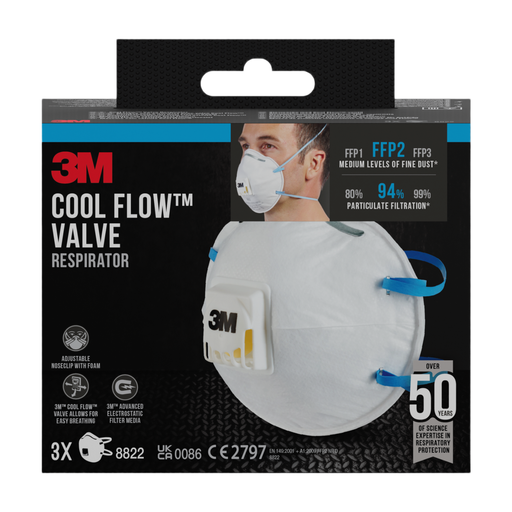
Why this choice suits this profile : With three masks in the box, this pack is suitable for small DIY, cleaning or sanding jobs that generate particles, without requiring you to buy reusable equipment.
The FFP2 class and the presence of a valve are clearly stated. However, the mask is limited to particles and is not suitable for gases or vapours.
Three-piece pack, lightweight design, nose clip and exhalation valve to reduce heat and moisture inside the mask.
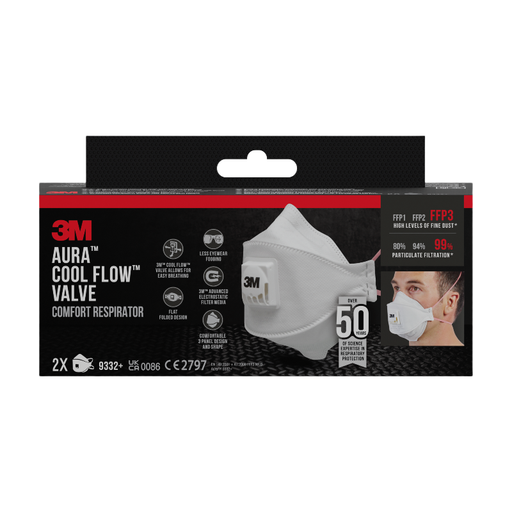
Why this choice suits this profile : Its three-panel foldable design and stated compatibility with glasses and hearing protection make it a suitable solution for the most demanding users.
The FFP3 class is explicitly linked to the EN 149 standard. This mask is still intended for particles and must not be used against gases, vapours or in an oxygen-depleted atmosphere.
FFP3 class, Cool Flow valve, adjustable nose clip, crush-resistant inner shell and dual straps.
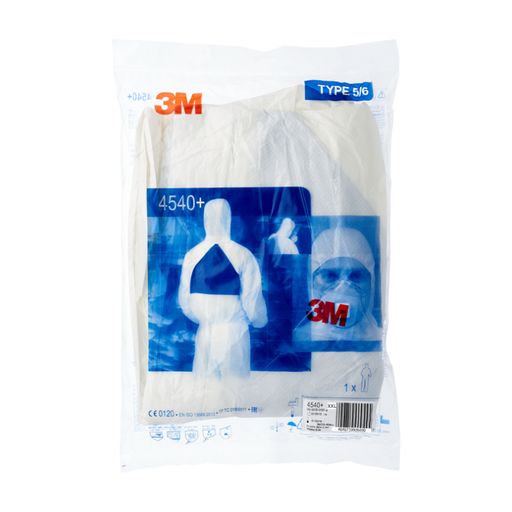
Why this choice suits this profile : This coverall is designed for industrial operations, handling hazardous powders and certain painting jobs requiring a Category III garment.
The stated protection types are precisely defined : Type 5 against particles and Type 6 against certain liquids. The coverall does not replace a risk assessment or the other PPE required.
Category III, antistatic treatment indicated according to EN 1149-5, breathable back panel, three-panel hood and two-way zip fastening.
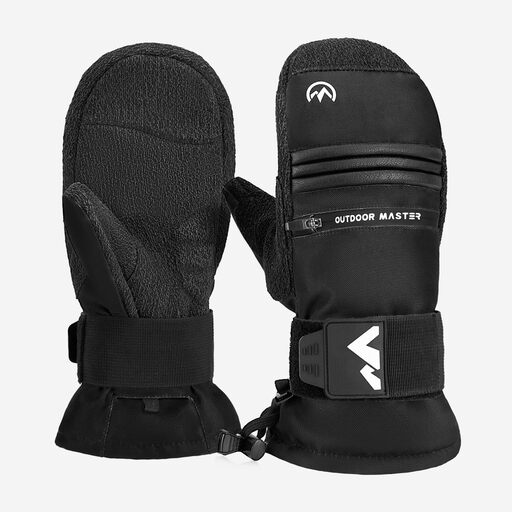
Why this choice suits this profile : These mittens are designed for skiing, snowboarding and outdoor activities in cold weather, when waterproofing and warmth are the top priorities.
The description clearly reserves these mittens for activities in snow and outdoors : they must not be used with chemicals.
3M thermal insulation, KEVLAR reinforcement, waterproof and windproof design, and mitten shape to minimise heat loss.
We have put together a complete, real-time updated selection of products that meet these demanding criteria and European safety regulations.
For painting, drilling or sanding jobs, the 3M 2890S and 2891S goggles feature a polycarbonate construction. Their product details mention scratch-resistant and anti-fog treatments, as well as an adjustable strap and compatibility with certain masks and hearing-protection equipment.
In a noisy workshop, the 3M PELTOR X2A ear defenders can complement your other protective equipment. However, their SNR rating of 31 dB must be considered alongside the actual sound level measured and the length of exposure.
For cycling, skateboarding or using a scooter, choose a helmet suited to your activity, adjust it correctly and replace it after a significant impact. A helmet that has suffered an impact may have invisible damage. Removable, washable liners make care easier, but do not allow you to extend its useful life indefinitely.
The masks concerned are listed as disposable in their product details. Replace them if they are damaged or soiled, or if breathing becomes difficult. You should also follow the instructions provided and the procedures in force in your working environment.
No. These classifications correspond to very specific situations and limitations. Consult the safety data sheet for the product being handled, the coverall’s instructions and the risk assessment. Additional gloves, boots, goggles or respiratory protection may be essential.
Measure your head circumference above the eyebrows, then compare the result with the manufacturer’s size chart. Once worn, the helmet should remain stable without exerting excessive pressure. Adjust the dial and chin strap before every ride, and replace the helmet after a significant impact.