What should you look for?
First, measure the humidity and check the room’s ventilation. If a dehumidifier would still be useful as an extra measure, choose one to suit the room and the way you’ll manage the collected water, rather than focusing solely on its capacity in litres per day.
| Concern |
What to check |
Consumers concerned |
| Understanding the damp |
Take relative humidity readings in the affected room at different times; check for marks and the condition of surfaces. |
When damp keeps returning without a clear cause, I want to know whether an appliance would improve the air or mask a problem with the home. Around 29% of consumers would make identifying the cause a priority. |
| Drying laundry |
Check for a laundry mode, the stated room size and the conditions under which the stated capacity was measured. |
If I regularly dry laundry indoors, I’m looking for a solution that suits the room, without forgetting to ventilate it. This would be the main concern for around 24% of consumers. |
| Frequent use |
Compare the tank capacity, humidity settings and whether continuous drainage can actually be connected. |
If the appliance will need to run often, I want to manage the collected water without repeated interruptions. Around 29% of consumers would put this need first. |
| Noise and handling |
Check the noise level in the mode you plan to use, the appliance’s footprint and how often you’ll need to empty it without drainage. |
In an occupied room, I want to minimise noise and avoid moving or emptying the appliance too often. Around 18% of consumers would prioritise this concern. |
Dehumidifiers to consider on Joybuy
These appliances are designed to dehumidify the air in a room at home, particularly when laundry is drying there. Consider them as a complement to ventilation, after ruling out an underlying problem that needs investigating.
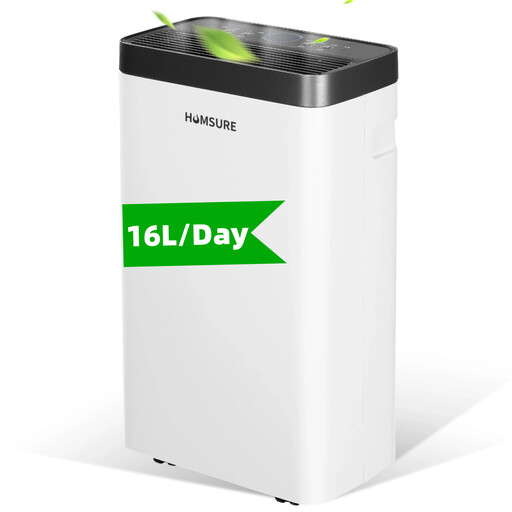 Image unavailable
HUMSURE dehumidifier, 16 L/day, 25 m²
Worth considering for a room that matches the stated size of 25 m². The title lists a capacity of 16 L/day, a 1.4 L tank, a 24-hour timer and automatic defrost; check the conditions used to measure the capacity and the noise level in the mode you’ll use.
View on Joybuy
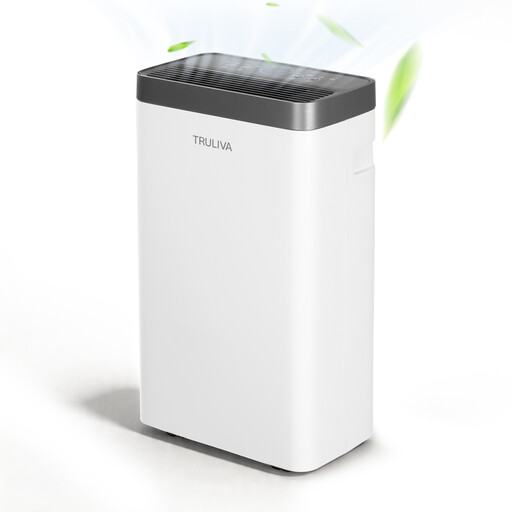 Image unavailable
TRULIVA AP10-2012EE dehumidifier, for around 32 m²
Consider this if you dry laundry in a room that matches the stated size. The title mentions a laundry mode, a 24-hour timer, automatic defrost and continuous drainage; check that you can connect it to a drain and that its noise level is suitable if the room is occupied.
View on Joybuy
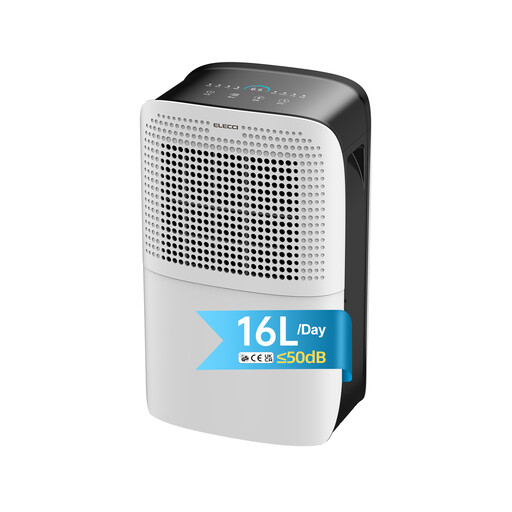 Image unavailable
ELECCI dehumidifier, 16 L/day, 3.1 L tank
Worth considering if you’d like to choose between using the tank and continuous drainage in a room listed as up to 32 m². The title mentions a hose, four modes and a capacity of 16 L/day; check the water’s route, the conditions used to measure the capacity and the noise level in the mode you plan to use.
View on Joybuy
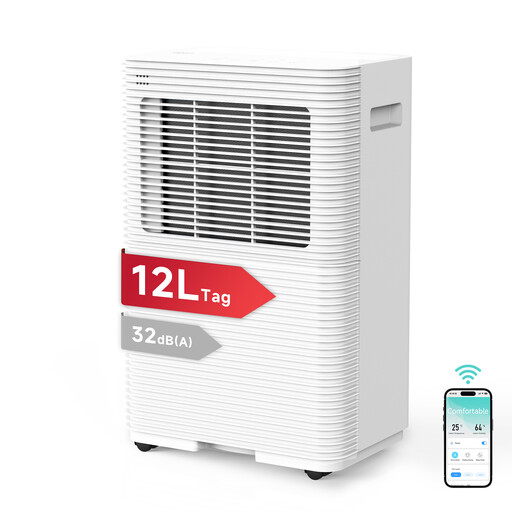 Image unavailable
VINO Smart 12 L Wi-Fi dehumidifier, 1.8 L tank
Consider this for a room listed as up to 24 m² if Wi-Fi control appeals to you. The title lists automatic, laundry and sleep modes; check the conditions used to measure the capacity and the noise level in the mode you plan to use.
View on Joybuy
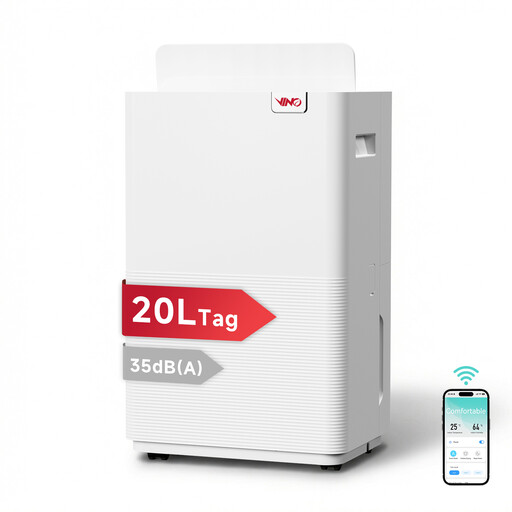 Image unavailable
VINO Smart 20 L Wi-Fi dehumidifier, 2.5 L tank
Worth considering for a room listed as up to 40 m² if you’re also looking for Wi-Fi control. The title lists automatic, laundry and sleep modes; the stated capacity alone won’t tell you how much water it will collect in your home, and you should check the noise level in the mode you’ll use.
View on Joybuy
Frequently asked questions
What humidity level should I measure before choosing an appliance?
Qualitel generally puts the recommended range for a home at between 40% and 60% relative humidity. Take several readings in the room at different times: a shower, cooking or drying laundry can temporarily affect the measurement.
Can you compare two capacities in litres per day directly?
Not without checking the test conditions. De’Longhi states 10 L/24 h for the DEX210SF at 30 °C and 80% relative humidity, while Supra states up to 10 L/day for the DU 100 Respire at 20 °C and 80% relative humidity.
Should you choose a tank or continuous drainage?
A tank is suitable if you can empty it as often as needed; continuous drainage requires a compatible drain. Check the tank capacity and, if you’re connecting a hose, that it’s included, how long it is and whether it can reach the drain.
When should you have your home inspected instead of buying a dehumidifier?
Arrange an inspection if you notice leaks, recurring stains or mould, damaged surfaces, or if damp persists despite ventilation. Qualitel recommends an inspection when damp continues; if you rent your home, keep a record of the signs you’ve noticed too.
Can a dehumidifier replace ventilation?
No: it removes water from the air, but doesn’t replace the air. ADEME notes that mechanical ventilation continuously removes moisture from the home, so check that it’s working even if you use a dehumidifier as an extra measure.


