
Livraison le jour même ou le lendemain

Qualité garantie

Débloquez vos offres de bienvenue: Livraison GRATUITE | Jusqu'à -80 % | 30 jours d'essai gratuits à JoyPlus
Téléchargez l'application
A pepper mill may seem straightforward to choose. Yet between imprecise grinding mechanisms, materials that require delicate care, and settings that shift during use, some models quickly disappoint. Whether you are seasoning everyday dishes, finishing plates at the table, or choosing a culinary gift, a few key criteria can make the difference between a smart purchase and a poorly suited model.
A wooden pepper mill brings warmth to the table, but not all types of wood handle moisture equally well. Product listings that focus heavily on aesthetics do not always explain the required care. In most cases, wood should never be submerged or washed under running water.
Stainless steel fits more naturally into a contemporary kitchen and is generally easier to maintain day to day. It is still worth checking the exact composition, whether any plastic components are present, and how easily the reservoir can be accessed.
The word “adjustable” does not guarantee a consistent grind. For preparing a black pepper sauce, a finer grind is generally preferable. Conversely, a coarser grind is better suited to finishing a steak or salad.
An adjustable pepper mill should therefore offer a clearly identifiable system, such as a dial or button. Above all, check that it remains accessible and does not shift during use.
A narrow reservoir can turn refilling into a tedious task, particularly when the peppercorns vary in size. Some models also require partial disassembly. Before ordering, check how the mill is filled, its capacity where specified, and the recommended care instructions.
A pepper mill should not be used with moist foods, fresh herbs, or ingredients not listed as compatible by the manufacturer. For greater versatility, look for an explicit statement confirming compatibility with sea salt or dried spices.
An pepper mill with a ceramic grinder uses a mechanism that is resistant to corrosion. This can be an advantage for sea salt, whose moisture and mineral content may accelerate the wear of certain metal components. Ceramic is not unbreakable, however: this very hard material can crack or shatter if dropped or handled incorrectly.
Metal mechanisms are highly suitable for pepper and provide a different grinding feel. In both cases, grind consistency, build quality, and access to the mechanism matter at least as much as the material highlighted in the specifications.
A manual pepper mill requires no batteries and lets you control the amount of freshly ground pepper directly. It is particularly well suited to people who use pepper regularly in the kitchen or prefer to keep electronic components off the dining table.
An electric pepper mill is especially convenient when only one hand is free, such as while preparing a dish or serving at the table. You should, however, plan for battery replacement and check the power requirements. The WOOX model featured below runs on AA batteries.
A salt and pepper mill helps reduce the number of accessories on the table, provided the manufacturer explicitly approves both uses. Damp salt or particularly large crystals are not suitable for every mechanism.
If you also want to grind seeds or spices, check the list of compatible ingredients carefully. A spice mill is not necessarily designed for nuts, oily foods, or moisture-containing blends.
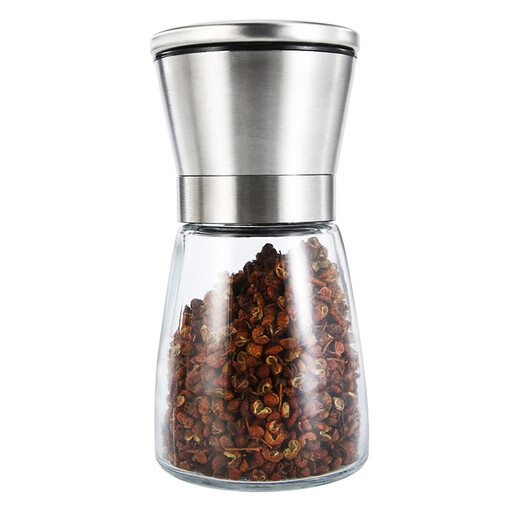
Why it is a good match: its manual operation is well suited to everyday use, with no batteries or electrical outlet required. A straightforward choice for an apartment or a first kitchen setup.
The manual format eliminates battery costs and reduces the number of components that require maintenance.
The product listing specifies a 304 stainless steel body and compatibility with black pepper and Sichuan peppercorns.
Why it is a good match: its lotus wood body creates a warm atmosphere on a family table and works equally well with modern interiors or more rustic décor.
The product information recommends dry cleaning and advises against immersion—two essential precautions for protecting both the wood and the mechanism.
It combines a ceramic grinder with a stainless steel adjustment knob, offering a grind ranging from fine to coarse.
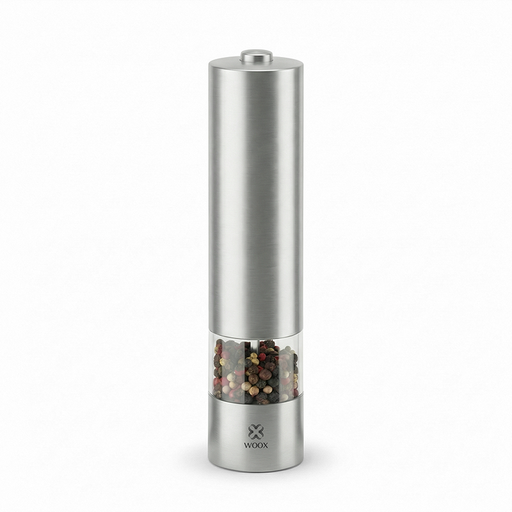
Why it is a good match: its electric operation makes serving at the table or preparing a dish easier when only one hand is available.
The product listing clearly specifies AA battery operation, making it easier to anticipate running costs and confirm that replacement batteries are readily available.
It combines a stated stainless steel and AS construction with a ceramic grinder for grinding both salt and pepper.
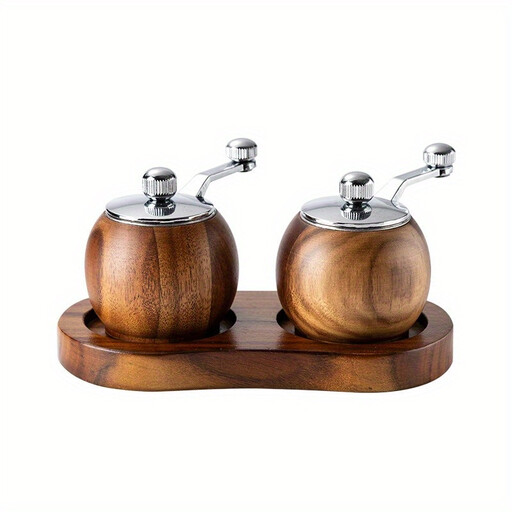
Why it is a good match: this set is ideal for households that want to distribute several seasonings between the kitchen and the table, or put together a culinary gift.
The set avoids the need to purchase several units separately. However, remember to check the dimensions and intended uses before placing your order.
The product listing specifies a set of three round grinders, a practical solution for keeping dried spices separate.
A mill’s service life depends primarily on moisture, frequency of use, and the ingredients placed in the reservoir. To preserve a wooden pepper mill, wipe the exterior with a soft, dry cloth. Avoid the dishwasher, soaking, and cleaning products whenever the product listing advises against them.
With an electric model, remove the batteries during prolonged periods of non-use and keep the compartment completely dry. With a manual mill, do not force the mechanism if peppercorns become stuck. A setting that is too tight can also make grinding difficult.
Before choosing a spice mill, also check the safety instructions, whether any small parts are accessible to children, and the seller’s return policy. Specifications can vary from one reference to another. For dimensions, compatible ingredients, and the exact contents of the package, the product listing remains the most reliable source.
We have brought together an up-to-date selection of pepper mills so you can compare formats, materials, mechanisms, and intended uses.
The method depends on the model’s design. On the Pepper Mill Lotus Wood, remove the top knob and the stainless steel adjustment mechanism, pour the peppercorns into the reservoir, then replace the components. Perform the process over a dry work surface to prevent moisture from entering the mill.
No universal service life can be guaranteed. It depends on the mechanism, frequency of use, and ingredients being ground. Limiting use to pepper and dried spices, combined with storage in a dry place, reduces the risk of blockages and premature wear.
Its running costs mainly consist of AA batteries, in addition to the purchase price. A manual model does not involve this recurring expense, but it does require mechanical operation each time it is used. The right choice therefore depends largely on how frequently you use it and whether you prefer manual simplicity or electric operation.