
Livraison le jour même ou le lendemain

Qualité garantie

Débloquez vos offres de bienvenue: Livraison GRATUITE | Jusqu'à -80 % | 30 jours d'essai gratuits à JoyPlus
Téléchargez l'application
A set of pens and felt-tips for drawing and colouring can quickly become cumbersome if the nibs, inks and uses don't match your needs. Between felt-tips marketed as all-purpose, brush pens with dozens of shades and gel pens claimed to work on any paper, there are certain features worth checking before you place your order.
Whether you're preparing for the new school term, a journaling notebook, illustrations or lettering projects, three common pitfalls keep cropping up.
A set of 60 or 100 shades gives you a generous palette, but it doesn't necessarily replace several different nib types. For writing small notes, a fine-tip felt pen will be far more practical than a brush pen. Conversely, colouring large areas calls for a wider, more consistent nib.
So take a proper look at what the set actually contains: distinct colours, a colour chart, replacement nibs and a storage system.
Water-based ink is generally easy to blend and clean up, but how it performs varies a lot depending on the surface. On thin paper, it can bleed through or leave halos. For watercolour effects, it's best to choose thick paper. On black, kraft or coloured paper, go for metallic gel pens or opaque pigmented ink instead.
The term "washable" usually refers to stains on certain surfaces or fabrics. It doesn't guarantee complete removal in every situation.
A cap that isn't properly closed speeds up drying, especially with brush pens and artist markers. Some models include an anti-dry system, but the best habit is to put the cap back on after every use. According to the manufacturer's recommendations, storing them horizontally can also help maintain a steady ink flow.
The durability of the nib matters just as much. For frequent use at school or in the office, a locked or reinforced nib reduces the risk of it being pushed in under pressure.
Pigmented inks are generally chosen for their opaque colours and their claimed permanence once dry. Gel inks offer a smooth glide and come in white, gold or silver for working on dark surfaces. Acrylic felt-tips produce a finish close to paint and can be used on paper, wood, glass, metal or ceramic – provided you test the surface first.
For everyday writing, erasable gel pens use thermosensitive ink. Friction allows you to correct mistakes, but this type of ink isn't suitable for documents that need to stay permanent, nor for receipts printed on thermal paper.
Before ordering, identify the surface you'll mainly be working on:
The models below cater to different uses. Their features are given according to the information provided on the product pages.
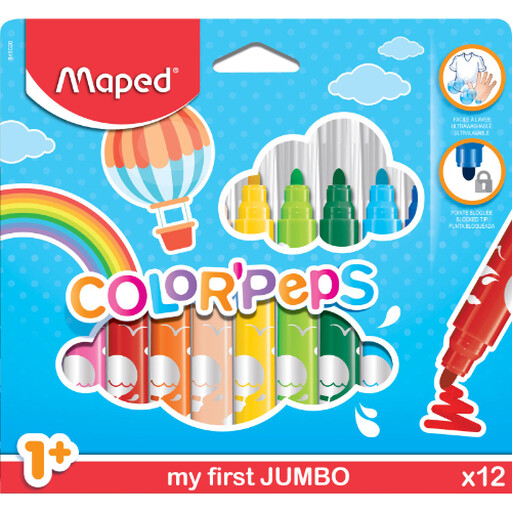
Why this choice suits this profile: Its jumbo triangular shape makes it easy for young children to grip. The 12-colour set is perfect for first colouring activities, both at home and at school.
The 5 mm nib is locked in both directions and the water-based ink is claimed to be ultra-washable with soapy water on most fabrics and on skin.
Wide body, triangular shape, 12 shades and recommended age from 12 months. Adult supervision is still essential.
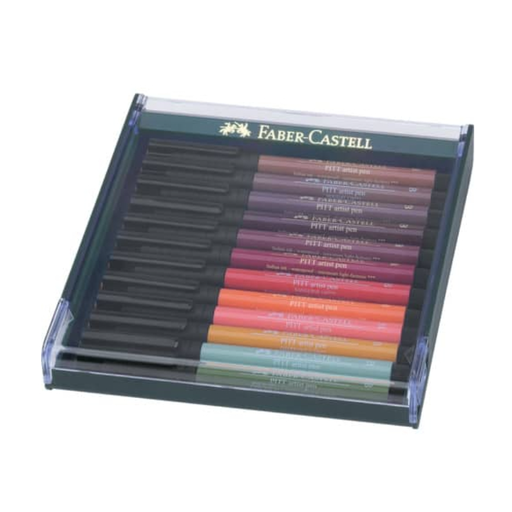
Why this choice suits this profile: This set of 12 brush pens is aimed at illustrators, calligraphy enthusiasts and anyone looking for a flexible nib to vary their strokes.
The flexible fibre nib is designed to hold its shape. According to the manufacturer's page, the pigmented ink is water-resistant once dry and lightfast.
12 basic colours, odourless ink and a nib suited to lettering, illustration and detailed sketching.
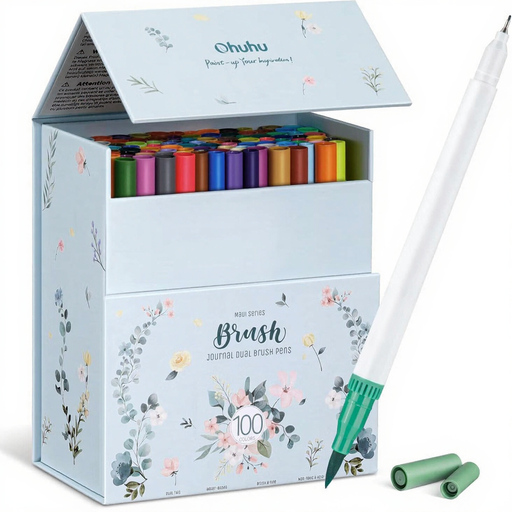
Why this choice suits this profile: Regular drawers, art students and colouring enthusiasts get two nibs per marker, so they can switch from detail to broad coverage without changing tools.
The colour chart to fill in helps you identify the actual shades, while the replacement nibs mean you don't have to stop working if one wears out.
100 numbered shades, a fine nib of 0.4 mm, a brush nib from 1 to 6 mm, a colour chart card and a storage case.
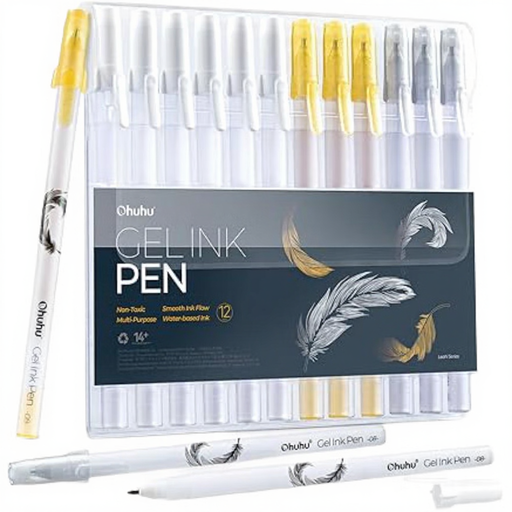
Why this choice suits this profile: Card makers, scrapbookers, illustrators and decorators can enjoy shades that show up clearly on black paper, kraft paper and other dark surfaces.
The 0.8 mm metal nib and the highly opaque pigmented ink are designed for details and contrast, rather than for general use on white paper.
Six white pens, three gold and three silver, with claimed fast drying and tips protected by caps with an internal seal.
We've put together a comprehensive selection, updated in real time, of products that meet these demanding criteria and European safety standards.
A set of 12 felt-tip pens is enough to learn how to blend shades, do school exercises or start journaling. A palette of 60 or 100 shades becomes interesting when you want to minimise mixing and achieve more subtle gradients.
They're mainly suited to annotations, preparatory sketches and planners. Their thermosensitive ink can be erased by friction or heat, so it's best to avoid them for a piece you intend to keep long-term or for an official document.
Close each cap immediately after use, avoid heat and direct light, and follow the recommended storage orientation. With dual-tip felt-tips, keep an eye on both ends for signs of drying. Using suitable paper also reduces the pressure on the nib and helps maintain a consistent line.