
Livraison le jour même ou le lendemain

Qualité garantie

Débloquez vos offres de bienvenue: Livraison GRATUITE | Jusqu'à -80 % | 30 jours d'essai gratuits à JoyPlus
Téléchargez l'application
Whether you're an artist, a student, or simply looking for the perfect tool to organise your daily life, choosing pens and markers can quickly become overwhelming. Faced with a multitude of options, it's easy to fall into common traps that lead to disappointing purchases. To help you make sense of it all, we've broken down the features that truly matter.
Before you dive in, let's review the most common frustrations:
To avoid these issues, it's essential to focus on a few key technical parameters rather than on marketing claims.
Navigating the jungle of writing instruments becomes much simpler when you know what to look for. Here are the three key criteria for making the right choice.
The tip is the heart of your tool. Your choice depends entirely on your intended use.
The ink determines not only the colour but also the permanence and behaviour of your line on the paper.
A pen you use for hours should be comfortable. Look at the shape of the barrel (round, hexagonal, triangular), the presence of a non-slip grip, and the weight. Brands like M&G often incorporate rubber grips to reduce fatigue. Some manufacturers, like STABILO, go even further by committing to an eco-conscious approach with pen barrels made from bio-based plastic.
To help you see more clearly, here is our selection of products suited for different profiles.

Why we chose it: For those who juggle multiple projects, this multicolour ballpoint pen is a true organisational ally. It allows you to colour-code your notes, planner, or study cards without carrying an entire pencil case.
The retractable mechanism is reliable and avoids the main problem of multi-colour pens: losing caps and ink drying out. Everything is contained in a single barrel.
4 colours (black, blue, red, green) in a single pen with a rubber grip for comfortable writing, even during long sessions.
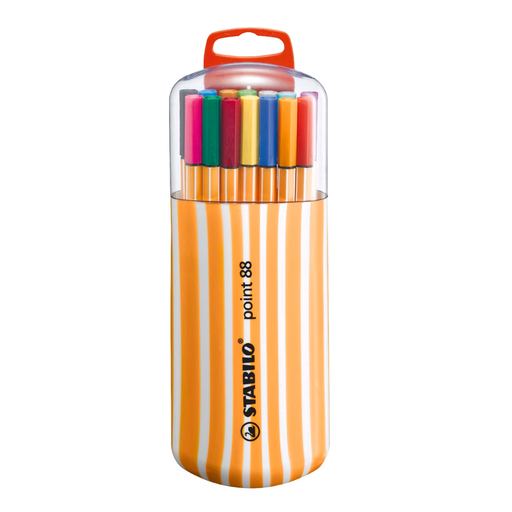
Why we chose it: The 0.4 mm tip is the gold standard for precise lines, diagrams, and decorating notebooks. This set offers a beautiful colour palette to unleash your creativity, all in a practical storage case.
The tip is metal-clad, which protects it from being crushed, even under heavy pressure or with repeated use of stencils and rulers. It's a guarantee of longevity.
Precision lines and water-based ink that won't bleed through most quality papers (90g/m? or higher recommended).
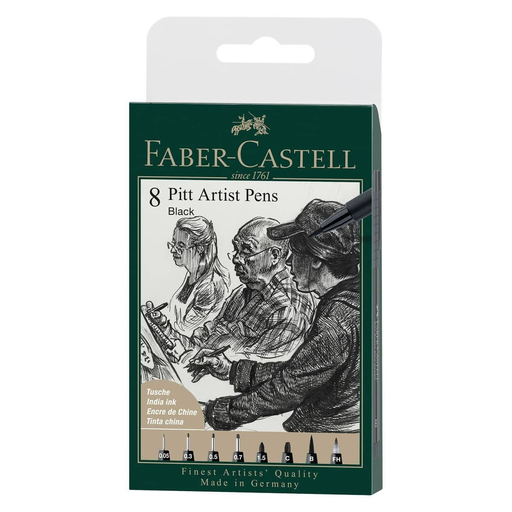
Why we chose it: For artists who sell their work or simply want it to last, archival quality is non-negotiable. This set uses pigmented India ink, renowned for its permanence and resistance to fading.
Once dry, India ink is waterproof. This means you can apply watercolour or other media over it without fear of the black line smudging—a recurring problem with conventional inks.
The set includes a variety of tips (extra-fine, fine, brush), offering great versatility for sketching, inking, and calligraphy with a single kit.
We've compiled a comprehensive list of products that meet our standards for quality and durability.
The golden rule is to always cap your markers tightly after use. For dual-tip or alcohol-based markers, it is recommended to store them horizontally. This allows the ink to distribute evenly between both tips and prevents one of them from drying out. Finally, avoid leaving them in direct sunlight or near a heat source.
A fineliner tip is rigid and calibrated for a line of consistent thickness. It is ideal for writing, outlining, and technical details. A brush tip is flexible and responds to the pressure you apply: the harder you press, the thicker the line. It is used for lettering, modern calligraphy, and filling in areas with a paint-like effect.
Acrylic paint markers are very versatile and adhere to many surfaces: paper, cardboard, wood, metal, plastic, glass, ceramic, and even pebbles. However, for optimal adhesion and durability on non-porous surfaces like glass or plastic, it is often advisable to clean and degrease the surface beforehand. For long-term protection, applying a finishing varnish may be necessary.