
Livraison le jour même ou le lendemain

Qualité garantie

Débloquez vos offres de bienvenue: Livraison GRATUITE | Jusqu'à -80 % | 30 jours d'essai gratuits à JoyPlus
Téléchargez l'application
Whether you’re a student, teacher, professional, journaling enthusiast or drawing fan, choosing pens and fine liners isn’t just about the colour of the barrel or how many pieces come in the box. A nib that snags, ink that bleeds through the paper or a mechanism that jams can quickly make a pack frustrating to use.
So before you place an order, it’s worth distinguishing the features that actually matter from the purely marketing claims. Here are the criteria to look out for, followed by a selection suited to different needs.
A very fine nib lets you write in margins, fill in a diary or trace details with precision. However, it can feel less comfortable for fast writing, especially if the ink flow isn’t consistent. Conversely, a 0.7 or 1.0 mm nib produces a more visible line, but takes up more space on a small line.
So the term “fine nib” should always come with a specific measurement: 0.38 mm, 0.4 mm, 0.5 mm or 0.7 mm, for example.
A pack of 40 or 50 pens can be useful for a classroom, an association or a shared office. For personal use, a smaller set that’s better suited to your colours and writing style is often a smarter choice.
Always check the exact contents: some pen packs group together several identical models, while others offer multiple colours in the same barrel.
Gel, liquid or oil-based ink doesn’t behave the same way on notebook paper, recycled paper, a sketchpad or glossy paper. An ink advertised as quick-drying can help reduce smudging, but the result also depends on the paper’s weight and texture.
For note-taking, choose a line width that suits your notebooks. For drawings and diagrams, fine liners with reinforced nibs generally offer better control.
A nib surrounded by a metal sleeve can be used with a ruler or stencil. The STABILO point 88, for example, has a 0.4 mm nib protected by a metal tip, according to its product description.
Gel pens generally offer a smooth glide and come in black, blue, red or multi-colour assortments. They’re popular for note-taking and notebooks, but capped models need to be closed after each use.
Ballpoint pens use a thicker ink, often well suited to forms and everyday writing. They’re practical when you want consistent drying and moderate ink consumption.
Liquid ink pens can produce a smooth, precise line. The WRITECH model with a 0.5 mm nib is described as having quick-drying black ink and a needle-point tip. These features come from its product description; they don’t guarantee the same result on all papers.
Erasable pens, on the other hand, use thermosensitive ink. Friction makes the marks disappear, but this type of ink isn’t suitable for official documents, thermal receipts or archives exposed to significant temperature changes.
For school and the office, black ink pens and blue ink pens cover most needs. Red ink pens are used for corrections, highlighting or prioritising information. Multi-colour models combine several inks in one instrument, saving space in your pencil case.
Also consider the mechanism: a retractable model means you won’t lose the cap, while a capped pen may be better for fine liners and inks that need to be protected from air.
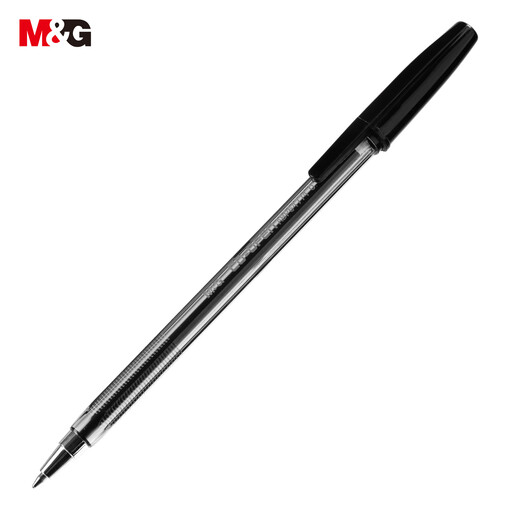
Why this choice suits this profile: This pack of 40 black ink ballpoint pens is ideal for shared supplies, homework, meetings and family reserves.
The stated quantity is clearly indicated: you’re not paying for a colour assortment you don’t need.
0.7 mm ballpoint nib, oil-based black ink and ceramic tip according to the product description.
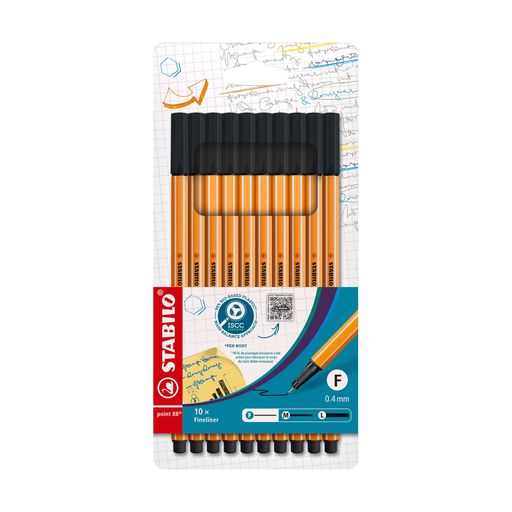
Why this choice suits this profile: Its precise nib is aimed at those who want consistent writing for notebooks, diagrams and neat work.
The 0.4 mm size is clearly stated, allowing you to compare this pen with other fine liners on an objective basis.
Nib reinforced with a metal sleeve, barrel and cap made from 96% bio-based plastic according to the description provided.

Why this choice suits this profile: This pack is aimed at pupils, students and professionals who regularly correct their notes, diaries or exercises.
The erasable function is paired with a 0.5 mm nib and an integrated friction tip: it doesn’t rely solely on a colour claim.
Thermosensitive ink, needle-point nib and 12 blue pens as stated in the product description. This ink is not intended for permanent documents.

Why this choice suits this profile: Students and professionals can quickly switch from black to blue, red or green without changing pens.
The contents are explicit: three pens, each combining four colours, with a retractable mechanism and separate buttons.
0.7 mm ballpoint nib, non-slip grip and four inks per pen for visually organising notes.
We’ve put together a comprehensive, real-time updated list of products that fully meet these strict selection criteria and European safety regulations.
To extend the life of your pens and fine liners:
A 0.5 to 0.7 mm nib is generally suitable for note-taking: it offers a good balance between readability and speed. Gel pens glide smoothly on paper, while ballpoint pens are practical for forms, lessons and everyday writing.
No. Their thermosensitive ink can become difficult to find after exposure to heat or cold. Use them instead for exercises, diaries, drafts and notes that may be changed. For a permanent document, choose a non-erasable black or blue ink.
A pack of 6 to 12 pieces is usually enough for a student, a journaling enthusiast or home use. Boxes of 20, 40 or 50 pens are more suited to schools, offices, associations and spaces where supplies are shared.