
Livraison le jour même ou le lendemain

Qualité garantie

Débloquez vos offres de bienvenue: Livraison GRATUITE | Jusqu'à -80 % | 30 jours d'essai gratuits à JoyPlus
Téléchargez l'application
A pendant light is more than just a simple fixture. It's the centerpiece that sculpts the atmosphere of a living room, elevates a dining table, or adds character to a kitchen. But when faced with a multitude of models, what starts as love at first sight can quickly turn into a headache. A design that looks stunning in a photo is no guarantee of pleasant daily lighting or a successful integration into your space.
As a Product Expert at Joybuy, I'm here to demystify the market and help you avoid the most common pitfalls. Here are the three mistakes that too often turn a promising purchase into a costly regret:
This guide gives you everything you need to make the right choice: a pendant light that is functional, durable, and in perfect harmony with your interior.
Before you even think about style, a few technical points need to be addressed. This is your guarantee of choosing a fixture that will truly fit your daily life, not just your design aspirations.
The way light is cast is fundamental. It mainly depends on the shape and material of the lampshade.
To ensure your pendant light integrates perfectly, follow a few rules of proportion.
The material influences not only the aesthetics but also the light diffusion and maintenance.
To put theory into practice, here are a few iconic models that perfectly illustrate these tips.
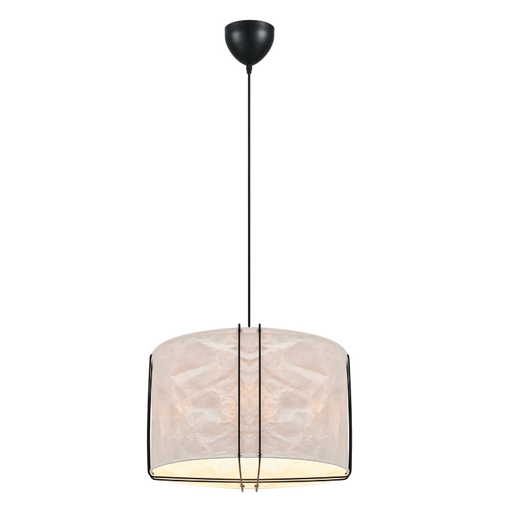
Why it's a match: Perfect for those seeking a serene and clean atmosphere. Its Japandi style, a fusion of Nordic minimalism and Japanese aesthetics, brings a touch of organic softness to a living room or bedroom.
The slightly crumpled paper shade diffuses light perfectly evenly, eliminating any risk of glare. It's the ideal solution for soothing ambient lighting.
Creates a warm, enveloping light, perfect for a cosy atmosphere. Its light and airy design integrates easily without overwhelming the space.
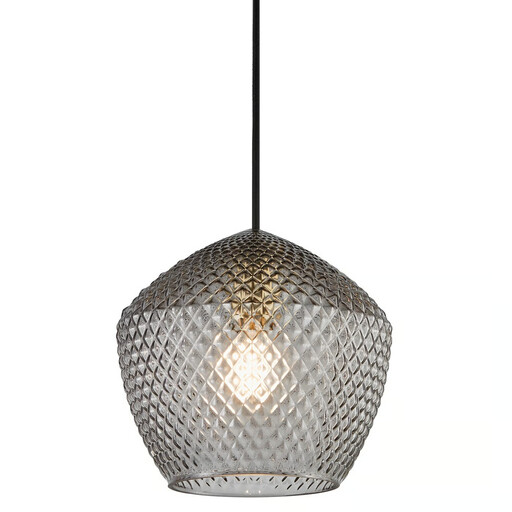
Why it's a match: For those who see their light fixture as a piece of jewellery. The combination of brushed brass and faceted smoked glass evokes the glamour of the Art Deco era. A statement piece for a living or dining room with a bold character.
The smoked and textured glass softens the light and creates unique reflections, preventing harsh illumination. The high-quality materials (mouth-blown glass, metal) ensure its durability and simple maintenance.
A sculptural design that creates a unique play of light thanks to its faceted glass. A true work of art, even when turned off.
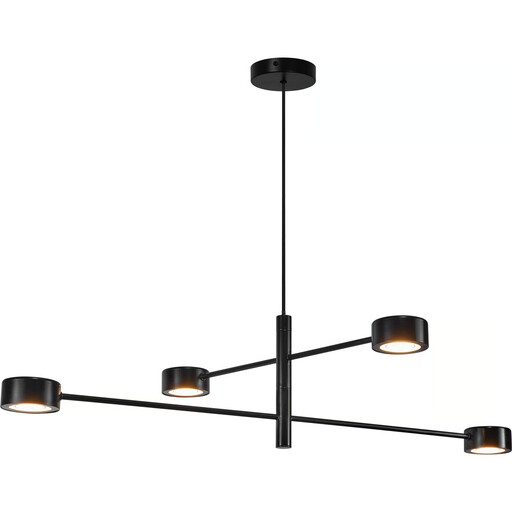
Why it's a match: Ideal for those who prioritise functionality over a long table or kitchen island. Its minimalist design and integrated technology combine performance with contemporary aesthetics.
Its four light heads are adjustable, allowing you to direct light precisely where it's needed and avoid glare. Its metal structure is robust and very easy to clean.
The integrated Moodmaker function allows you to adjust the light intensity to three levels using a standard wall switch, without needing an external dimmer.
Explore our complete selection of pendant lights, chosen for their design, lighting quality, and durability.
The golden rule is to leave a space of 75 to 90?cm between the lowest point of the fixture and the tabletop. This spacing ensures optimal illumination of the table without ever obstructing the diners' line of sight. You can, of course, adjust this height by a few centimetres depending on your bulb's brightness and your ceiling height.
The choice depends on the fixture's function. If it's the main light source, its diameter should be proportional to the room's size (see the calculation formula above). If the pendant is an accent light, for example in a reading nook, you can choose a smaller model (25-40?cm in diameter) and hang it lower for a more intimate effect.
Yes, this is an excellent and increasingly common choice. The advantages are clear: minimal energy consumption, an exceptional lifespan (often over 25,000 hours), and nearly infinite design freedom for creators. Many models, like the Clyde pendant by Nordlux, include practical features like dimming. The only drawback is that the light source is not replaceable. This makes it crucial to invest in a reliable brand and a quality product.