
Livraison le jour même ou le lendemain

Qualité garantie

Débloquez vos offres de bienvenue: Livraison GRATUITE | Jusqu'à -80 % | 30 jours d'essai gratuits à JoyPlus
Téléchargez l'application
A good pencil case should open easily, offer enough space and fit into your school bag without taking up too much room. Some models, however, focus more on appearance than practicality, which can reveal their shortcomings after just a few days of use. Whether you need a pencil case for a schoolchild, student, artist or professional, a few checks are all it takes to avoid disappointment.
A large pencil case can hold plenty of stationery. But with just one compartment, pencils quickly end up in a jumble, making it difficult to find what you need. For a child who only uses a few pens and felt-tip pens, this extra capacity also takes up unnecessary space in their school bag.
A three-compartment pencil case makes it easier to separate pens, accessories and drawing materials. However, it is bulkier and heavier once filled.
A children's pencil case decorated with a unicorn, Disney, Paw Patrol or Peppa Pig design will naturally catch the eye. But its appearance says nothing about the quality of the fabric or the durability of the zip. A zip that catches or a fragile puller can quickly become frustrating at school.
Check that the zip runs smoothly without forcing it, inspect the stitching around it and see whether the inside has a lining that is easy to clean.
A hard-shell pencil case protects stationery better against knocks and crushing, but it generally takes up more space than a soft pouch. Before ordering, compare its dimensions with those of the bag's pocket, especially if it is for a primary school bag or a student bag that is already well packed.
For everyday use, a length of around 21 to 22.5 cm is enough to carry pens, pencils, an eraser and small accessories. Some models can also hold a 15 to 20 cm ruler. A wider storage pencil case is useful for felt-tip pens, highlighters or coloured pencils, provided it remains compatible with the bag.
The number of compartments should mainly reflect your habits:
Polyester is valued for being lightweight and easy to care for. Even when a model is described as durable, take the time to examine the quality of the stitching, the strength of the handles and the durability of the zip.
With its outer shell, a hard-shell pencil case helps limit knocks and pressure on pencils in a full bag. It is well suited to fragile stationery, but is less flexible when it needs to fit into a narrow pocket.
Dyed leather or full-grain sheepskin leather provides a more elegant finish, suitable for school, professional or travel use. However, this material requires more care: use a soft cloth, limit exposure to moisture and avoid overfilling it.
Small pullers, elasticated bands and certain removable parts may pose a risk to children under 3 years of age. Check the manufacturer's warnings and choose the model according to the user's age.
To check compliance information in Europe, look for precise details about the manufacturer, the responsible person in the European Union, the materials and care instructions. A pencil case is not necessarily subject to the same requirements as a toy, even when it features a character or design intended for children.
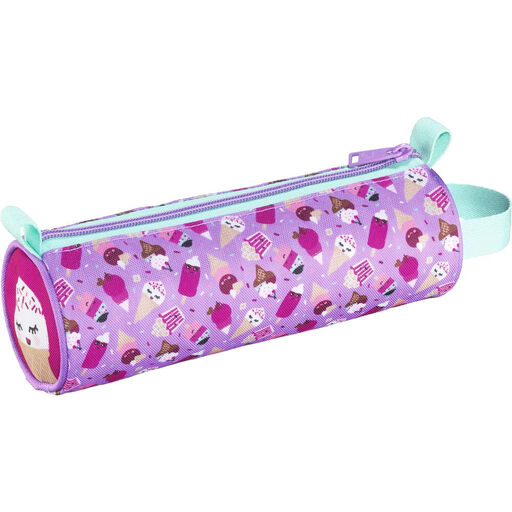
Why this choice suits this profile: Its cylindrical shape holds a schoolchild's essential stationery, while its pink design featuring ice creams and popcorn adds a playful touch.
The stated 22.5 x 7.5 cm size makes it possible to assess how much space it will take up before buying, while the zipped closure prevents the contents from spilling out.
Polyester, metal puller and wipe-clean with a damp cloth.
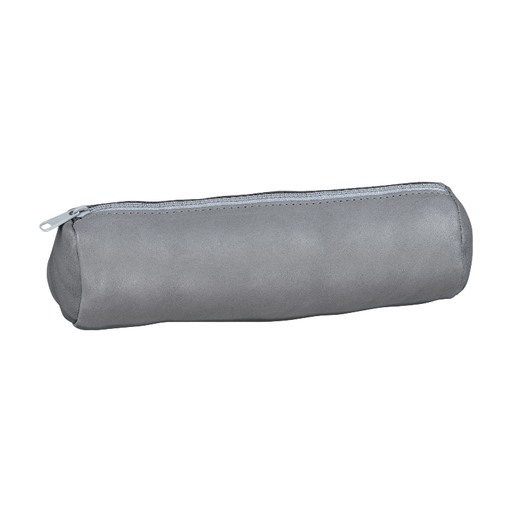
Why this choice suits this profile: Its full-grain sheepskin leather and understated style work equally well for everyday use at secondary school, in the office or while travelling.
The stated capacity of around 15 pens and a double ruler reduces the risk of choosing a pouch that is too narrow.
22 x 6 x 4 cm size, internal identification label and zipped closure.
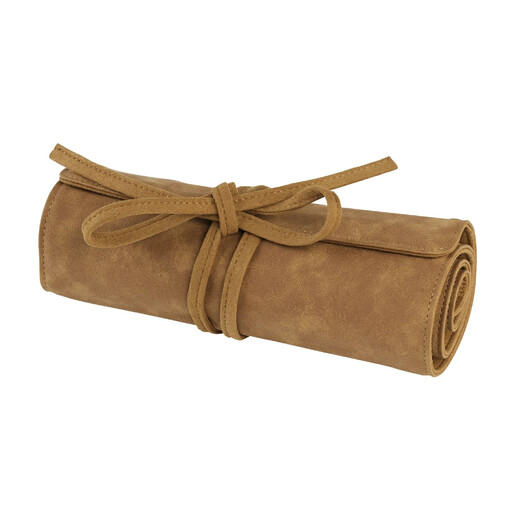
Why this choice suits this profile: This roll-up artist's pencil case is designed for illustrators, graphic arts students and anyone who carries tools of different sizes.
The adjustable slots prevent brushes, pencils and markers from being mixed together in a single compartment.
Roll-up storage, elasticated or adjustable fastenings and compact transport in a bag or suitcase.
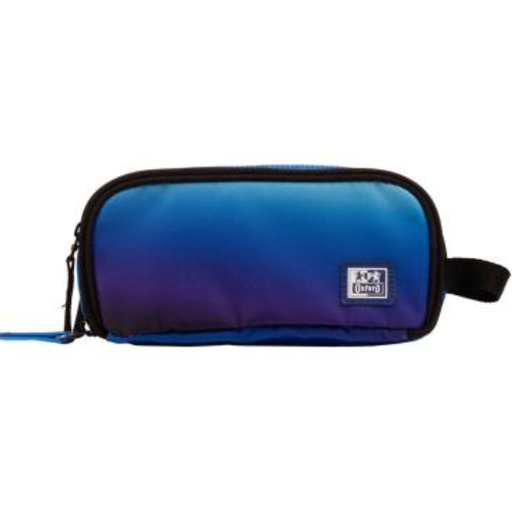
Why this choice suits this profile: Its three compartments are ideal for secondary school pupils, sixth-form students, university students and professionals who juggle numerous stationery items and small accessories.
The three zipped sections, five-slot pen holder and mesh pocket help prevent stationery from getting mixed together.
22 x 10 x 8 cm dimensions, integrated handle and rear elasticated band for attaching it to a notebook or ring binder.
We've put together a complete, real-time updated list of products that fully meet these strict selection criteria and European safety regulations.
A 21 to 22.5 cm format is generally suitable for everyday pens and pencils. To carry a ruler, felt-tip pens or a large number of pencils, also check the pencil case's width and depth, not just its length.
A hard shell can help prevent items from being crushed in a bag, but it is less flexible and sometimes more cumbersome. It is particularly suitable for users who carry fragile stationery or want enhanced external protection.
Avoid filling it beyond its capacity, regularly remove debris that builds up around the zip and clean the outside with a damp cloth when permitted by the manufacturer. For leather, use a soft cloth and limit exposure to water, heat and direct sunlight.