
Livraison le jour même ou le lendemain

Qualité garantie

Débloquez vos offres de bienvenue: Livraison GRATUITE | Jusqu'à -80 % | 30 jours d'essai gratuits à JoyPlus
Téléchargez l'application
A pencil sharpener might seem straightforward. Yet the wrong model can snap leads, jam pencils in the opening or scatter shavings all over your pencil case. To avoid wasting your money, first check compatibility with your pencils and the level of safety on offer.
Not all pencils have the same diameter. Standard graphite pencils are usually between 6 and 8 mm, while some coloured pencils, triangular models or children's pencils are thicker. A standard sharpener may then not work with a jumbo pencil.
So check the accepted diameter before ordering. For extra-large pencils, look for an opening designed for jumbo sizes or a dual-hole pencil sharpener offering two different diameters.
An electric pencil sharpener lets you quickly prepare several pencils, but it needs a suitable power supply and regular maintenance. Battery-powered models are easier to move around, whereas a device with a mains adapter is better suited to an office, classroom or workshop.
Also check the usage limits. Some devices accept graphite, coloured or charcoal pencils from 6 to 12 mm, but are not suitable for wax pencils or chalk.
A sharpener without a tray is compact, but you'll need to find a bin after every use. For school, drawing or on the go, a pencil sharpener with a shavings tray stops you finding shavings at the bottom of your pencil case or on your desk.
For a child, also check for a lid, a safety screw or a mechanism that limits access to the blade. A blade is still sharp, even when protected. For young children, adult supervision is still recommended, especially with electric models.
The manual pencil sharpener remains lightweight, quiet and easy to carry. It is perfect for a student, a pencil case or occasional use. For frequent use, go for a stable body, a good grip and a transparent shavings tray.
The electric model reduces effort during repeated sharpening sessions. Check the type of power supply, the battery life or stated running time, the tray capacity and whether there is an auto-stop feature. A rechargeable or battery-powered device is handy to carry, but batteries need replacing and are not always included.
Shavings can build up around the blade and hinder rotation. Empty the tray regularly and clean the mechanism with a brush or dry cloth. Never immerse a pencil sharpener in water.
Some models have a replaceable blade unit. This option can extend the life of the body, provided you follow the manufacturer's instructions and handle the blade with care.

Why this choice suits this profile: This pack is ideal for families who want to equip several pencil cases or keep one at home, at school and in the office.
The two openings accept different diameters and the transparent shavings tray stops shavings spilling into your pencil case.
Three pieces, two diameters, shavings compartment and compact size.
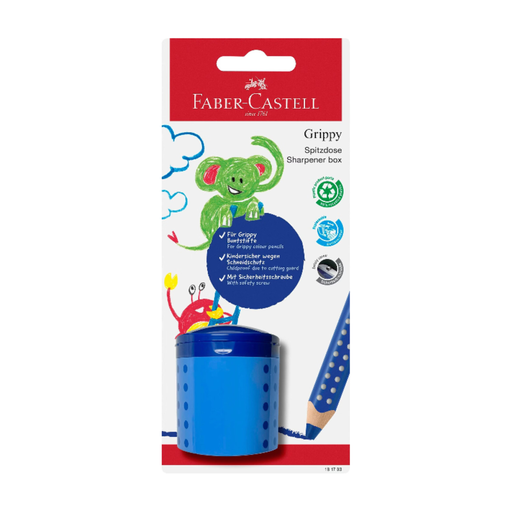
Why this choice suits this profile: Its design works well with thick coloured pencils and young users, at home and in the classroom.
The click mechanism, cutting guard and safety screw limit accidental access to the blade, without removing the need for adult supervision.
Large shavings tray, interchangeable sharpening unit and compatibility with extra-thick pencils.

Why this choice suits this profile: It is aimed at users who want multiple point settings and regular use in the office or a workshop.
The specification states compatibility from 6 to 12 mm and excludes wax pencils, which avoids nasty surprises with sizing.
Three point shapes, auto-stop, metal helical blade and large-capacity shavings tray.
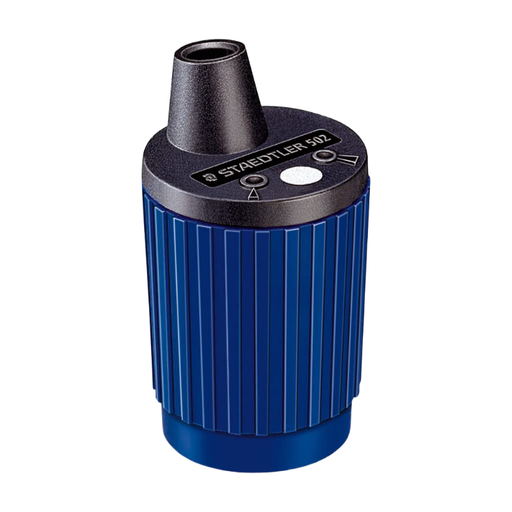
Why this choice suits this profile: This compact design meets the needs of architects, draughtsmen, students and users of 2 mm lead holders.
Its opening is specifically designed for 2 mm leads – a standard sharpener is not suitable for all writing instruments.
Pocket-sized, metal blade and sharpening suited to technical drawing and fine detail work.
We have put together a comprehensive list, updated in real time, of products that meet these demanding selection criteria and European safety regulations.
For a school pencil case, a manual model with a shavings tray is usually practical, quiet and easy to carry. A dual-hole design offers more flexibility if your child uses both standard pencils and thicker coloured pencils. In the office, an electric model can be useful when several pencils need sharpening regularly.
Start by checking that the pencil diameter matches the opening. Insert it without forcing and turn it steadily if it is a manual model. A dirty or blunt blade can also apply uneven pressure. With an electric device, follow the stated usage time and empty the shavings tray to prevent build-up.
The cost mainly depends on the power supply. A mains-powered model does not need batteries, whereas a battery-operated sharpener usually runs on four AA batteries, often sold separately. You also need to factor in possible blade replacement and cleaning the shavings tray. For occasional use, the manual model remains the simplest and least demanding option to maintain.