
Livraison le jour même ou le lendemain

Qualité garantie

Débloquez vos offres de bienvenue: Livraison GRATUITE | Jusqu'à -80 % | 30 jours d'essai gratuits à JoyPlus
Téléchargez l'application
Choosing a pencil sharpener for coloured pencils depends on the pencil’s diameter, the hardness of its core and how often you use it. A model designed for standard school pencils may not be suitable for jumbo, watercolour or technical drawing pencils.
To avoid disappointment, pay particular attention to compatibility, shavings management and safety. Here are the key points to check before choosing a manual or electric pencil sharpener.
Many coloured pencils have a thicker barrel than standard graphite pencils. Some models, such as STABILO Woody coloured pencils or pencils for young children, can reach around 10 mm in diameter.
A standard pencil sharpener may not accept them, or may produce an uneven point. A dual-hole model will usually cover two sizes, but always check the dimensions specified by the manufacturer.
Without a container, shavings end up directly on your desk, in your pencil case or on the classroom table. A pencil sharpener with a container avoids this inconvenience, but capacity varies considerably between models.
For everyday use, choose a transparent or easy-to-remove compartment. This allows you to monitor how full it is and prevent shavings from blocking the blade.
An electric pencil sharpener allows you to sharpen several pencils quickly, but you need to check the power supply and compatibility with the cores being used. The tenwin models featured here accept pencils from 6 to 12 mm, but their product information specifies that they are not suitable for wax pencils or oil pastels.
Before placing your order, identify the type of pencil you use. A soft core or a very flexible barrel may require moderate pressure and a suitable blade.
Diameter is the first technical criterion to consider. Several categories can be distinguished:
A pencil sharpener for thick pencils should not be confused with a simple dual-hole model. Always check the supported diameter range.
Manual models generally use a metal blade secured in a plastic casing. The stability of the pencil and the rigidity of its barrel directly affect how even the point will be.
For drawing and colouring, a point that is too fine can weaken a coloured core. Some electric pencil sharpeners offer several settings, producing a fine, medium or shorter point. This is useful when switching from writing to colouring and then to blending.
For a children’s pencil sharpener or school use, look for:
These features reduce risks, but do not replace adult supervision with young children. Blades must be kept out of the reach of children under 3 years of age.

Why this choice suits this profile : This pack is ideal for families, pupils and offices that want several compact pencil sharpeners available in different places.
The two openings are suitable for standard pencils and some wider models. The transparent container stops shavings from being scattered everywhere.
Three units, two diameters, metal blades and integrated containers.
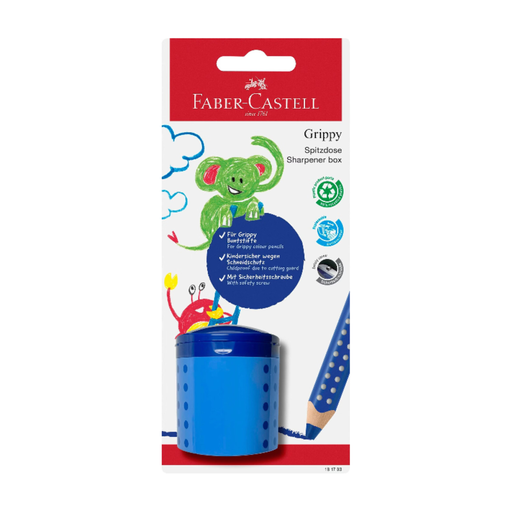
Why this choice suits this profile : It is designed for users of jumbo pencils who want an enclosed casing and a mechanism suitable for small hands.
The click mechanism only activates the blade when the thick pencil is positioned correctly. The large container means you do not have to empty it so often.
Compatible with extra-thick pencils, it features a large container and an interchangeable sharpening unit.
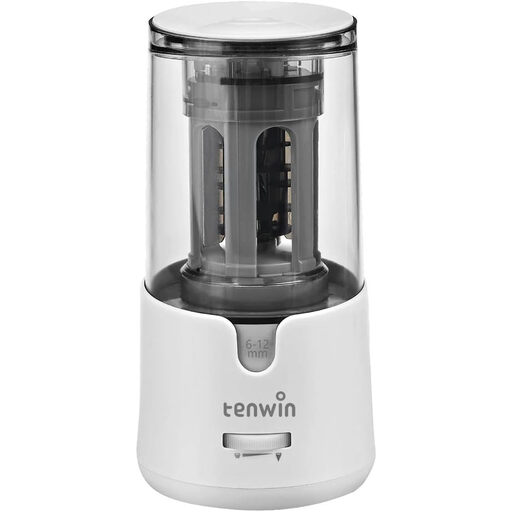
Why this choice suits this profile : This model is suitable for classrooms, workshops, offices and studios where several pencils need to be sharpened regularly.
The stated 6 to 12 mm range prevents you from choosing a device limited to standard pencils. Automatic shut-off activates at the end of the cycle or in the event of overheating.
Mains power, large-capacity container, three point shapes and a stated cycle time of 3 to 5 seconds.
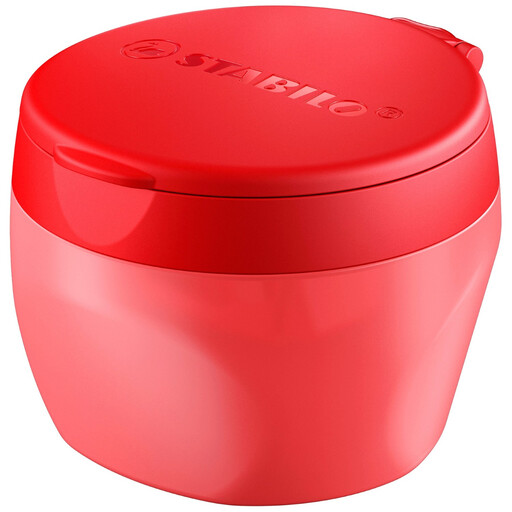
Why this choice suits this profile : It is designed for STABILO Woody 3 in 1 pencils and other extra-large-core pencils measuring around 10 mm.
Its opening is designed for very large diameters, so you do not have to force a jumbo pencil into a standard opening.
Large transparent container, cover and replaceable blade module.
We have put together a comprehensive selection, updated in real time, of products that meet these demanding criteria and European safety standards.
The manual pencil sharpener remains easy to carry, quiet and independent of any power source. It fits naturally in a pencil case, making it ideal for homework or short colouring sessions.
An electric model is more convenient in a workshop, classroom or office where many pencils need to be sharpened. A mains-powered device avoids having to replace batteries, while a battery-powered model offers greater freedom of movement. The battery-powered tenwin versions use four AA batteries, which are not included according to the product information.
Before buying, compare the cost of consumables, how easy it is to clean the container and the availability of replacement blades or modules. For 2 mm technical pencils, choose a dedicated pencil sharpener rather than a model designed for coloured pencils.
Choose a model that clearly states its compatibility with jumbo pencils or supports a diameter range of up to 10 or 12 mm. STABILO Woody and Faber-Castell Grippy pencils generally require a dedicated accessory or an extra-wide opening.
Its lifespan depends on how often it is used, the hardness of the pencils and how well it is maintained. Empty the container regularly, remove residue with a dry brush and avoid forcing in an oversized pencil. Some models feature a replaceable blade or module.
Its running costs include electricity or batteries, as well as possible blade replacement. If you only sharpen a few pencils each week, a manual model is often the simplest option. For intensive use, however, its speed and container capacity may offset the cost of consumables.