
Livraison le jour même ou le lendemain

Qualité garantie

Débloquez vos offres de bienvenue: Livraison GRATUITE | Jusqu'à -80 % | 30 jours d'essai gratuits à JoyPlus
Téléchargez l'application
A good pencil deserves a perfect point. Yet, finding the right pencil sharpener often feels like an uphill battle. Between leads that break, shavings that invade your desk, and models that give up the ghost after a few weeks, frustration is never far away. This seemingly simple accessory hides subtleties that determine its effectiveness and longevity.
To avoid buyer's remorse, let's review the common pitfalls that lead straight to disappointment. Once you've identified these issues, you'll be much better equipped to choose a reliable tool that's truly suited to your needs, whether for back-to-school, the office, or your creative projects.
To avoid these disappointments, a few technical specifications are all you need to separate the good from the bad. These are the true indicators of a pencil sharpener's quality and suitability for your use.
The heart of a pencil sharpener is its blade. There are two main types:
Not all pencils are the same size. A standard graphite pencil (like an HB) is about 7-8 mm in diameter. However, ergonomic pencils for children or certain art pencils can be as large as 10-12 mm.
The choice of power source depends on where and how often you'll use it.
Every user has different expectations. Here are a few recommended options, chosen for their ability to meet specific needs while avoiding common pitfalls.

WHY IT'S A GREAT CHOICE: Ideal for heavy use in a studio or office, this device offers precision, speed, and versatility. It perfectly meets the demands of creatives who want a flawless, consistent point without wasting time.
Its robust helical blade puts an end to premature wear and broken leads. Its wide compatibility (6-12 mm pencils) eliminates the risk of a mismatch with different-sized art pencils.
Three point settings (sharp, medium, blunt) to adapt to different uses (detail drawing, sketching). Auto-stop function for a perfect and safe sharpening every time.
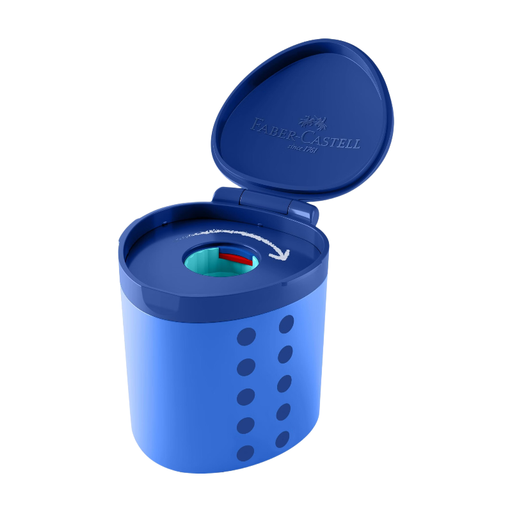
WHY IT'S A GREAT CHOICE: Designed for children's hands, this sharpener emphasizes safety and cleanliness. It's the smart choice for parents preparing back-to-school supplies and looking for a reliable, hazard-free tool.
It avoids the false-safety trap with its patented anti-cut mechanism and safety screw. The blade is only accessible when a pencil is correctly inserted, minimizing risks for little hands.
Specially designed for large-diameter ("Jumbo") pencils. Its large shavings reservoir keeps the pencil case and desk clean. The sharpening unit is interchangeable for a longer lifespan.
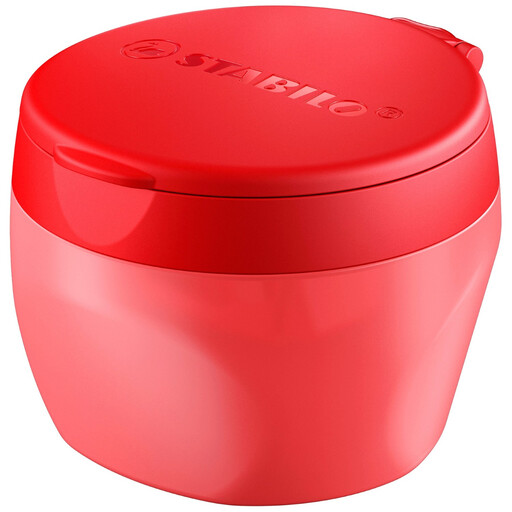
WHY IT'S A GREAT CHOICE: Users of the famous STABILO woody 3-in-1 pencils need a tool adapted to their extra-large 10 mm lead. This sharpener is the essential accessory for maintaining these unique pencils without damaging them.
It brilliantly sidesteps the incompatibility trap. Trying to sharpen a Woody pencil with a standard sharpener damages both the lead and the wood. This model is specifically calibrated for this format.
Ergonomic design that's easy for both children and adults to grip. The blade module is replaceable, which extends its lifespan.
Explore our full selection of products that meet our criteria for quality and reliability.
To maintain the effectiveness of your electric pencil sharpener, regular maintenance is essential. Before handling, unplug the device. Empty the shavings reservoir. Use a small dry brush (often included) or a paintbrush to gently remove graphite and wood residue accumulated around the helical blade. Avoid any contact with water or liquid cleaning products.
This is a valid concern, as coloured pencil leads are often softer or waxier. To minimize risks, choose an electric pencil sharpener with a helical blade, which is gentler than a straight blade. Models with point adjustment are also an excellent choice, as they allow you to select a less sharp and therefore less fragile point. Our advice: apply only light pressure and let the machine do the work.
The difference lies in the cutting mechanism. A straight blade, found on most small manual sharpeners, works like a plane: it removes material from only one side at a time. A helical blade rotates around the pencil, sharpening its entire circumference simultaneously. This process is more consistent, creates a more symmetrical conical point, and significantly reduces the stress on the lead, which drastically limits breakage.