
Livraison le jour même ou le lendemain

Qualité garantie

Débloquez vos offres de bienvenue: Livraison GRATUITE | Jusqu'à -80 % | 30 jours d'essai gratuits à JoyPlus
Téléchargez l'application
A pencil case often stays with its owner for several months, or even several years. Yet choosing one based solely on colour or price can quickly lead to frustration: a zip that sticks, a format that is too narrow, fabric that is difficult to clean or compartments that are never used.
Before buying a pencil case or pen case, it is therefore worth considering a few practical features. Here are the main criteria to examine, along with a selection suitable for pupils, students, artists and professionals.
A pencil case may look spacious in a photo, then turn out to be surprisingly narrow once filled. Thick pens, markers, rubbers and rulers can quickly take up all the available space. For everyday school use, a model measuring 22 to 22.5 cm in length will generally accommodate standard pens and pencils. However, a compact pencil case may not be suitable if you carry lots of stationery.
A 3-compartment pencil case makes it easier to organise your supplies, but it also takes up more room in a bag. It is useful for separating different categories of accessories, such as pens, coloured pencils, highlighters or small stationery items. For a few essential tools, a single-compartment pencil case will be lighter and quicker to use.
Polyester, faux leather and leather require different types of care. Some models can only be cleaned with a damp cloth and must not be immersed in water or machine washed. A metal zip may be sturdy, but it should be kept away from sharp objects and must not be forced when the pencil case is too full.
Measure the space available in your schoolbag, rucksack or briefcase before ordering. Dimensions are often more informative than descriptions such as “large format” or “multi-purpose”.
Also consider the stated capacity with a little caution. Some models claim to hold up to 35 pencils or around 20 pens, but this estimate depends on the shape of the instruments and whether you also need to carry a ruler.
Polyester is widely used for school products: it is lightweight and can generally be cleaned with a damp cloth. Dyed or full-grain leather offers a different feel and can be suitable for the office as well as everyday use, but it requires more care: use a dry or barely damp cloth, very little water and store it away from direct sunlight.
For a leather pencil case, check in particular:
For a purchase intended for a child, check the recommended age and warnings concerning small parts, particularly zip pulls or cords. The information supplied by the manufacturer and, where necessary, by the responsible person in the European Union should be accessible from the product page.
These precautions do not replace common sense: a pencil case should not be overfilled, placed near a flame or used as a toy by a child under 3 years old when it contains small parts.
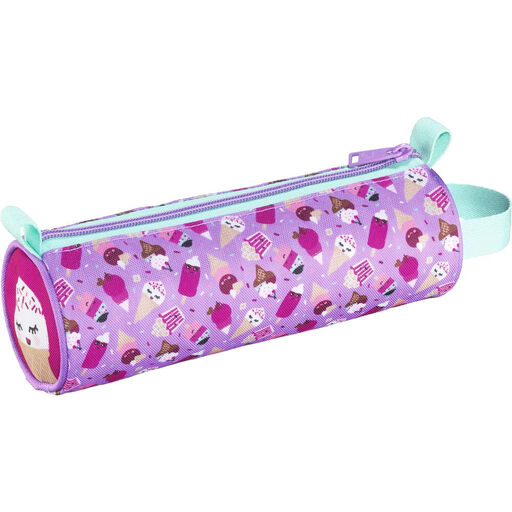
Why this choice suits this profile : Measuring 22.5 x 7.5 cm, this pencil case can hold everyday stationery. Its polyester fabric is designed for daily school use, while its colourful pattern lets children add a personal touch to their schoolbag.
The dimensions are clearly stated, and the single compartment means you do not pay for a more complex organisation system than you need.
Polyester, carry handle, metal zip pull and cleaning with a damp cloth.
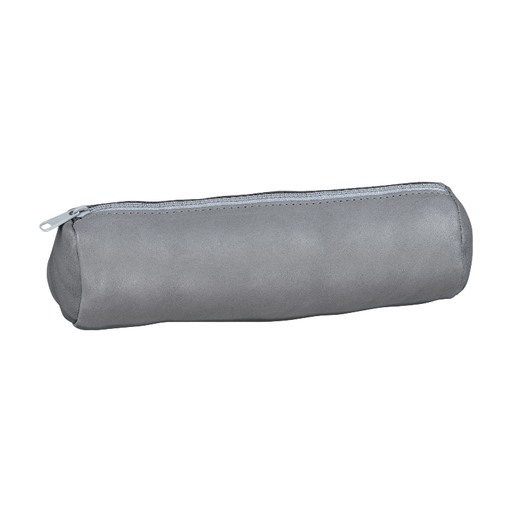
Why this choice suits this profile : This pencil case is made from dyed full-grain sheepskin leather and has a discreet format suitable for the office, studying or travelling. Depending on the thickness of the instruments, it can hold around fifteen pens and a double ruler.
The product description specifies the material, format and approximate capacity. This makes it easier to check whether it matches your stationery.
Full-grain leather, zip fastening and an inner label for identifying the pencil case if it is lost.
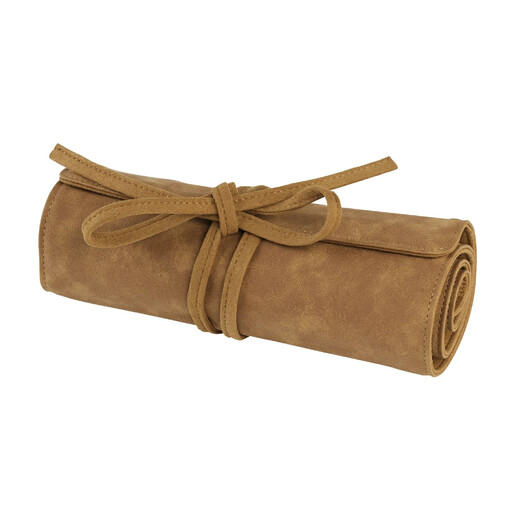
Why this choice suits this profile : This artist’s pencil case rolls up and features adjustable slots for pencils, brushes, felt-tip pens and drawing tools. It is designed for artists on the move, graphic arts students and anyone who carries a lot of equipment.
The dedicated slots keep tools separate and reduce friction between instruments during transport.
Adjustable compartments, integrated fastening, roll-up format and cleaning with a damp cloth.
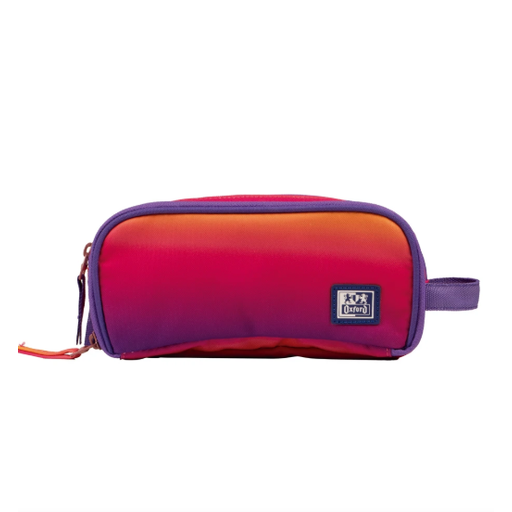
Why this choice suits this profile : Its three zipped compartments let you separate pens, pencils, rubbers and markers. Measuring 220 x 100 x 80 mm, it is still easy to slip into a school or work bag.
The separate compartments make organisation clearer and mean you do not have to empty the entire pencil case to find an accessory.
Three zipped compartments, polyester fabric, easy-to-carry format and exterior cleaning with a damp cloth.
We have put together a complete, real-time updated list of products that meet these demanding selection criteria and European safety regulations.
To keep your pencil case functional for as long as possible, avoid mixing sharp objects with delicate fabrics. Place the heaviest instruments at the bottom and leave a little room before closing the zip. A storage case can also be used to sort stationery accessories by purpose: writing, drawing, correcting or geometry.
At your desk, an open desk organiser can complement your pencil case and keep the pens you use every day close at hand. When travelling, choose a model whose format matches your bag precisely. If you only carry a few instruments, a compact pencil case will often be more practical.
Clean the exterior with the product recommended by the manufacturer, then allow it to dry completely before storing your stationery. Avoid machine washing when the product description advises against it. For leather, limit exposure to moisture and direct heat.
For standard pens and pencils, a length of between 21 and 22.5 cm will generally be suitable. If you need to add a ruler, felt-tip pens or a large number of pencils, also check the width and depth. Always compare the stated dimensions with those of your bag.
It is a good choice if you want to separate different categories of school stationery. However, it may be bulkier and heavier than a simple pencil case. For a limited selection of equipment, a single compartment will generally be enough.
Avoid overfilling it, do not force the fastening and regularly remove pencil shavings or debris. Clean it according to the manufacturer’s instructions and store it in a dry place. These simple steps help reduce wear to the fabric, lining and fastening mechanism.