
Livraison le jour même ou le lendemain

Qualité garantie

Débloquez vos offres de bienvenue: Livraison GRATUITE | Jusqu'à -80 % | 30 jours d'essai gratuits à JoyPlus
Téléchargez l'application
Whether for the back-to-school season, organising notes at the office, or a creative hobby project, choosing the right pens and highlighters can quickly become a headache. Faced with eye-catching packaging and hundreds of options, it's easy to end up with disappointing products. A pen that dries out in a week, a tip that frays after the first use, or a pastel colour that's nearly invisible on paper… the frustrations are many and all too common.
Before you fill your basket, here's a quick look at the common pitfalls that can hurt your experience and your budget.
To avoid these disappointments, you just need to focus on a few technical criteria that make all the difference between a good and a bad product.
Navigating the jungle of pens and highlighters becomes much simpler when you know what to look for. Instead of relying solely on packaging or the number of colours, three technical parameters truly make all the difference.
The shape of the tip determines the pen's primary use. Choosing the right one is the first step towards achieving results that meet your expectations.
The ink is the core of the product. Its composition influences not only the colour but also its durability and how it reacts with paper.
Finally, the packaging should suit your habits.
To help you see more clearly, we've selected products that tick all the boxes for three distinct user profiles.
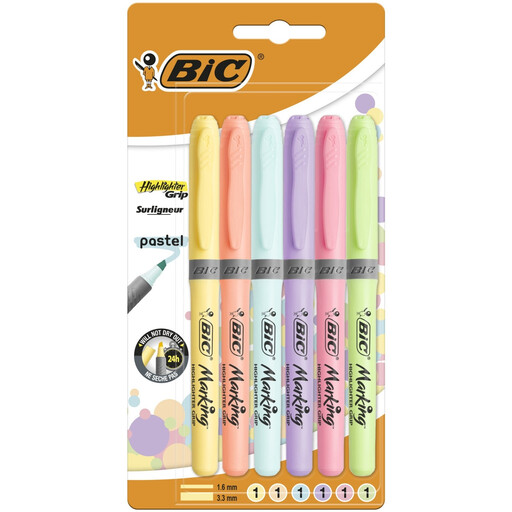
Why it's the right choice: Ideal for long study sessions, this set combines a rubber grip for optimal comfort and eye-friendly pastel colours. The flexible chisel tip allows for both broad highlighting and fine underlining.
BIC's anti-dry-out technology, which promises up to 24 hours uncapped (according to the manufacturer), is the perfect answer to the nightmare of a pen drying out after a moment of forgetfulness.
The rubber grip offers superior control and comfort, reducing hand fatigue during highlighting marathons.
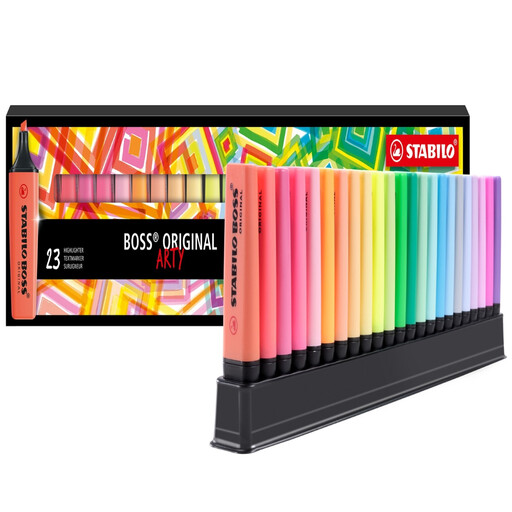
Why it's the right choice: This set is the all-in-one solution for colour-coding, lettering, and decorating. With 23 colours (neon, pastel, and nature), it offers a rich palette for personalising a bullet journal or study notes.
No more disappointing colours! This set offers a range that is as extensive as it is proven. The quality of the Stabilo chisel tip, a benchmark in itself, prevents premature wear even with intensive creative use.
The versatility of the tip (2 and 5 mm lines) and the diversity of the 23 colours make it an all-in-one tool for highlighting, drawing, and decorating.
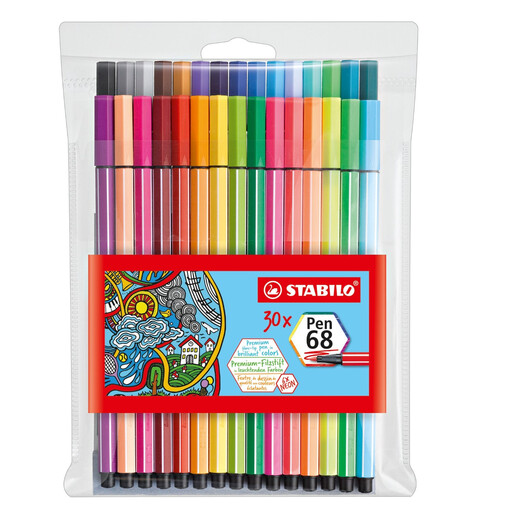
Why it's the right choice: With its robust 1 mm bullet tip and water-based ink, this set is tailor-made for drawing and colouring. The 30 vibrant colours allow you to create uniform blocks of colour and even watercolour effects by blending them with a little water.
The bullet tip is designed to withstand pressure, which prevents the 'crushed tip' syndrome so common with low-end pens. The pigment-rich ink guarantees an intense and luminous result.
The tip's durability and the water-soluble ink offer creative versatility that goes far beyond simple colouring.
We have compiled a complete selection of products that meet our quality criteria and current safety standards.
The golden rule: always replace the cap securely after use until you hear the safety "click". For long-term storage, keep them horizontal so the ink is evenly distributed in the reservoir. Finally, if you're the forgetful type, opt for models with anti-dry-out technology, checking the duration promised by the manufacturer.
It's all about the visual effect and comfort. Neon (or fluorescent) colours are ultra-bright and immediately catch the eye, perfect for isolating a crucial piece of information. Pastel highlighters, with their softer shades, are easier on the eyes when re-reading long documents. They are also very trendy for the aesthetic touch they bring to notebooks and planners.
A fine-liner pen (e.g., a 0.4?mm tip) is primarily designed for details, outlines, and writing. Trying to colour large areas with one would not only be tedious but could also damage the paper and wear out the tip prematurely. For colouring, it's better to turn to bullet tip pens (like the Stabilo Pen 68) or brush tip pens, which are much better suited for covering large areas.