
Livraison le jour même ou le lendemain

Qualité garantie

Débloquez vos offres de bienvenue: Livraison GRATUITE | Jusqu'à -80 % | 30 jours d'essai gratuits à JoyPlus
Téléchargez l'application
Peel-and-stick wallpaper promises to transform your interior quickly and cost-effectively. Whether you're creating an accent wall, modernising a kitchen, or personalising a child's room, the ease of "peel and stick" is undeniably appealing. But behind this apparent simplicity, major disappointments can sometimes lurk. As a Product Specialist at Joybuy, I'm here to help you navigate the options and make an informed choice that goes far beyond marketing claims.
Before you get started, it's best to be aware of the most common issues that can turn your wall decor project into a real headache.
To avoid these setbacks, a few objective technical specifications should be scrutinised. These are the true guarantees of a product's suitability for your project.
The material directly impacts the durability, maintenance, and final appearance of your adhesive wall covering.
The word "peel-and-stick" shouldn't make you forget about surface preparation, which remains a crucial step. For lasting adhesion, the surface must be smooth, clean, dry, and non-porous. Dust, grease, or bumps are the sworn enemies of a good bond. This is especially true for an adhesive furniture makeover project, where the slightest surface imperfection will be noticeable. Our advice: always test on a small, inconspicuous area first.
Always check the roll's length and width. For a full wall, measure your surface area and add a margin of about 10% for cuts and potential mistakes. If your wallpaper has a pattern, the "pattern repeat" (the vertical distance required for the pattern to repeat) is crucial information. A drop match or straight match requires more precision and can lead to more waste. For large projects, it is imperative to order all your rolls at once to avoid differences in dye lots (colour variations between production batches).
To illustrate these criteria in practice, here are a few products tailored to specific needs.
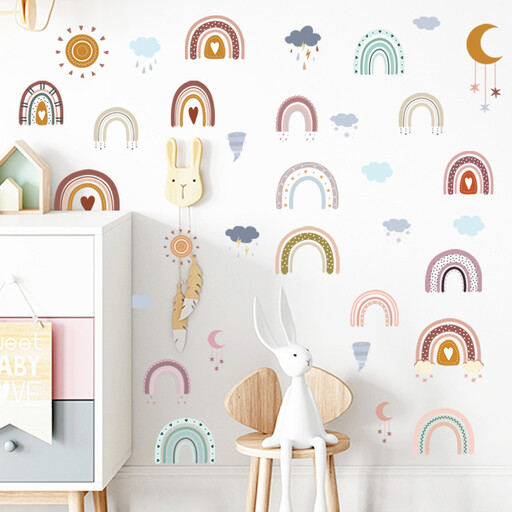
Why it's a great choice : Ideal for renters or for an evolving child's room decor. These wall stickers allow you to personalise a space without committing to a full wall installation. They are designed to be removed without leaving residue, offering maximum flexibility.
As individual wall stickers, the complex problem of aligning patterns over a large area is simply eliminated. Application is intuitive, and the risk of error is minimal.
Allows you to create a decorative focal point quickly and affordably, with the peace of mind of a reversible solution.
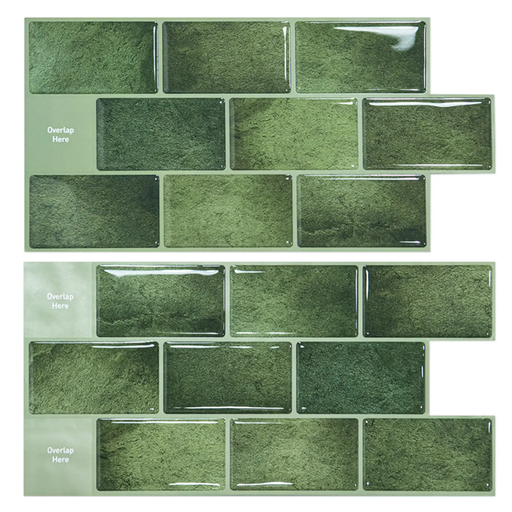
Why it's a great choice : Designed specifically as a peel-and-stick backsplash, this product is a practical solution for modernising a kitchen without major renovations. Its vinyl composition with a 3D epoxy gel layer gives it good water resistance and makes it easy to clean.
The epoxy gel layer creates a genuine relief, thus avoiding the pitfall of a flat, disappointing visual effect. The finish convincingly mimics the texture of real tile.
The large tile panels (30x30 cm) allow for faster coverage and reduce the number of seams, resulting in a more seamless and professional finish.
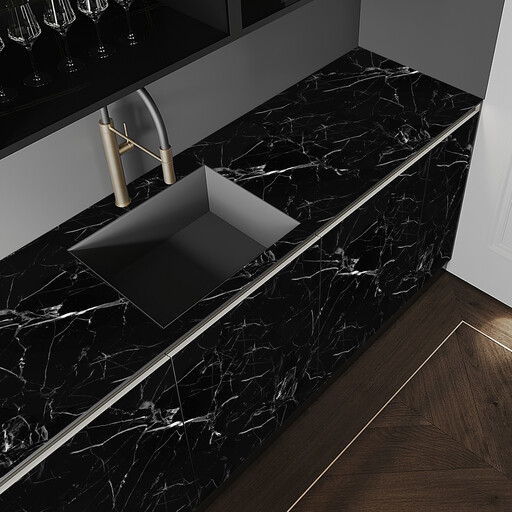
Why it's a great choice : For those seeking a strong visual impact, this marble effect wallpaper adds a sophisticated touch. It's perfect for creating an accent wall in a living room or a unique headboard, without the cost and complexity of real stone.
The generous roll length (5.08 m) is a major asset. It minimises the number of seams needed on a large wall, which is essential for maintaining the continuity and realism of the marble veining.
Made from premium PVC, it offers a durable and easy-to-clean surface, ensuring a spectacular finish that lasts.
We have curated a full range of products that meet our strict selection criteria and current standards.
Yes, but under certain conditions. Opt for a model explicitly designed to be moisture-resistant, typically made of PVC. It can be installed on walls that are not in direct, constant contact with water (so-called "dry zones"). Absolutely avoid the inside of a shower enclosure or the immediate surroundings of a bathtub, where standing water and intense steam will eventually compromise the adhesive.
For a clean removal, especially if you are a renter, patience is your best friend. Gently heat the wallpaper's surface with a hairdryer on a low setting. The heat will soften the adhesive, allowing you to peel the paper away by pulling gently at a 45-degree angle. Work in small sections to avoid pulling too hard on the underlying paint.
The basic rule is to calculate the total surface area of your walls (height x width) and subtract the area of doors and windows. Then, add a safety margin of 10% to 15%. This margin is essential to account for cuts, installation errors, and, most importantly, to ensure pattern repeats align correctly. It's always better to have a little extra wallpaper than to have to reorder and risk getting a different dye lot (colour variation).