
Livraison le jour même ou le lendemain

Qualité garantie

Débloquez vos offres de bienvenue: Livraison GRATUITE | Jusqu'à -80 % | 30 jours d'essai gratuits à JoyPlus
Téléchargez l'application
The promise of peel-and-stick wallpaper? A quick and hassle-free way to transform your interior. Ideal for creating an accent wall, modernising a kitchen, or upcycling old furniture, its ease of application is a key selling point. But be warned: behind this appealing promise lie traps that can turn your DIY project into a total nightmare. To avoid falling into them, here are the key points to check before you buy.
Three disappointments consistently appear in user reviews:
Knowing these pitfalls is one thing. Knowing how to outsmart them is even better. And it all starts with choosing the right product based on specific technical criteria.
To avoid any disappointment, rely less on marketing photos and more on these essential technical specifications.
The choice of material is crucial for the durability, maintenance, and final appearance of your adhesive wallpaper.
A self-adhesive wallpaper is unforgiving of poorly prepared surfaces. For rock-solid adhesion, the substrate (wall or furniture) must be:
For patterned wallpapers (geometric, floral, wood-effect wallpaper), the pattern repeat is a crucial point. This refers to the distance at which the pattern repeats. A drop match or straight match requires great precision during installation to ensure the panels align. Pro tip: always order 10% extra wallpaper to account for waste from cuts and pattern matching. With a concrete-effect wallpaper or a solid-colour model, this headache disappears, making it a much simpler option for getting started with easy wall decor.
To put theory into practice, here are a few products that tick the right boxes for specific projects.
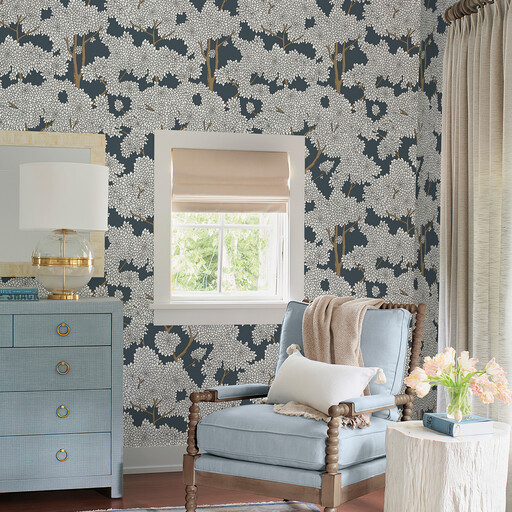
Why we love it: Perfect for personalising a space without a long-term commitment. Its repositionable nature and format are ideal for an accent wall, a headboard, or the inside of a bookshelf, with minimal risk to well-painted walls.
Made from PVC vinyl, it offers better long-term durability than standard paper, while being designed for clean removal from a smooth, prepared surface. This is enough to reassure even the most anxious renters.
Its wipeable surface makes it practical for daily life. The grid on the backing paper helps ensure straight cuts and prevents crooked lines.
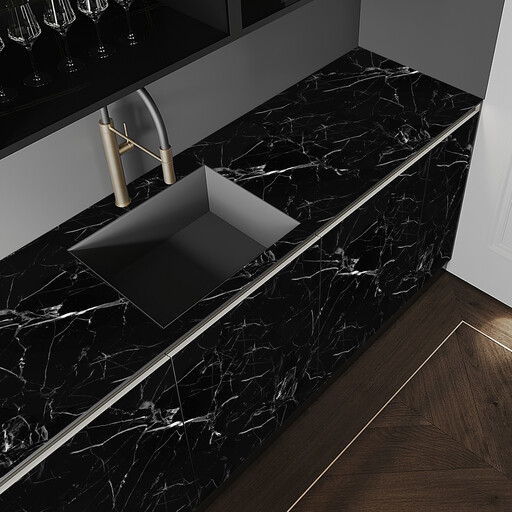
Why we love it: Perfect for giving a new lease of life to cabinet doors, a secondary worktop, or a coffee table. Its 60 cm width is well-suited to standard furniture dimensions, and its marble effect adds a touch of character.
This one avoids the "cheap plastic" trap thanks to a high-quality print on premium PVC. Its durable, washable surface is designed to withstand the stresses of furniture use (scuffs, cleaning) far better than a simple sticker.
At over 5 metres, the roll is generous: enough to cover several items in one go and ensure pattern continuity, avoiding unsightly seams on a single surface.

Why we love it: For those who want to create a strong focal point in a room (behind a sofa, as a headboard) with a textured effect. The vertical slat pattern adds structure and an illusion of height without the complex installation of real wood slats.
It sidesteps the complex installation trap. A vertical slat pattern is easier to align than a floral one. The long, wide roll minimises the number of seams, thus reducing the risk of mistakes and bubbles on a large wall.
The visual finish creates a beautiful illusion of depth. The warm wood tone establishes a much more inviting atmosphere than plain paint and turns a bland wall into a true decorative feature.
Explore our full selection of editor-approved products that meet our quality criteria and current standards.
1. Does peel-and-stick wallpaper damage walls? This is THE question that every renter dreads. The answer is... it depends. Three factors come into play: the quality of the wallpaper, the condition of the wall, and the removal method. On a high-quality, smooth, non-flaking paint job, a quality vinyl wallpaper can usually be removed without a trace, especially if you gently heat it with a hairdryer to soften the adhesive. On a fragile wall or with low-grade paint, the risk of pulling off paint chips during removal is very real. Our advice: always test it on an inconspicuous area before you commit.
2. Can you install adhesive wall coverings in a bathroom? Yes, but under certain conditions. You must choose a PVC vinyl model specifically designed for humid rooms. Avoid direct water splash zones (inside a shower, around the bathtub). Ensure the room has effective ventilation to limit condensation, which could eventually cause the edges to peel over time.
3. How do you avoid air bubbles during installation? The secret? Method and patience. Don't remove the entire backing paper at once. Peel back only the first 10-15 centimetres (4-6 inches), position the top of the panel, then smooth it from the centre outwards with a plastic squeegee or a soft cloth. Then, progressively unroll the backing paper while continuing to smooth. If a stubborn bubble persists, discreetly prick it with a fine needle to release the trapped air.