
Livraison le jour même ou le lendemain

Qualité garantie

Débloquez vos offres de bienvenue: Livraison GRATUITE | Jusqu'à -80 % | 30 jours d'essai gratuits à JoyPlus
Téléchargez l'application
Changing the mood of a room without taking on major renovation work is especially appealing to tenants, DIY wall décor enthusiasts, and families setting up a child’s bedroom. But a repositionable peel-and-stick wallpaper isn’t necessarily suitable for every wall or every project.
Before buying a self-adhesive wallpaper or a removable wall covering, there are three pitfalls to avoid:
A self-adhesive wallpaper is generally applied to a smooth, flat, clean and dry surface. Textured walls, dusty surfaces and fragile paints increase the risk of peeling.
In a rented property, start by testing the product on a small, inconspicuous area. Remove the backing film gradually, without pulling sharply, then check that the paint remains intact. The term removable indicates that the covering can be taken off, but it does not guarantee damage-free removal on all walls and finishes.
Adhesive-free models, such as some textured paper wallpapers, require a suitable paste. They therefore don’t meet the same need as a repositionable peel-and-stick wallpaper, even if they can cover a larger area per roll.
Measure the width and height of the area you want to decorate, then allow extra for cutting, sockets and pattern alignment. Then compare the coverage area per roll, not just its length.
Here are some formats from our selection:
For a panoramic wallpaper or a large feature wall, longer drops can reduce the number of joins. For revamping a piece of furniture, a door or a small alcove, a compact format minimises waste.
PVC vinyl is often appreciated for its easy-to-clean surface and self-adhesive application. It can work on painted walls, interior doors, furniture fronts or protected wooden panels, provided the surface is compatible.
A matt finish paper offers a different look, but generally requires paste and a more traditional installation. Embossed patterns, such as those on a 3D wallpaper, can also accentuate imperfections if the surface isn’t perfectly prepared.
In a bathroom, restrict its use to dry areas, away from direct splashes. These products are designed for indoor use and must be kept away from flames and sources of intense heat.
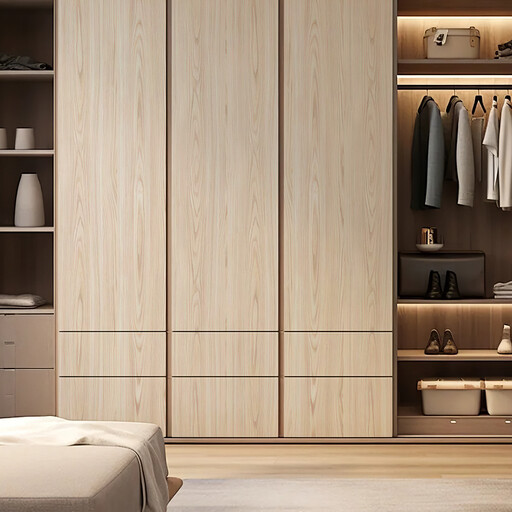
Why this choice suits this profile: Its light honey wood tone works well on a small area, a door or a furniture front. It goes on without paste on a smooth surface.
With approximately 1.83 m² of coverage, this roll lets you start on a small area and avoid unnecessary purchases.
Self-adhesive PVC vinyl, wipe-clean surface and a grid on the backing to make cutting easier.
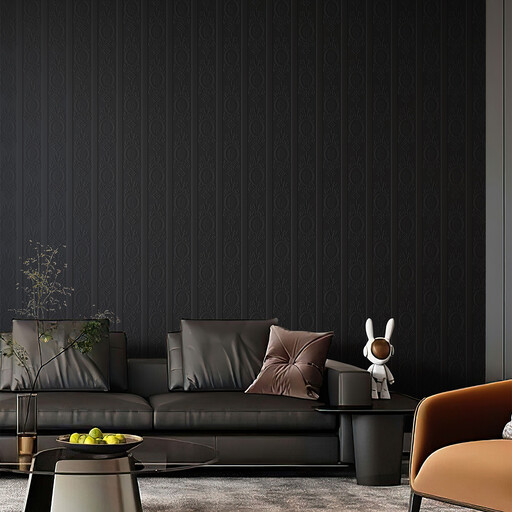
Why this choice suits this profile: Its embossed black damask pattern brings a striking graphic texture to a headboard wall, a TV corner or a bookshelf.
Reserved for a targeted area, it avoids attempting to cover a large wall with a narrow roll and simplifies vertical pattern alignment.
Self-adhesive PVC vinyl, 3D Rococo pattern and wipe-clean with a damp cloth.

Why this choice suits this profile: At 508 cm long, it’s ideal for feature walls in the living room or bedroom, as well as long surfaces in a hallway.
With approximately 3.05 m² of coverage, its length limits the number of joins on a large area, provided you take care with vertical alignment.
PVC vinyl, vertical slat pattern, easy-to-wipe surface and paste-free application.

Why this choice suits this profile: This ocean-themed décor, populated with animals including an elephant, personalises a child’s bedroom or nursery without committing to a permanent renovation.
Presented as a decorative element, it avoids ordering multiple rolls just to create a simple wall accent.
Self-adhesive décor, blue ocean pattern and DIY application described as removable.
Floral designs, such as a dense-pattern wallpaper, instantly add character to a living room or bedroom. Wood-effect finishes are better suited to doors, furniture and feature walls. In a child’s bedroom, always check the manufacturer’s warnings and keep small offcuts or trimmings out of reach of young children.
We’ve put together a complete, real-time updated selection of products that meet these demanding criteria, while also taking European safety regulations into account.
Yes, provided the wall is smooth, dry, clean and sufficiently stable. A matt, porous, friable or freshly painted surface can reduce adhesion. Test on a small area before covering the entire surface.
Its lifespan depends on the quality of the surface, humidity, temperature and how often it’s handled. Careful installation on a compatible surface promotes better durability. Check the product’s specifications for its precise usage conditions rather than relying on a general timeframe.
It can reduce costs for paste, tools and labour, especially for a small area or a piece of furniture. However, the calculation should take into account the number of rolls needed, waste and any trial runs. Before choosing, always compare the coverage area, the material and the installation method.