
Livraison le jour même ou le lendemain

Qualité garantie

Débloquez vos offres de bienvenue: Livraison GRATUITE | Jusqu'à -80 % | 30 jours d'essai gratuits à JoyPlus
Téléchargez l'application
Looking to give your interior a fresh new look without the hassle of painting or traditional wallpapering? Whether you're a renter wanting to protect your walls or a homeowner seeking an easy and cost-effective renovation solution, peel-and-stick wallpaper is the perfect answer.
We'll explain how to choose the right self-adhesive wallpaper and showcase a selection of products perfect for all your projects, from creating an accent wall to upcycling furniture.
By the Joybuy Product Recommendation Officer
Before you get started, there are a few key points to consider to ensure a flawless result.
Most high-quality peel-and-stick wallpapers are made from vinyl PVC. This material has numerous benefits: it's resistant, durable, and often washable, making it an ideal washable wallpaper for high-traffic areas like a hallway or kitchen. When it comes to finishes, the selection is vast, allowing you to mimic a multitude of textures. A wood-effect wallpaper will create a warmer atmosphere, while a marble-effect wallpaper will add a touch of contemporary elegance. The secret? Choose a pattern that matches the ambiance you want to create so it integrates seamlessly with your decor.
Don't skip this crucial step: the longevity and final look of your adhesive wall covering depend entirely on proper surface preparation. The golden rule: the surface must be perfectly smooth, clean, and dry. This means you should avoid textured, grainy, or freshly painted walls (wait at least 3 to 4 weeks for the paint to fully cure). A quick wipe-down with a damp cloth and a mild detergent to remove dust and grease from the surface (wall, cupboard door, etc.), let it dry completely, and you're ready to go.
Get out your tape measure! Accurately measure the height and width of the area to be covered to calculate the square footage. Each roll specifies the area it can cover. Our advice: always plan for 10% extra. This contingency is essential to account for offcuts, ensure perfect pattern matching, and fix any potential application mistakes.
To give you some ideas, here are our current favourites, each suited for a specific design project.

Key Feature: This model stands out with its deep coffee-brown wood colour and its generous width (60?cm), which is ideal for covering large areas with minimal seams. Its highly realistic wood effect instantly adds warmth to any room.
Highlights:
Best For? Perfect for creating an accent wall in a living room or office, revamping the doors of a large wardrobe, or lining a long hallway. It's the ideal solution for adding character to a room that feels too plain or impersonal.
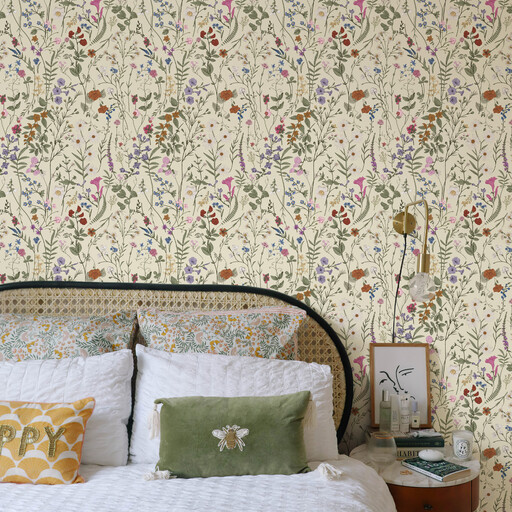
Key Feature: With its lush and vibrant floral pattern, it enlivens a space without overwhelming it. It is particularly effective when used sparingly for maximum decorative impact.
Highlights:
Best For? For DIY enthusiasts who want to personalise a reading nook, line the inside of a bookshelf, decorate the back of a niche, or give a chest of drawers a makeover. The possibilities are endless! A smart choice for injecting a dose of whimsy into an entryway or bedroom.

Key Feature: This marble-effect wallpaper plays on sharp contrast with its deep black background and graphic white veins. It instantly creates a sophisticated and highly contemporary focal point, perfectly mimicking the look of natural stone.
Highlights:
Best For? For anyone unafraid of a bold and elegant design statement. It works wonders for modernising a bathroom (in dry areas), creating a spectacular accent wall in an entryway, or transforming a simple console table into a statement piece.
Does none of these models fit your project? Or are you simply curious to discover other patterns and textures?
Explore our complete range of decorative solutions to find your inspiration.
Explore Our Full Collection of Wall Decor
Generally, no. When applied to a sound, smooth, and well-prepared surface (no peeling paint, no crumbling walls), a quality self-adhesive wallpaper can be removed without leaving residue or pulling off the paint. The trick for easy removal: gently heat the surface with a hairdryer while slowly peeling from a corner.
Yes, but with a few precautions. Vinyl PVC is highly resistant to humidity, making it perfectly suitable for "dry areas" in a bathroom (like the wall behind a vanity or cupboard doors). However, you should absolutely avoid areas with direct and constant contact with water, such as inside a shower, where water could seep through the seams.
The secret is patience and proper technique. Once the surface is ready, do not remove the entire protective backing at once. Peel back about ten centimetres from the top, position your strip, then smooth it out from the centre to the edges with a plastic squeegee (or a soft cloth). Work your way down gradually, removing the backing as you go and pushing out any air bubbles along the way.