
Livraison le jour même ou le lendemain

Qualité garantie

Débloquez vos offres de bienvenue: Livraison GRATUITE | Jusqu'à -80 % | 30 jours d'essai gratuits à JoyPlus
Téléchargez l'application
Peel-and-stick wallpaper promises a quick and affordable transformation for any interior. Whether creating an accent wall, giving a kitchen a fresh look, or personalising a child's room, the idea of renovating without glue or mess is more than appealing. However, the results don't always live up to expectations. A poorly chosen product can quickly turn into a nightmare, leading to premature peeling, stubborn bubbles, or impossible pattern matching.
As a product expert at Joybuy, my role is to help you make sense of the multitude of options available. Here are the key things to watch out for and the essential criteria to ensure your DIY wall decor project is a true success.
Before you check out, be aware of these common issues that can ruin the experience.
To avoid these disappointments, a few technical specifications should be scrutinised. They are the true guarantors of the quality and durability of your adhesive wall covering.
The wallpaper's composition is crucial for its durability and maintenance.
Even the best adhesive can't make up for an unsuitable surface. For perfect adhesion, the surface must be smooth, clean, dry, and non-porous. Freshly painted walls require a full curing time (several weeks) before application. Textured, grainy, or powdery surfaces will compromise adhesion and result in a flawed finish. Testing on a small, discreet area is always the best precaution.
Double-check the roll dimensions (width and length) to calculate the required quantity and avoid unpleasant surprises. For patterned wallpapers, the pattern repeat is a crucial detail: this is the height at which the pattern repeats itself. Be aware that a large pattern repeat generates more offcuts, meaning you'll need more wallpaper. Good to know: many models feature a grid on the backing film to help with straight cuts—a detail that makes all the difference during application.
To help you see how these criteria apply in practice, here are a few options tailored to specific needs.
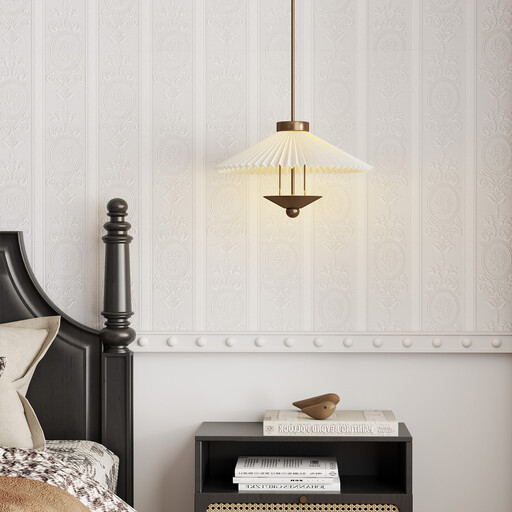
Why we love it: Perfect for small, targeted projects: a headboard, the back of a niche, or a closet door. Its smart size means you don't have to buy a large roll for a small area.
Its discreet, vertical rococo pattern is more forgiving of minor alignment issues than strict geometric designs. Its high-quality PVC construction minimises the risk of tearing during application.
Its practical dimensions (44 x 305 cm) are designed for accent projects and decorative touches. Its washable surface simplifies maintenance.
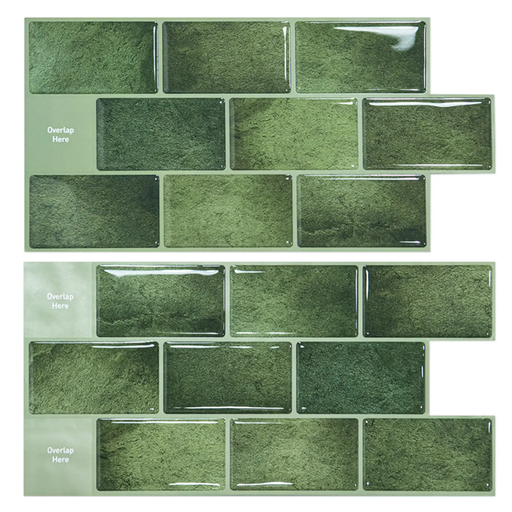
Why we love it: Specifically designed as a peel-and-stick backsplash, this product meets the demands of a kitchen environment. It lets you modernise an outdated tile look without committing to major renovations.
Its vinyl composition, coated with an epoxy gel, gives it a 3D effect, good water resistance, and easy cleaning. This helps prevent premature peeling due to humidity and achieves a more realistic look than a simple flat sticker.
Its textured 3D look that mimics real tile. Resistant to humidity and easy to clean, it's perfect for kitchen backsplashes.
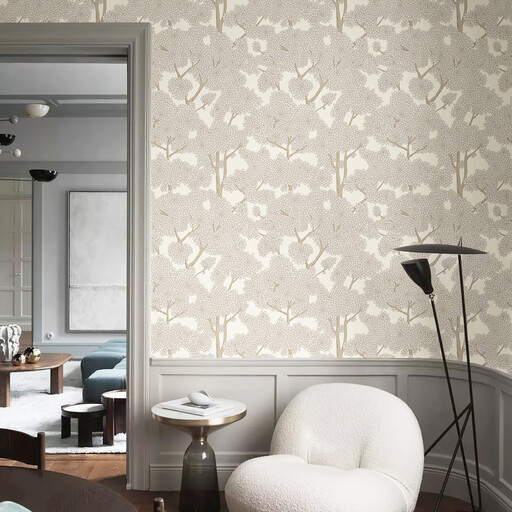
Why we love it: For those who want to create a focal point in a room with an elegant botanical pattern. The generous roll length (508 cm) is ideal for covering an accent wall with minimal seams.
The grid on the back is a real asset for clean cuts, which are crucial for properly aligning a botanical pattern and avoiding the dreaded "amateurish look." The quality PVC ensures good durability over time.
Its timeless botanical pattern and its length, suitable for accent walls (covers approx. 2.2 m?). The integrated cutting guide on the back.
We've curated a complete selection of products that meet our quality standards and comply with current regulations.
Its longevity depends on a trio of factors: the quality of the product, the preparation of the surface, and the environment. A good quality PVC model, applied to a smooth, clean wall in a dry room, can last for several years without issue. In a bathroom or kitchen, its lifespan will naturally be shorter if the product is not specifically treated to be moisture-resistant.
This is a legitimate concern, especially for renters. As a general rule, a quality wall decal or wallpaper can be removed without leaving adhesive residue or tearing off the paint. The condition? The wall must have been well-prepared, and the original paint must be sound and perfectly dry. The trick for removal: gently heat the surface with a hairdryer to soften the adhesive, then pull slowly and parallel to the wall.
This is a very bad idea. The adhesive is designed for smooth, non-porous surfaces. Applying it over existing wallpaper (especially if it's textured or vinyl) completely compromises adhesion. Furthermore, the weight of both layers could cause everything to peel off. For a clean and lasting result, there is only one solution: remove the old covering and prepare the wall.