
Livraison le jour même ou le lendemain

Qualité garantie

Débloquez vos offres de bienvenue: Livraison GRATUITE | Jusqu'à -80 % | 30 jours d'essai gratuits à JoyPlus
Téléchargez l'application
Peel-and-stick wallpaper has become the go-to solution for refreshing an interior without breaking out the toolbox. Whether you're a renter looking to personalise your space or a time-crunched homeowner, the promise is appealing. But be warned: the market is flooded with options where the best often sits alongside the worst. A poor choice can quickly turn a simple decor project into a total nightmare.
Before taking the plunge, let's review the three most common pitfalls to avoid.
To see things clearly and make the right choice, focus on a few technical details that make all the difference.
The material determines not only the look of your wallpaper but also its durability and ease of maintenance.
The effectiveness of a self-adhesive wallpaper depends as much on its glue as on the wall it's applied to. The golden rule is simple: the surface must be smooth, clean, dry, and non-porous.
Before committing to an entire wall, always test a small, inconspicuous area first. This will allow you to check the adhesion and ensure removal leaves no damage.
Accurately measure the area to be covered (height x width) and always add a safety margin of at least 10%. This margin is essential for accommodating cuts and small mistakes.
For patterned models, pay attention to the "pattern repeat." A straight or drop match requires aligning the strips, which inevitably creates waste. For large walls, wider and longer rolls are often a good idea: they reduce the number of seams and ensure a more seamless result.
Rather than an endless list, here are a few products that meet specific needs, selected for their quality and ease of use.
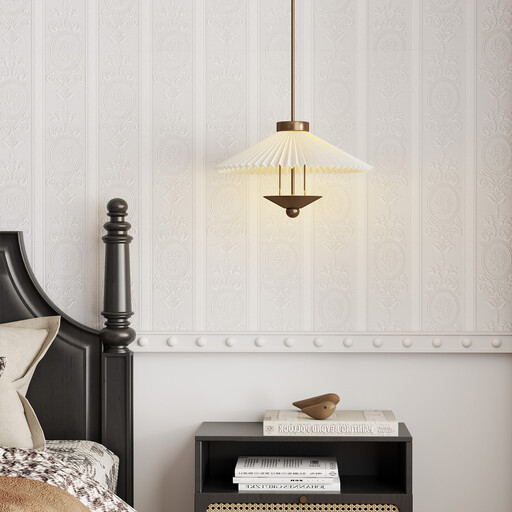
Why we chose it: Perfect for adding a touch of subtle elegance without papering an entire wall. Its dimensions are designed for targeted projects: a headboard, the back of a niche, or customising a piece of furniture with **furniture wrap**.
Its vertical rococo pattern, while subtle, provides a visual texture that sets it apart from a simple 2D print. The roll size, designed for smaller surfaces, minimises pattern-matching headaches.
Made from PVC vinyl, it's washable and therefore easy to maintain. Its understated design integrates easily into most interiors.
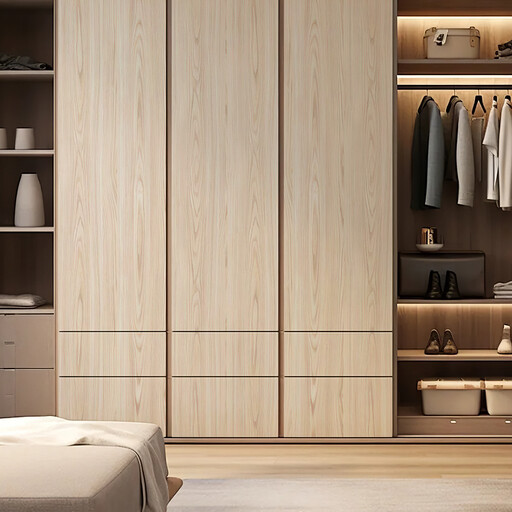
Why we chose it: Perfect for creating a warm accent wall in a living room or bedroom. This **wood-effect wallpaper** brings a modern, Scandinavian touch, ideal for those who want a realistic look without the fuss, making for **easy wall decor**.
Its high-quality PVC vinyl finish and continuous wood grain pattern ensure a realistic look, light-years away from cheap, low-end prints. The long roll length (over 5 metres) minimises seams and simplifies installation on a large wall.
Its 60 cm width and generous length cover approximately 3 m? per roll, offering excellent value for covering an entire accent wall.
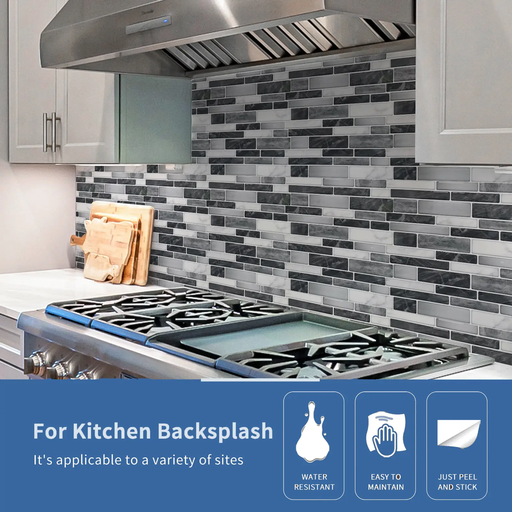
Why we chose it: A tailor-made solution for kitchen backsplashes and bathroom walls (outside the shower area). These adhesive tiles are designed to resist humidity and wipe clean with a sponge, a non-negotiable feature for these rooms.
Its gel-like surface creates a true textured 3D effect that perfectly mimics real tile. The adhesive, advertised as extra-strong, is specifically designed to hold up in humid areas and prevent peeling.
Its resistance to moisture and stains, combined with an easy-to-clean non-porous surface, makes it a smart and durable choice for wet areas.
Discover our full selection of products that meet our quality criteria.
1. Does peel-and-stick wallpaper damage walls when removed? It all depends on the condition of your wall and the quality of its paint. On a healthy, smooth surface coated with quality paint (satin or gloss), a good-quality adhesive wallpaper can usually be removed without leaving residue or stripping the paint. However, on a wall with old, flaky paint, or on poorly prepared drywall, there's a risk the adhesive will pull off part of the surface. The pro tip: gently heat the wallpaper with a hairdryer during removal to soften the glue and make it easier to peel off.
2. Can you apply peel-and-stick wallpaper over existing wallpaper? This is a very bad idea. For optimal adhesion and a flawless finish, the surface must be perfectly smooth. Applying an adhesive wall covering over existing wallpaper, even if it's smooth, can cause bubbles and premature peeling. Not to mention, the texture of the old wallpaper might show through, ruining the visual effect. A clean, well-prepared surface is the key to a successful installation.
3. What is the lifespan of a peel-and-stick wallpaper? Its longevity depends on three factors: the quality of the product, the room's conditions (humidity, sun exposure), and the care taken during installation. A high-quality vinyl model, installed correctly in a dry room with low friction (like a bedroom or office), can last for several years. In a kitchen or entryway, where it's more exposed to moisture and bumps, its lifespan will naturally be shorter.