
Livraison le jour même ou le lendemain

Qualité garantie

Débloquez vos offres de bienvenue: Livraison GRATUITE | Jusqu'à -80 % | 30 jours d'essai gratuits à JoyPlus
Téléchargez l'application
Peel-and-stick wallpaper promises a quick and effortless transformation for our interiors. Gone are the days of glue, pasting tables cluttering the living room, and endless hours of work. However, behind this attractive promise, real disappointments can sometimes lurk: a wall covering that peels off after a few weeks, patterns that are impossible to align, or a final result that just looks "cheap".
As a home decor product expert at Joybuy, I'm here to separate fact from fiction for you. Here are the key things to watch out for and the essential criteria to ensure your project is a complete success.
Before you get started, keep these common issues in mind that can turn a fun decor project into a real headache.
To avoid these disappointments, here are the technical points to check before you buy.
The material of your adhesive wall covering determines its durability, appearance, and ease of maintenance.
The golden rule: peel-and-stick wallpaper will only last on a surface that is perfectly smooth, clean, dry, and non-porous. Forget about grainy walls, textured plaster, or peeling paint without proper preparation (sanding, applying a primer). Also, be wary of satin or gloss paints, which can compromise adhesion: a very light surface sanding is often recommended to ensure a good grip.
Your project will define the type of product you need.
Here are a few options that meet specific needs, taking into account our criteria for quality and practicality.
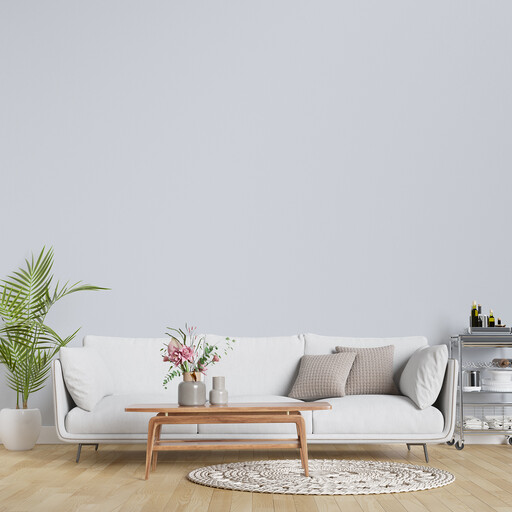
Why we chose it: Perfect for giving a new lease of life to a dresser, cabinet doors, or for lining the back of a bookshelf. Its 60 cm width is very practical for covering most furniture without needing to match seams.
Its subtle texture and neutral colour are very forgiving: they hide minor surface imperfections and don't require millimetre-perfect alignment, unlike complex patterns.
Made from quality PVC vinyl, it is both durable and easy to clean. An essential point for furniture, which sees heavy daily use.
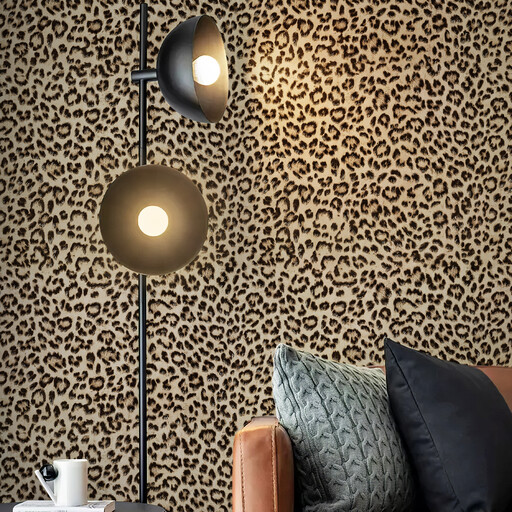
Why we chose it: For those who want to create a bold focal point in a living room or bedroom without committing to a full renovation. This pattern is a true design statement that instantly transforms a plain wall.
The long roll (over 5 metres) minimises the number of seams on a standard wall, reducing the risk of misalignment and ensuring beautiful pattern continuity.
Its PVC vinyl composition makes it washable, a significant advantage for keeping a wall in a living area looking pristine. The dense pattern is also more forgiving of small application errors than a strict geometric design.
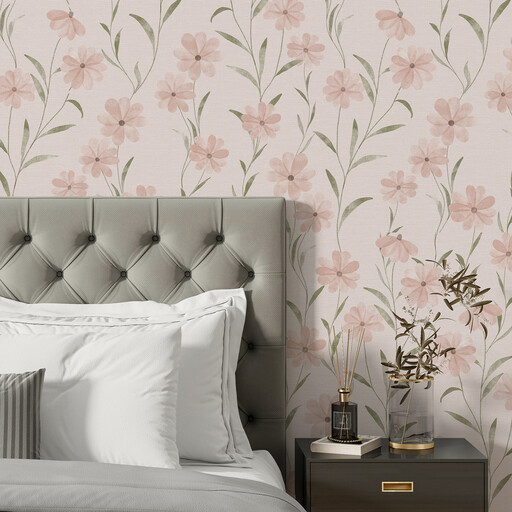
Why we chose it: Perfect for adding a touch of softness and character to a bedroom or living room without overwhelming the decor. The light background and delicate floral pattern preserve the room's brightness.
Unlike entry-level peel-and-stick wallpapers with a "plasticky" look, this quality vinyl model offers a smooth finish and a polished appearance that doesn't look low-end.
The long roll (over 5 metres) is ideal for covering a headboard wall or the wall behind a sofa. It ensures an application with minimal seams for a clean, harmonious result.
Discover our full selection of products that meet our quality criteria and current safety standards.
1. Does peel-and-stick wallpaper damage walls when removed? It all depends on the quality of the wallpaper and the condition of your wall. A good quality product applied to a healthy wall (no peeling paint, no crumbly plaster) generally comes off without leaving residue or damaging the paint. A little tip: to make removal easier, gently heat the surface with a hairdryer. In any case, we recommend testing on a small, inconspicuous area before you begin.
2. Can you put peel-and-stick wallpaper in a bathroom or kitchen? Yes, but only if you choose a vinyl model specifically designed to be moisture-resistant and washable. However, avoid direct water spray zones, such as inside a shower or on the backsplash right behind the sink. Also, make sure the room is well-ventilated to prevent moisture from seeping in at the edges.
3. How do I calculate the right amount of wallpaper? Measure the total width of the wall(s) to be covered, then divide that by the width of one roll. This will give you the number of strips you need. Next, measure the height of your wall, adding a 10?cm margin for cuts at the top and bottom. Multiply the number of strips by this height to find the total length you'll need. The golden rule: always allow for 10% extra wallpaper to account for offcuts from pattern matching and any potential mistakes.