For a school lunchbox, don’t choose a savoury snack just because it contains peanuts or makes a sports-related claim. Compare the protein figures per 100 g, then check how much you’ll actually pack. First, check the allergens and the school’s food rules; also look at the salt and other nutritional information. Nutri-Score can help you make comparisons when it’s shown, but it doesn’t replace the label.
Who is this guide for?
Parents looking to compare protein content
If protein content matters for your child’s lunchbox, start with the nutritional information for the exact product and the amount they’ll take, rather than assuming it’s suitable because it’s associated with sport.
Families mindful of allergens
Ingredients and “may contain” statements are important if your child has an allergy or the school has food rules. Vico states that Curly Cacahuète Original contains peanuts and may contain milk, nuts and gluten.
Shoppers comparing popular formats
Crackers, breadsticks and other savoury snacks can’t be compared just because they’re in the same aisle. Check the nutritional information and pack size of each product before putting together a lunchbox.
What should you check before buying?
For a lunchbox, first check that the product is suitable for your child and complies with the school’s rules. Then compare its nutritional values and the amount you plan to pack.
| What to consider |
What to check |
Who is this for? |
| Protein |
Compare the protein figures per 100 g, then work out how much that means for the amount you’re packing. Also compare energy and salt on the same basis. |
If I’m mainly looking for a clear protein figure, the recipe alone isn’t enough. Around 29% of consumers put checking protein content first. |
| Allergens and school rules |
Read the ingredients and allergen information on the exact pack you’re buying, and check the school’s rules. |
If an ingredient could be a problem for my child or the school, making sure the product is suitable comes before its protein content. This is the main concern for around 29% of consumers. |
| Nutritional values and portion size |
Pay particular attention to salt and fat per 100 g, then choose an amount that suits your child’s age and appetite. |
When preparing an amount that’s right for my child, I want to look beyond a single nutritional figure. Around 24% of consumers prioritise this balance between the label and the portion. |
| Format and convenience |
Check whether the pack lets you take the amount you want and whether it can be resealed for the journey. |
When I’m shopping, I mainly need a pack that’s easy to pop into a lunchbox, without overlooking dietary checks. Ease of use comes first for around 18% of consumers. |
Mistakes to avoid
-
Assuming peanuts mean high protein
The presence of peanuts doesn’t tell you how much protein is in the finished snack or the portion you’ll pack.
Compare the protein figures per 100 g on the packaging of the exact product, then take into account how much you’re putting in the lunchbox.
-
Assuming all savoury snacks contain gluten
Recipes and allergen statements vary. Vico states that Curly Cacahuète Original may contain gluten; this doesn’t apply to the whole category.
Read the pack you’ve chosen and check the school’s rules before packing it.
-
Thinking Nutri-Score has to be shown
France’s Ministry of the Economy states that displaying Nutri-Score is optional in France. The DGCCRF distinguishes this logo from the nutritional declaration required for most prepacked foods.
If the logo is shown, use it as an extra guide. Either way, read the ingredients and nutritional information.
Brands to use as a guide
Vico
Curly Cacahuète Original is a useful example for looking at what the presence of peanuts in a savoury snack actually means.
- Vico states that this recipe contains 32% peanuts.
- This percentage alone doesn’t mean the snack is “high in protein”. The recipe contains peanuts and may contain milk, nuts and gluten.
Carrefour
Carrefour’s range includes crackers, pretzels and breadsticks, which you can compare product by product.
- These categories offer several formats to consider for a lunchbox.
- Being in the same category doesn’t tell you the protein content or allergens of a specific product.
Belin
Belin Réception is a useful point of comparison among savoury snack assortments.
- The Open Food Facts listing identifies it as a savoury snack.
- The listing is marked as incomplete. Check the information on the exact pack when comparing this product, and don’t assume the same details apply to the whole range.
A cracker to consider on Joybuy
This 30 g bag of chickpea crackers is worth considering if you’re looking for a portion-sized option for a lunchbox. You’ll still need to check the protein content, allergens and school rules for the exact product.
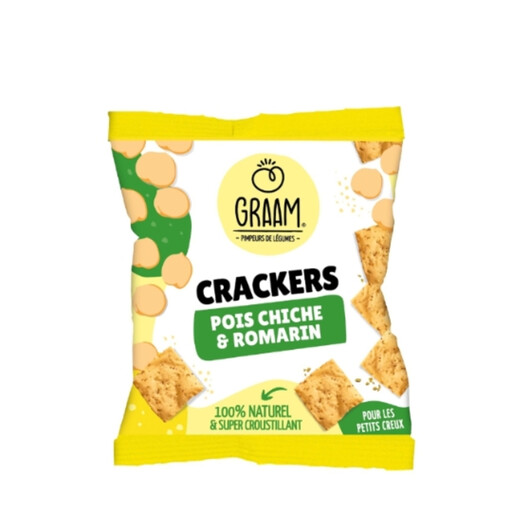 Image unavailable
Gram Chickpea Cracker 30 g
The 30 g bag is worth considering if you want to pack a set amount. Compare the protein and salt figures on the label, and make sure this portion is suitable for your child.
Wheat flour is listed in the information for this product. Check the ingredients and any “may contain” statements on the exact pack, then confirm the school’s rules.
View on Joybuy
Frequently asked questions
Is Nutri-Score compulsory on savoury snacks in France?
No. France’s Ministry of the Economy states that displaying Nutri-Score is optional in France. The DGCCRF explains that nutritional declarations, on the other hand, are required for most prepacked foods. Check them to compare protein and salt, in particular.
Is a peanut snack necessarily high in protein?
No. The presence of peanuts alone doesn’t establish the protein content of the finished snack. Although Vico states that Curly Cacahuète Original contains 32% peanuts, you’ll need to check the protein figure on the label for the exact product.
How much savoury snack should you pack for a child?
Don’t automatically use an adult portion size. Manger Bouger points out that portions vary with a child’s age. When deciding how much to pack, take into account the rest of the lunchbox and your child’s appetite.


