People who regularly stock up their cupboards
You’re looking for a jar you’ll use often and comparing sizes before you stock up.


When stocking your cupboard, choose a size that suits how often you use peanut butter, then check whether the recipe contains only peanuts or other ingredients too. Texture also matters, depending on whether you use it on toast or in cooking. For a 100% peanut butter, check the storage instructions and whether you need to stir it.
You’re looking for a jar you’ll use often and comparing sizes before you stock up.
You’re looking for a recipe that lists only peanuts and don’t mind stirring the product if the oil naturally rises to the top.
You choose between smooth and crunchy depending on how you’ll use it, then check the ingredients and storage instructions on the jar.
Start by working out how much you’ll use, then compare recipes and textures to find the right one for your cooking.
| What to consider | What to check | Who it matters to |
|---|---|---|
| Size | Net weight and storage instructions, particularly after opening. | If I use this product regularly, I want a jar whose contents I can use as directed. Around 34% of consumers prioritise choosing a size that suits their needs. |
| Recipe | Ingredients list and whether it contains sugar, salt or other ingredients. | For toast as well as recipes, I prefer to know exactly what’s in the jar. Around 33% of consumers put ingredients ahead of other criteria. |
| Texture | Smooth or crunchy, and whether it needs stirring. | When I’m cooking and making toast, I want a texture that works for both, even if I need to stir the product as directed on the label. Texture is the top priority for around 33% of consumers. |
Product listings from Carrefour Bio and Monoprix describe different recipes: the first lists 100% peanuts, while the second also contains sugar and salt.
Check the ingredients list on the jar you choose if you’re looking for a recipe made with peanuts alone.
Listings for some PROZIS and ETHIQUABLE products say that a layer of oil can appear naturally.
Follow the instructions on the jar: stir it if recommended and follow the storage guidance.
Check the product you buy for peanuts and any warnings about traces of other allergens. The DGCCRF reminds consumers that allergens in prepacked foods must be clearly highlighted.
If you have an allergy, check the ingredients list and warnings on the exact jar every time you buy it. Don’t assume the information on another recipe applies.
ALDI France lists a 600 g peanut butter, available in smooth or crunchy versions and described as containing 100% peanuts.
Carrefour’s listing for a 350 g jar states that it contains 100% roasted peanuts from organic farming.
An Auchan listing for a 454 g jar describes a recipe made with 100% peanuts.
An Auchan listing for a 500 g smooth version states that it contains 100% peanuts.
The listing for a 350 g organic jar describes a recipe made with 100% peanuts, with no added oil, sugar or salt.
These two jars suit different cupboard preferences: one is described as containing only peanuts, while the other has a smooth texture. Check the ingredients and product-specific instructions before choosing.
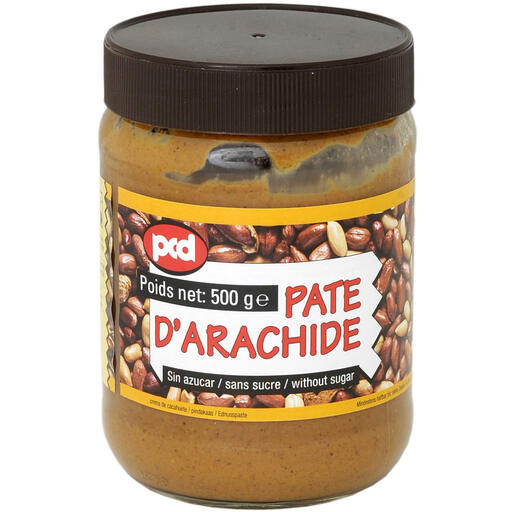 Image unavailable
This 500 g jar is a good choice if you’re looking for a recipe described as containing only peanuts. Check the label for storage instructions and any warnings about traces of other allergens.
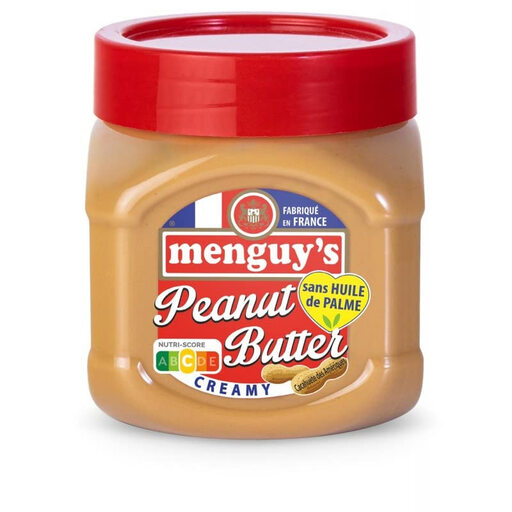 Image unavailable
This 454 g product is a good fit if you prefer a smooth texture, particularly for spreading on toast. If you’re looking for peanuts alone, check the ingredients list rather than assuming it has the same recipe as another MENGUY'S product. Also check the instructions for after opening.
Not necessarily: listings for some PROZIS and ETHIQUABLE products say that oil can separate naturally. Follow the instructions on the jar you’ve bought for stirring and storage.
Texture alone doesn’t tell you what’s in the jar. Read the ingredients list for the smooth or crunchy version you choose: products available in both textures don’t necessarily have the same recipe.
Check the ingredients list and any warnings about traces on the exact jar you’re buying. Carrefour Bio’s listing, for example, states that it contains peanuts and may contain traces of sesame. Information for another product isn’t a substitute.
Compare the nutritional values on the same basis, such as per 100 g, then check each ingredients list separately. The DGCCRF states that nutrition information is given per 100 g or 100 ml to make comparisons easier; it doesn’t replace checking the recipe.