Households planning their weekly shop
You’re looking for a quantity that suits your regular consumption and want to compare jar sizes before choosing.


For your weekly shop, choose a jar size that suits how much your household gets through, then compare the ingredient lists: a large jar doesn’t necessarily contain only peanuts. If you prefer a short ingredient list, check that peanuts are the sole ingredient. If organic certification or sourcing information matters more to you, check the details on the jar without assuming what it contains.
You’re looking for a quantity that suits your regular consumption and want to compare jar sizes before choosing.
You prefer a product made solely from peanuts and don’t mind stirring it if the oil rises to the surface.
You check for organic certification and sourcing information, while also checking the ingredients in the jar separately.
To compare jars for your regular shop, start with how much you’ll use, then check the ingredients and choose the texture or sourcing details that matter to you.
| Criteria | What to check | Who it matters to |
|---|---|---|
| Jar size | Check the net weight and choose a quantity that suits how much you use. | For my regular shop, I want a jar I can finish, rather than automatically opting for a larger size. Around 36% of consumers are said to make jar size their main criterion. |
| Ingredients list | Check whether peanuts are the only ingredient or whether the recipe also includes sugar, salt or added fat. | I want to know exactly what’s in my spread and keep added ingredients to a minimum. Around 29% of consumers are said to prioritise this. |
| Texture and use | Look for smooth or crunchy and check whether the product comes with any stirring instructions. | Whether I’m spreading it on toast or adding it to a recipe, I want to choose a texture I enjoy and know whether I’ll need to stir the jar. Around 21% of consumers are said to put this need first. |
| Organic certification and sourcing | Check the organic claims and sourcing information for the specific product. | I want to take production methods or sourcing information into account, without assuming that every recipe from a brand is the same. This is said to be the main criterion for around 14% of consumers. |
The Carrefour Sensation product listing states that it contains 92% roasted peanuts, as well as shea butter, sugar and sea salt. The Menguy’s and Prozis listings mentioned here, by contrast, list peanuts as their only ingredient.
If the ingredients are a deciding factor for you, read the full list on the jar, not just the product name.
Product listings for some recipes made solely from peanuts state that the oil may naturally separate.
Check the manufacturer’s instructions, stir the product if recommended and follow the storage instructions on the jar.
Peanut butter contains peanuts. The Monoprix product listing mentioned here also warns that it may contain traces of sesame and nuts. Check these warnings for the specific product you buy.
According to the DGCCRF, allergens must be highlighted on the label. Read the ingredients list and any trace warnings on the packaging of the product you choose.
These examples highlight differences in jar size and ingredients. The details given relate to the specific products mentioned, not every product from each retailer or brand.
The retailer stocks products including Carrefour Sensation and Menguy’s, which have different ingredients.
The listings consulted include products from Prozis and Ethiquable made with peanuts.
One of the retailer’s listings features a 600 g jar of Trader Joe’s peanut butter.
The listing for a 350 g Monoprix product details its ingredients.
An Ethiquable product listed at Auchan is labelled organic and comes in a 350 g jar.
These 454 g and 500 g jars of peanut butter are worth considering for your regular shop. Their size and, depending on the product, name don’t replace checking the ingredients on the packaging.
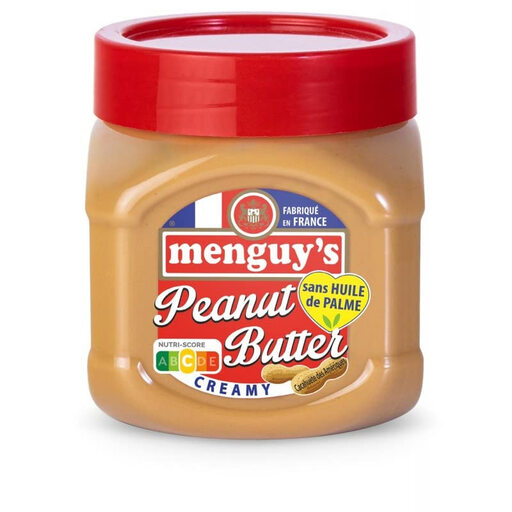 Image unavailable
If you’re after a smooth option for your regular shop, this jar contains 454 g. Check its ingredients list if you’re looking for a recipe made solely from peanuts.
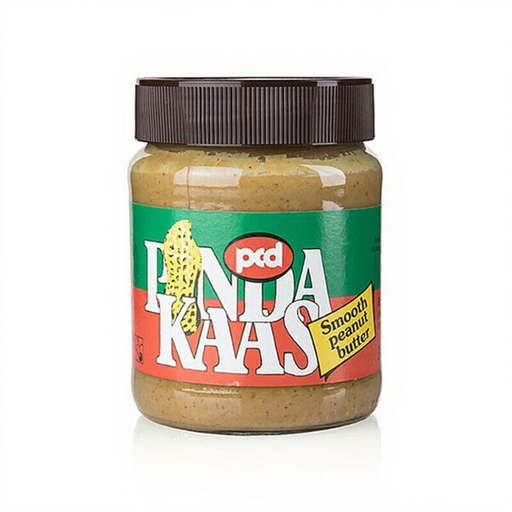 Image unavailable
This 500 g jar may suit you if that quantity matches your regular use. Check the ingredients on the packaging before comparing it with a recipe made solely from peanuts.
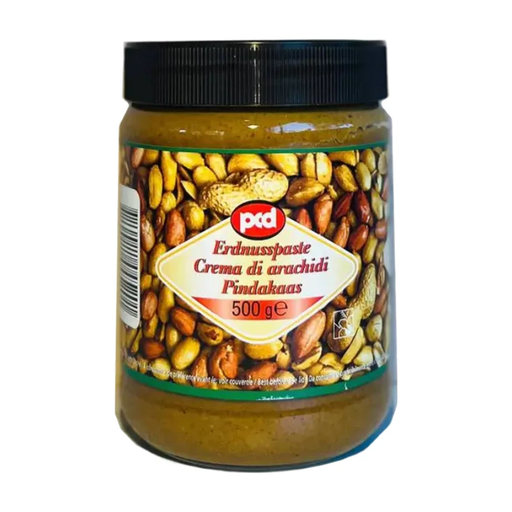 Image unavailable
Before adding a 500 g jar to your weekly shop, think about how much you’ll use. Check the ingredients for this specific product to distinguish it from other PCD jars of the same size.
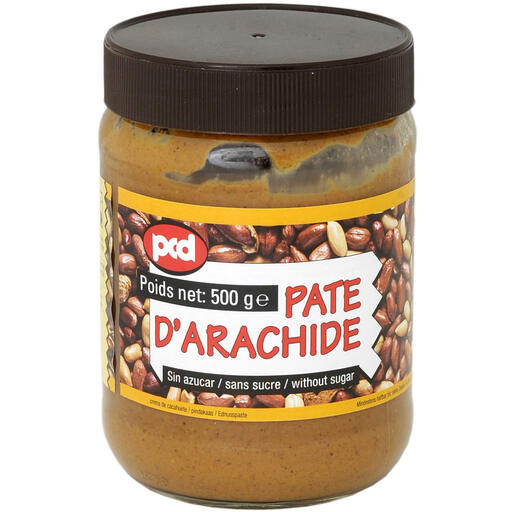 Image unavailable
If you prefer a short ingredients list, check the one on this 500 g jar. The product name alone doesn’t tell you its nutritional values.
Read the ingredients lists and compare the nutritional information on the same basis. The DGCCRF says that nutritional declarations are given per 100 g or 100 ml to make comparisons easier. For peanut butter, look in particular at fat, sugars, protein and salt per 100 g.
Check the ingredients list on the jar: if that’s what you’re looking for, peanuts should be the only ingredient. The Menguy’s and Prozis listings mentioned here give peanuts as the sole ingredient, while Carrefour Sensation also lists shea butter, sugar and sea salt.
For some recipes made solely from peanuts, this separation is described as natural. Stir the product if the manufacturer recommends it and follow the storage instructions on the jar.
Peanut butter contains peanuts and isn’t suitable for anyone with a peanut allergy. According to the DGCCRF, allergens must be highlighted on the label. Also check the trace warnings on the packaging you buy, as these may refer to other allergens depending on the product.