
Livraison le jour même ou le lendemain

Qualité garantie

Débloquez vos offres de bienvenue: Livraison GRATUITE | Jusqu'à -80 % | 30 jours d'essai gratuits à JoyPlus
Téléchargez l'application
A peach drink, peach-flavoured iced tea or jam may seem easy to choose. However, the difference between an enjoyable product and a disappointing purchase often comes down to details that are not immediately obvious: the actual amount of fruit, sugar content, format or storage conditions.
This guide from the Joybuy Product Recommendation Officer helps you compare peach products using practical criteria, whether you are looking for an everyday drink, peach sweets for a delicious break or an ingredient for your desserts.
A picture of a peach on the packaging does not guarantee that the product contains much juice. Peach juice or a fruit drink may contain only a small percentage of concentrate, supplemented with water, sugar, acidifiers and flavourings.
The ingredients list generally shows the components in descending order by quantity. The quantitative declaration can also be used to check the proportion of peach when this is stated. For example, Jardin Cafe Real iced tea lists 0.4 % peach concentrate and 0.4 % peach juice, while the WANT WANT drink indicates 1 % concentrated peach juice.
Two products may taste similar while having very different nutritional profiles. Check the “carbohydrates, of which sugars” line per 100 ml or 100 g, then relate these values to the amount you will actually consume.
The format also matters: a small 190 or 230 ml can is not the same serving size as a 1.5 l bottle. For a drink to share, compare peach syrup based on its dilution instructions, rather than relying solely on the nutritional values displayed on the bottle.
Peach products do not all keep in the same way. Peach jam should generally be stored in the refrigerator after opening. An opened drink may need to be consumed quickly, while a tin of peaches in syrup should, according to the manufacturer's instructions, be consumed immediately after opening.
Always check the best-before date, the condition of the packaging and the instructions printed on the product. If the tin is swollen, leaking or the lid is damaged, it is best not to consume the contents.
According to the information provided, Don Simon Peach Iced Tea contains 1 kcal and 0 g of sugars per 100 ml. This does not mean that all iced teas have the same composition: the label on each product remains the best guide.
For peach snacks, peach sweets, peach konjac jelly or peach mochi, look at the texture, net weight, allergens and gelling agents. Jelly.B jelly, for example, comes in an individual 150 g sachet and contains several sweeteners as well as konjac powder. The nutritional information shown on the product page states 7 kcal per sachet, but also indicates the presence of polyols, so it is best to read the label carefully before consuming it regularly.
For sweets containing gelatine, such as certain Korean or Japanese specialities, check its origin as well as the allergen information. Kororo Amaou Peach Gummy Candy specifically indicates the presence of gelatine, beef and apple.
Choose peach syrup according to its concentration, volume and intended use. The 456 ml/600 g JENI syrup can be diluted with still or sparkling water, or used on ice cream, cake or fruit salad. The 600 ml Teisseire peach syrup states that it contains 50 % fruit juice from concentrates, including 35 % peach and lemon.
Bonne Maman 370 g jam contains peaches, cane sugar, concentrated lemon juice and fruit pectin. It is just as suitable for spreading on toast as it is for baking or homemade recipes, and should be stored in the refrigerator after opening.
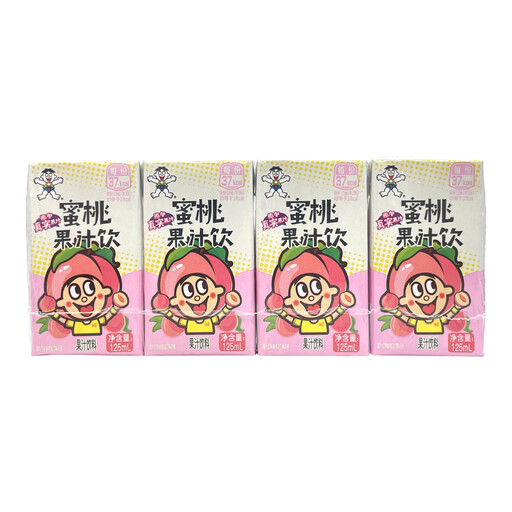
Why this choice suits this profile: The multipack of four 125 ml cartons is ideal for individual breaks, breakfast or a student's bag. This format also means you do not have to open a large bottle each time.
The percentage of concentrated juice is stated as 1 %, helping you distinguish a fruit drink from a juice made predominantly from peach.
Four 125 ml portions, 30 kcal per 100 ml according to the product information, and convenient storage before opening.
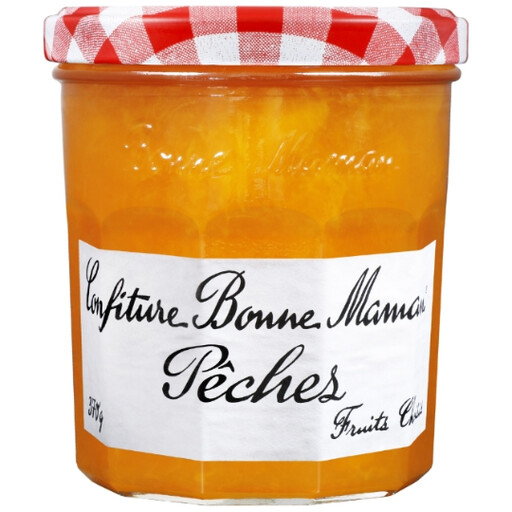
Why this choice suits this profile: This peach jam is ideal for those who prefer a family-sized jar and a versatile product, whether spread on toast or used in baking.
The ingredients list is short and specifies the presence of fruit pieces, sugar, concentrated lemon juice and pectin.
370 g jar, made in France according to the available information, and 241 kcal per 100 g.
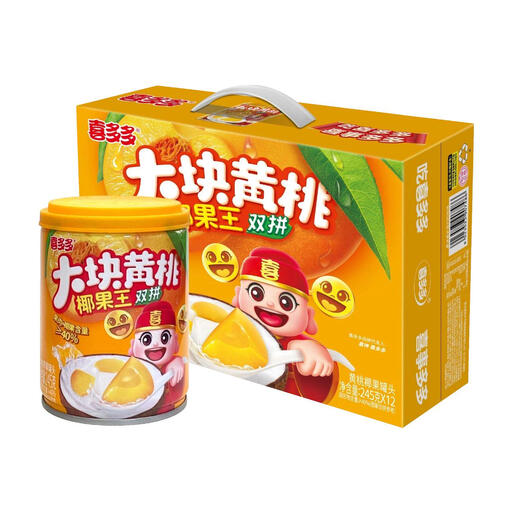
Why this choice suits this profile: The pack of 12 tins is suitable for families, offices or anyone who regularly uses fruit in desserts.
The composition indicates at least 18 % yellow peach and 18 % coconut. The product must be consumed immediately after opening.
245 g tins containing peach pieces and nata de coco, ready to enjoy as they are or use as a topping for ice cream or cake.
We have put together a complete, real-time updated list of products that fully meet these strict selection criteria and European safety regulations.
Start by comparing the “of which sugars” line per 100 ml or 100 g. Don Simon Peach Iced Tea contains 0 g of sugars per 100 ml according to its product information, compared with 11.3 g per 100 ml for Jardin Cafe Real. Also look out for sweeteners and polyols in the ingredients list.
The storage period depends on the product. Refrigerate the bottle when recommended on the label and follow the stated time limit. For Don Simon, the product information advises consuming the drink within three to four days of opening. An individual carton or can is generally intended to be drunk immediately.
Dilute it with still or sparkling water, adjusting the amount to suit your taste. It can also be served with ice cream, yoghurt, fruit salad or cake batter. Always check the recommended dilution instructions and refrigerate the bottle after opening when specified.