
Livraison le jour même ou le lendemain

Qualité garantie

Débloquez vos offres de bienvenue: Livraison GRATUITE | Jusqu'à -80 % | 30 jours d'essai gratuits à JoyPlus
Téléchargez l'application
Choosing PC gaming speakers can quickly become a minefield. Between promises of seismic bass and flashy "surround sound" logos, it's easy to end up with disappointing gear that can completely ruin your gaming experience. Our mission at Joybuy is to guide you through the marketing jungle and help you make a truly informed choice.
Before diving in headfirst, let's review three common pitfalls that cost gamers dearly—and more importantly, how to avoid them.
To avoid falling into these traps, the secret is to focus on a few objective technical specifications. These are the true arbiters of your future PC speakers' performance.
The way your speakers connect to your PC is crucial for performance.
Wattage isn't everything—far from it. Sound quality is primarily a matter of acoustic design.
The software provided by manufacturers isn't just a gimmick. It's the key to getting the most out of your hardware. Good software will give you access to:
To help you see things more clearly, here is our selection designed for different user profiles, taking performance and versatility into account.
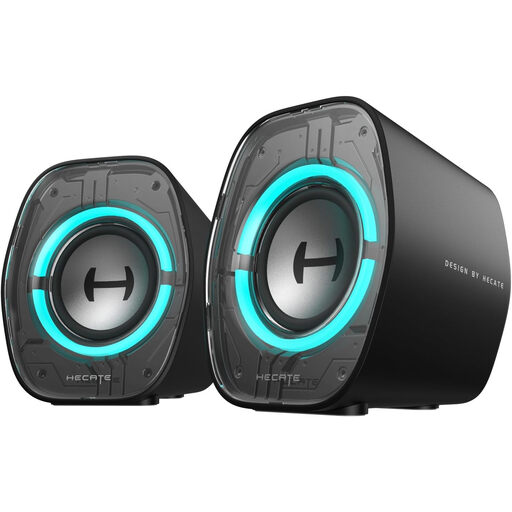
Why it's a great choice: Ideal for gamers with limited space who don't want to sacrifice features. Its ultra-compact footprint (less than 10cm wide) fits on any desk while offering modern gaming functionalities.
This model sidesteps the connectivity trap with its low-latency Bluetooth 5.4 (≤40ms) and a USB-C port. The three EQ modes (Game/Movie/Music) prevent the pitfall of overly boomy sound and ensure a balanced output.
Triple connectivity (Bluetooth, USB, AUX), 9 dynamic RGB lighting modes, and a 10° angled design for better sound projection.
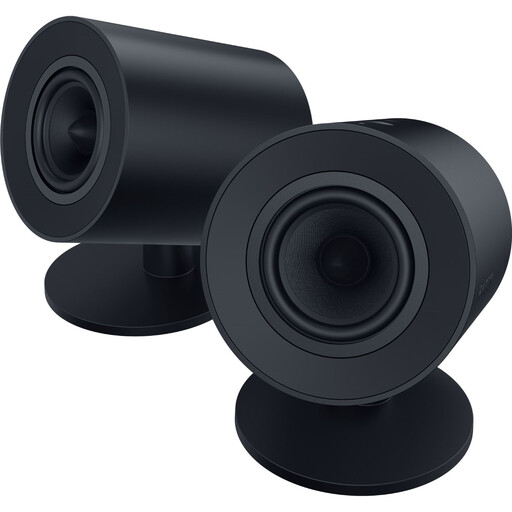
Why it's a great choice: Designed for gamers seeking a competitive edge through precise positional audio. The focus is on clarity and audio spatialisation for total immersion in compatible games.
It trades marketing-driven "surround sound" for THX Spatial Audio technology, a recognised standard for its ability to create a realistic 3D soundstage. The result: ultra-precise in-game sound localisation.
7.6cm full-range drivers for clear and powerful sound, USB connectivity for high-fidelity digital audio, and customisation via Razer Synapse software (10-band EQ).
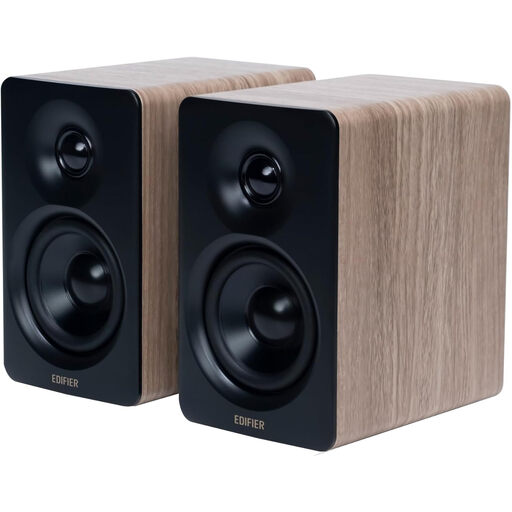
Why it's a great choice: For those whose use goes far beyond just gaming. This system is designed for high-fidelity, making it as excellent for listening to music and watching movies as it is for delivering a rich in-game audio experience.
It avoids the overpowering bass trap thanks to its two-way acoustic architecture (1" tweeter and 3" mid-bass driver). Digital Signal Processing (DSP) ensures a precise crossover and dynamic control for impeccable sound clarity across the entire spectrum.
Hi-Res Audio and Hi-Res Wireless certifications, support for the LDAC codec for high-quality Bluetooth streaming, and included angled aluminium stands for optimised desktop acoustics.
Explore our full selection, where every product has been chosen for its performance and reliability.
No, the RGB lighting is a completely separate circuit that has no impact on sound quality. It is purely aesthetic and can, in most cases, be customised or completely disabled via a physical button or dedicated software, giving you full control over your desk's ambiance.
It's not a requirement. High-quality stereo sound with a good soundstage (the ability to accurately locate sounds between the two speakers) is often more effective than poor surround sound. However, well-executed spatial audio, like that offered by THX Spatial Audio technology, can provide a real advantage in competitive games by improving the perception of the direction and distance of sounds.
For a well-made model, you can easily expect a lifespan of 5 to 10 years, or even longer, under normal use. The most common points of failure are the amplifier's electronic components or wear on the driver cones if they are constantly pushed to extreme volumes. Investing in a model with quality components and a robust design is therefore a winning long-term investment.