
Livraison le jour même ou le lendemain

Qualité garantie

Débloquez vos offres de bienvenue: Livraison GRATUITE | Jusqu'à -80 % | 30 jours d'essai gratuits à JoyPlus
Téléchargez l'application
Building a gaming PC isn’t just about stacking components with the most impressive numbers. A poorly sized case, an incompatible fan, or an oversized cooling system can quickly lead to extra purchases, more noise, and a fiddly installation.
The most common pitfalls include:
Start by measuring the actual space available, rather than relying solely on the “mid-tower” label. Several points need checking:
The Cooler Master Elite 600 Black accepts Mini-ITX to ATX motherboards, graphics cards up to 425 mm, and CPU coolers up to 160 mm. It also provides mounting points for radiators up to 360 mm, with the possibility of installing two radiators depending on the chosen configuration.
The Cooler Master Elite 502 offers different compatibility: graphics card up to 410 mm without a front radiator, CPU cooler up to 170 mm, and support for a front radiator up to 420 mm. These figures must be compared against the dimensions of each component before placing an order.
A CPU air cooler combines a finned heatsink with one or more fans. Simple to install, it contains no liquid circuit. The Cooler Master Hyper 212 Black, for example, measures 152 mm tall, features four direct-contact heat pipes, and runs with a 120 mm PWM fan.
For heavier loads, the Cooler Master Hyper 612 APEX has six heat pipes and two 120 mm fans. At 159 mm tall, you’ll need to check it fits inside your case.
PC liquid cooling, with a 240 mm or 360 mm radiator, can be worthwhile with a more power-hungry processor, for long gaming sessions, or as part of certain overclocking projects. However, the radiator must be compatible with the case, and the pump and fans need the right connectors.
A 120 mm fan kit should be chosen based on its location and role:
The CORSAIR RS120 ARGB is a 120 mm fan equipped with PWM control, a 3-pin 5 V ARGB connector, a daisy-chain connection system, and anti-vibration pads. The CORSAIR RS120-R ARGB White models feature a reverse airflow design, handy for certain intakes where the visible side needs to stay uniform.
Be careful not to confuse 5 V ARGB with 12 V RGB: these two standards don’t plug into the same headers. A mistake can damage the lighting system.
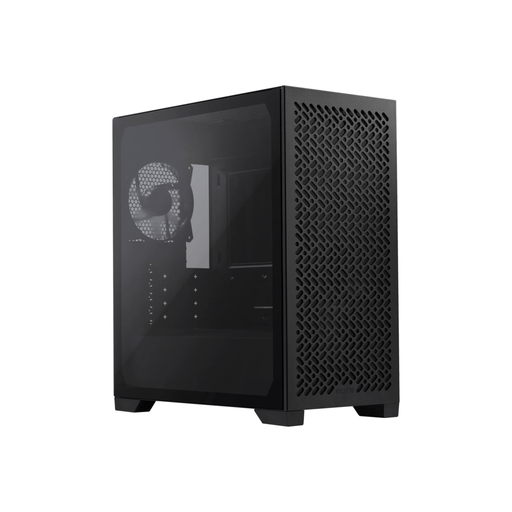
Why this choice suits this profile: This compact case accepts Mini-ITX and Micro-ATX motherboards, while supporting graphics cards up to 365 mm and radiators up to 360 mm at the front.
The magnetic mesh front panel simplifies access and promotes airflow, while the form factor limits reduce the risk of buying an incompatible motherboard.
34.13-litre volume, front USB Type-C port, and support for six fans.
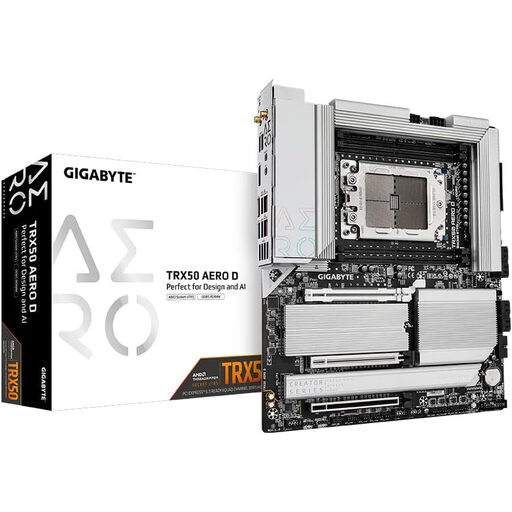
Why this choice suits this profile: This motherboard targets builds equipped with an AMD Ryzen Threadripper PRO 7000 Series processor, as well as demanding creative or professional workloads.
The AMD sTR5 socket is clearly defined: check your chosen processor before buying, rather than assuming a recent motherboard accepts all models.
DDR5 R-DIMM, PCIe 5.0, two USB4 Type-C ports, 10 GbE networking, and Wi-Fi 7.
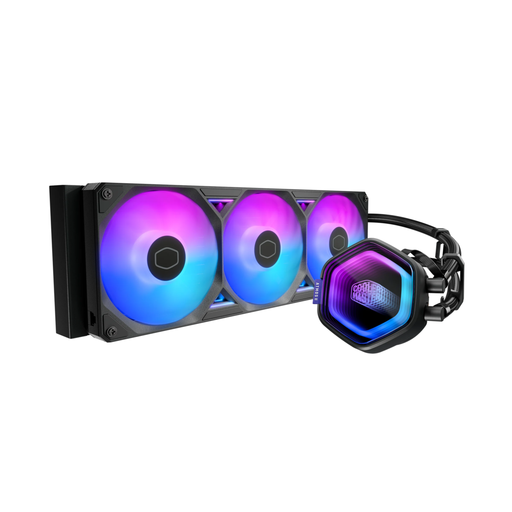
Why this choice suits this profile: This 360 mm liquid cooler combines three SickleFlow Edge ARGB fans with a cover featuring a VRM fan, for compatible high-end builds.
The radiator measures 394 × 119.2 × 27 mm: you must compare these dimensions against the available mounting points in your case before installation.
Intel LGA 1851/1700 and AMD AM5/AM4 compatibility, VRM fan, and a stated 6-year warranty.
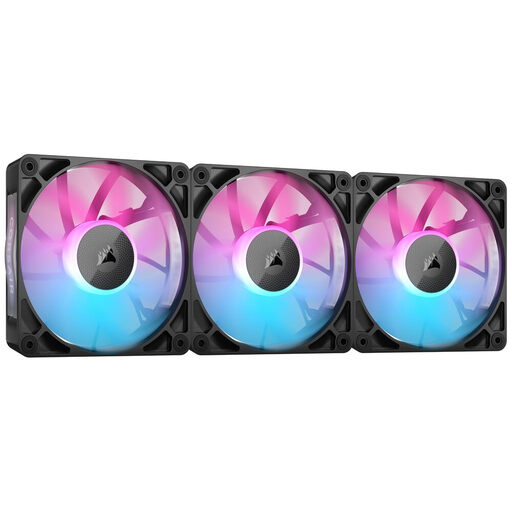
Why this choice suits this profile: This three-fan kit is aimed at users who want to connect multiple fans with fewer visible cables and centralised control.
The iCUE LINK system includes a hub, but you still need to plan for a SATA power connection and an internal USB header.
Three 120 mm fans, hub included, and stated support for up to 14 connected devices.
A CPU air cooler is generally simpler to install and maintain. A 240 mm liquid cooler can be worthwhile if your case has the necessary space and if your processor regularly runs under heavy load. Always check the compatibility of the socket, the radiator, and the available height.
It all depends on the case, the power of the components, and their layout. A balanced setup can start with an intake at the front and an exhaust at the rear. Add more fans if temperatures, noise levels, or airflow justify it, without blocking filters or multiplying cables unnecessarily.
No. ARGB lighting is primarily aesthetic and lets you visually customise your build. Cooling performance depends instead on airflow, static pressure, PWM speed, heatsink surface area, and the overall ventilation of the case.