
Livraison le jour même ou le lendemain

Qualité garantie

Débloquez vos offres de bienvenue: Livraison GRATUITE | Jusqu'à -80 % | 30 jours d'essai gratuits à JoyPlus
Téléchargez l'application
Pastel stationery supplies are appealing thanks to their soft shades, but an attractive colour palette alone is not enough to make the right choice. From ink that bleeds through paper to nibs that wear out too quickly and overly specialised sets, certain mistakes can turn an enjoyable purchase into impractical equipment.
Whether you are a student, teacher, employee, bullet journal enthusiast or budding illustrator, three common pitfalls regularly arise:
Here are the criteria to review before filling your pencil case or creative space.
For pastel highlighters, a chisel nib remains the most versatile option. It generally allows you to switch from a fine line to a wider stroke. STABILO Swing Cool models, for example, offer line widths of 1 and 4 mm, while STABILO BOSS Original Pastel models provide 2 and 5 mm.
Maped mini highlighters offer a width ranging from 1 to 5 mm, in a format measuring around 7 cm. They are well suited to compact pencil cases, children and anyone who annotates documents while on the move.
With brush-tip markers, the flexible nib lets you vary the pressure and therefore the thickness of the line. This format is better suited to lettering, bullet journal headings and expressive illustrations than to highlighting long paragraphs.
Water-based ink is very common in stationery and often produces a transparent finish. However, the result depends greatly on the paper’s weight and quality. In a thin notebook, always test the colour on a page at the back before decorating a double-page spread.
STABILO Pen 68 Pastellove pens use odourless water-based ink, with an advertised line width of 1 mm. They are suitable for detailed drawing, light colouring and bullet journalling. For subtle washes, choose paper designed for watercolours rather than a standard printer sheet.
Soft pastels and pastel chalk pencils produce a fine powder. They can be built up in layers, blended or mixed, but may transfer when they come into contact with the opposite page. Store them flat and use a suitable fixative.
A set of 4 to 6 colours is generally enough for everyday note-taking. An assortment of 10 to 15 shades offers more possibilities for journalling and creative activities. Boxes containing 36 or 60 colours are more suitable for artistic projects requiring numerous gradients and shades.
Also check:
In family settings, avoid products intended for children under 3 where they pose a choking risk. Pastel dust must not be inhaled or swallowed. For young children, prioritise use in a well-ventilated area and under adult supervision.
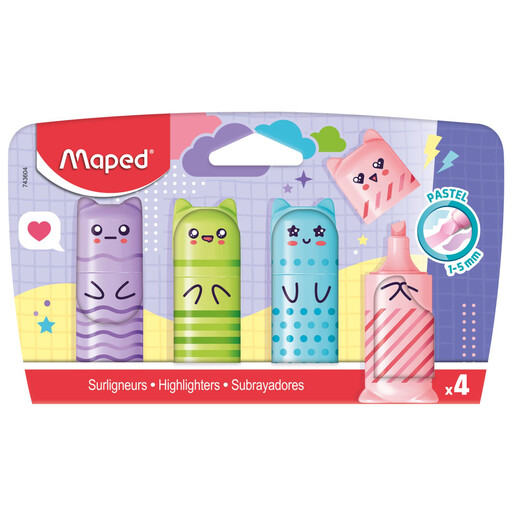
Why this choice suits this profile : its compact 7 cm format fits into a small pencil case, while its four colours cover everyday needs at school, in the office or in a notebook.
You avoid paying for a very extensive palette before you know which shades and line widths you actually use.
1 to 5 mm chisel nib, water-based ink, interchangeable caps and recyclable cardboard packaging.
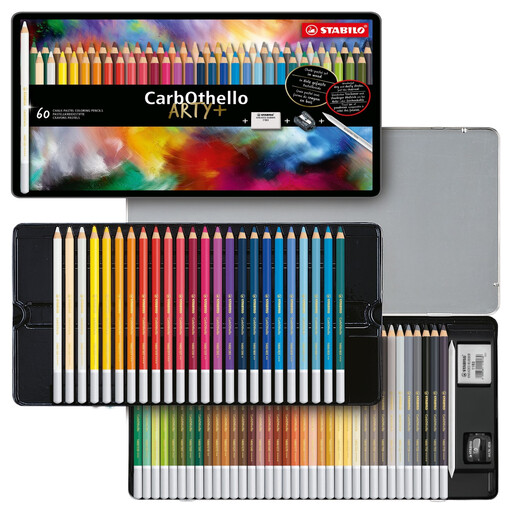
Why this choice suits this profile : the 60 pastel chalk pencils offer an extensive palette for portraits, backgrounds, shadows and artistic drawing projects.
The metal tin protects the pencils and makes it easy to identify the shades, rather than leaving them to become damaged at the bottom of a pencil case.
Dry, powdery pastel lead, 60 colours, dry or water blending, and PEFC-certified wood according to the product details.
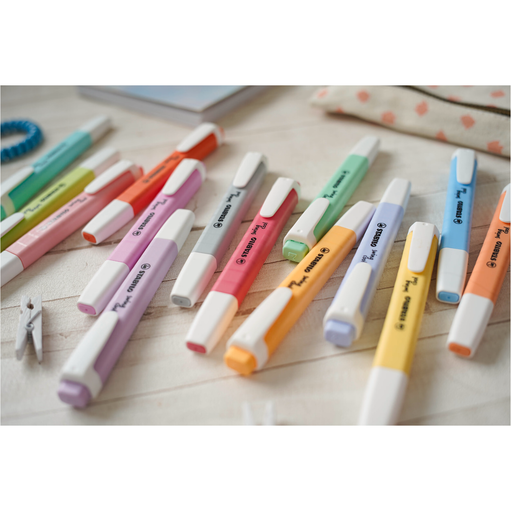
Why this choice suits this profile : students, teachers and professionals who annotate every day have a range of 14 shades in a handy storage case.
The slim barrel, clip and case make it easy to carry, while the anti-drying protection helps reduce waste caused by leaving the cap off.
Transparent water-based ink, 1 and 4 mm chisel nib, clip and advertised drying-out protection for up to 4 hours without a cap.
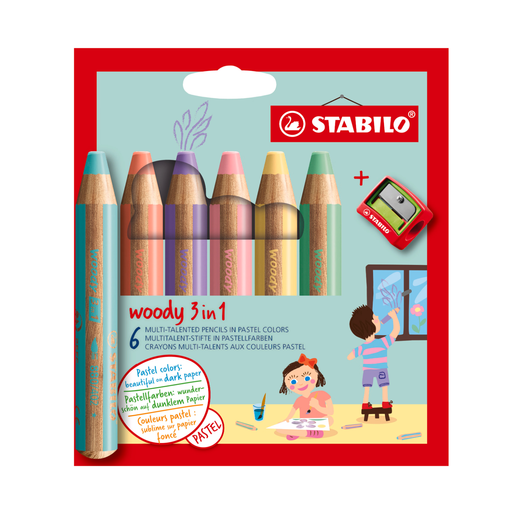
Why this choice suits this profile : these chunky pencils are suitable for little hands and a range of activities on paper, card or smooth surfaces.
A single pencil can create the effect of a coloured pencil, wax crayon or watercolour, so you do not need to buy several products for simple activities.
XXL 10 mm lead, six pastel shades, sharpener included and water erasability on non-porous surfaces.
For journalling, pair a pastel A5 notebook with fine-tip pens, highlighters and a few bullet journal accessories. The Jubiluu A5 notebook has a hard cover, 96 sheets of 100 g ivory paper, a bookmark and an elastic closure.
For lettering and fluid illustrations, the Ecoline Brush Pen Pastel 10-colour set contains nine shades and a blender pen. Its flexible brush tip is suitable for gradients and washes, provided you use suitable paper.
For more opaque drawings, the Faber-Castell Creative Studio 36-stick soft pastels can be used on paper, card or canvas. Store them flat and protect finished artwork from rubbing.
Finally, a garland of eggs in soft shades can complement pastel Easter décor in a classroom, office or family room. The stated set includes two garlands measuring almost 3 metres, with 24 cut-outs per garland.
We have put together a complete, real-time updated list of products that fully meet these strict selection criteria, as well as European safety regulations.
Yes, provided you check how transparent the ink is and test it on the paper you use. A chisel nib lets you switch between fine annotation and broad highlighting. On very thin paper, allow the ink to dry before closing the document.
Their usable lifespan depends on how often they are used, storage conditions and whether the cap is replaced. Put the cap back on after every use and keep the pens away from heat. Some models claim to resist drying out for several hours without a cap, but this does not remove the need to store them properly capped.
Textured paper or paper specially designed for pastels holds powder better than a smooth sheet. For creations intended to be kept, use a compatible fixative, follow its instructions and ventilate the room during application.