
Livraison le jour même ou le lendemain

Qualité garantie

Débloquez vos offres de bienvenue: Livraison GRATUITE | Jusqu'à -80 % | 30 jours d'essai gratuits à JoyPlus
Téléchargez l'application
A pastel colour palette adds a soft touch to a bullet journal, an illustration or study notes. However, choosing your pastel creative supplies based solely on the colours shown in the set can lead to a few unwelcome surprises. An attractive shade on the packaging may look too pale on paper, a felt-tip pen may bleed through the pages and a soft pastel may create a lot of dust.
Before comparing sets, it is therefore best to start with how you intend to use them: taking notes, children's colouring, lettering, artistic drawing or creating on several different surfaces.
The term “pastel” generally describes a light shade, but says nothing about its opacity. Pastel highlighters most often use transparent ink so that the text remains readable. By contrast, pastel acrylic markers apply a more covering layer, making them suitable for coloured or non-porous surfaces.
To avoid disappointment, check the type of ink, the recommended surfaces and the line width. The same soft colour will not produce the same result on white paper, kraft paper or a dark page.
An assortment of 36 soft pastels or 60 pastel pencils offers more shades, but it also takes up more space and generally costs more. For notes or simple patterns, 4 to 6 colours may be more than enough. For gradients, portraits and multi-layered compositions, however, a wider palette becomes very practical.
The number of shades does not remove the need to check the texture, tip type and compatibility with the surface you are using.
Inks and leads react to moisture, heat and direct light. Felt-tip pens that are not properly capped dry out more quickly, while crumbly pastels can break or dirty their box. A supplied case, metal tin or divided pencil case is a real advantage for everyday use.
For pastel felt-tip pens, a medium 1 mm tip is suitable for fine outlines, illustrations and details in a bullet journal. A chisel tip is more versatile: it allows you to draw a fine line for underlining or a broad line for highlighting.
The STABILO Pen 68 Pastellove has a robust M tip that produces a 1 mm line. STABILO Swing Cool Pastel models offer widths of 1 and 4 mm, while STABILO BOSS Original Pastel pens provide 2 and 5 mm lines. These specifications make it easier to compare precision and coverage in practical terms.
Water-based ink is generally suitable for ordinary paper, but it is best to check the risk of show-through on thin pages. Watercolour brush pens, such as the Ecoline Brush Pen Pastel, are designed to be worked with water or a blender pen. They therefore require paper that is thick enough to reduce cockling.
Clairefontaine Marbel acrylic markers use a water-based acrylic paint described as matt, opaque and permanent on several surfaces. Always test on an inconspicuous area, particularly when working on glass, plastic, metal or ceramics.
For a child, the pencil diameter, lead strength and ease of grip matter more than the number of colours. Small parts and tips may pose a choking or injury hazard: the products concerned should not be given to children under 3 and must be used under supervision.
The Faber-Castell Jumbo Grip Pastel set has a thick barrel and an ergonomic shape. Maped Color’Peps Pastel pencils feature a triangular barrel and FSC-certified wood. For a young user, these features are more useful than a particularly complex assortment.
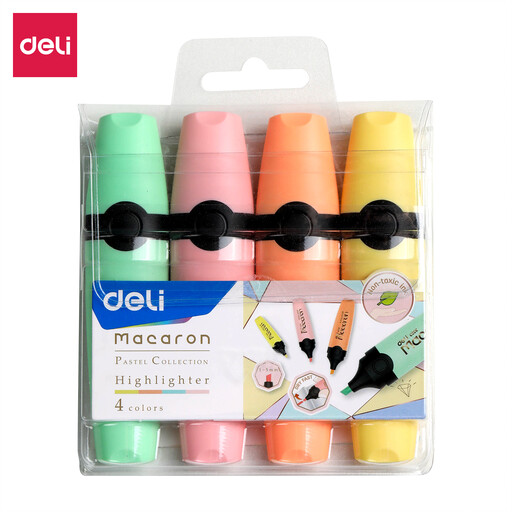
Why this choice suits this profile : This set of four colours is ideal for students who want to get started with a compact selection for lessons, planners and everyday notes.
The limited format means you do not pay for shades you are unlikely to use. The chisel tip produces lines from 1 to 5 mm, depending on its angle.
Water-based ink, a fibre tip and four pastel shades in an easy-to-carry format.
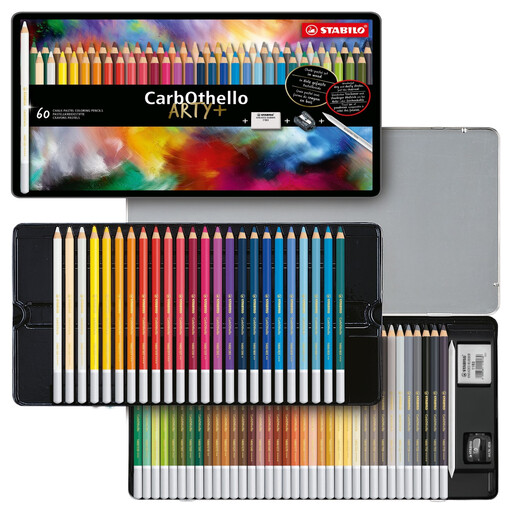
Why this choice suits this profile : Experienced amateur artists have an extensive palette for portraits, shading and detailed compositions.
The metal tin protects the pencils and makes them easier to organise, instead of allowing the leads to knock against one another in a pencil case.
60 colours, a dry pastel lead, the ability to create gradients and 100 % PEFC-certified wood according to the product details.
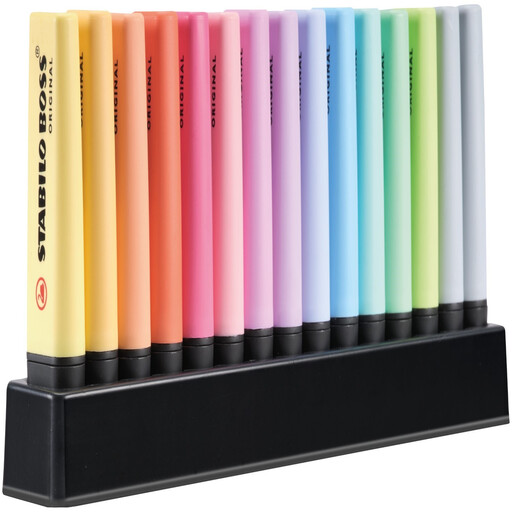
Why this choice suits this profile : This format is designed for anyone who highlights documents, lessons, timetables or notebooks every day and wants to use a wider range of colour codes.
The chisel tip offers two widths, while the anti-drying technology is advertised as effective for up to 4 hours without a cap.
15 highlighters, 14 advertised pastel shades, transparent water-based ink and a stated capacity of up to 375 m per highlighter.
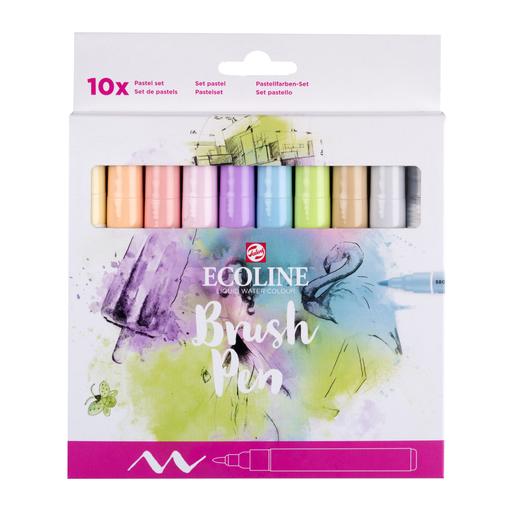
Why this choice suits this profile : Lettering, wash and delicate illustration enthusiasts can make use of a flexible brush tip and a dedicated blender pen.
The product details specify the ink formula and recommended surfaces, helping you distinguish a watercolour pen from a covering marker.
10 pens, including 9 pastel shades and one Blender, with a flexible synthetic brush tip and dye-based ink.
We have put together a complete, real-time-updated selection of products that meet these demanding criteria and European safety regulations.
Replace the cap on every felt-tip pen after use, even when the product details indicate protection against drying out. Store brush pens horizontally and keep dry pastels flat in their box. For artwork created with pastel pencils or crumbly pastels, a suitable fixative can help prevent smudging: test it first on a sample piece.
Products intended for children should be kept out of reach when not in use. Pastels that produce dust should be handled in a well-ventilated area, avoiding inhalation of the particles.
Chisel-tip highlighters are practical for organising information by colour, while fine-line pastel felt-tip pens are suitable for borders, headings and small patterns. For lettering, a brush tip offers more variation depending on the pressure applied. Always check the ink’s transparency and the notebook’s paper weight to minimise show-through.
Place a protective sheet underneath the page and test the product on a similar type of paper. Water-based inks can bleed through thin sheets, especially after several passes. Thicker paper or paper designed for drawing will generally make it more comfortable to use.
Yes. Keep them in their box, flat, away from moisture and knocks. Their powdery texture can soil your fingers and work surface. To protect a finished piece, applying a suitable fixative is generally recommended. Follow the manufacturer’s instructions and ventilate the room.