Employees who heat up their lunch
If you use a microwave at work, the sauce’s instructions and the amount you need for your meal matter just as much as the recipe. Panzani provides reheating instructions for some of its tomato and bolognese sauces.


For lunch at work, choose a sauce in a pack size that matches the amount you’ll use, with reheating instructions that suit the equipment available. Tomato sauce can be a good choice if you’re looking for a meat-free option, while bolognese is ideal when you fancy a meat sauce. In either case, check the ingredients and the storage instructions after opening on the jar you choose.
If you use a microwave at work, the sauce’s instructions and the amount you need for your meal matter just as much as the recipe. Panzani provides reheating instructions for some of its tomato and bolognese sauces.
To use the whole jar without leaving any to go to waste, choose a pack size that suits your upcoming meals and read the storage instructions for after opening.
Depending on your meal and dietary requirements, check whether it contains meat, read the ingredients list and highlighted allergens, and look for any specific claims on the product you buy.
For lunch at work, start with the reheating equipment available and the amount you’ll use. Then check how to store the sauce after opening and what it contains.
| Criteria | What to check | Who it matters to |
|---|---|---|
| Reheating and portion size | Compare the jar’s weight with the amount you plan to use for your meal, and read the reheating instructions for the exact product. | If I’m planning to heat up my pasta at work, I want a sauce that works with the equipment available and comes in an amount I can finish. Around 42% of consumers make this a priority. |
| Storage | Check the date on the jar, then look for the storage temperature and how long the sauce will keep after opening. | If I’m keeping a few jars in reserve, I need to know what to do with one once it’s been opened. This is the top priority for around 33% of consumers. |
| Ingredients | Read the ingredients list and highlighted allergens. Check the jar for any claims that matter to you. | Before taking a sauce to work, I want to know whether it contains meat or an ingredient I need to avoid. Around 25% of consumers prioritise this check. |
The storage instructions for an unopened jar don’t necessarily apply once it’s been opened. The Ministry of the Economy recommends following the manufacturer’s instructions for storage temperature and how long the sauce will keep after opening.
Choose a pack size you can use within the storage instructions on the packaging, and note the date you opened it if you’re keeping any leftovers.
An oversized jar could leave you with some sauce that you can’t use within the stated time.
For the Cooked Tomato Sauces and Bolognese sauces mentioned here, Panzani recommends reheating in a suitable covered container in the microwave, rather than heating the sauce directly in the jar.
Check the instructions for the product you’ve bought and make sure you have the right container available at work.
Carrefour Classic' Cooked Tomato Sauce lists celery as an ingredient, while Panzani Bolognese Sauce contains meat. An ingredient or claim that applies to one product doesn’t necessarily apply to other sauces from the same brand.
Read the ingredients list and allergen information on the jar you buy, even if you’re already familiar with the brand.
Panzani’s Cooked Tomato Sauce and Bolognese Sauce give you the choice of a tomato-based sauce or a meat sauce for pasta.
The Barilla Provençale Sauce reviewed here is a meat-free pasta sauce, sold in a 400 g jar.
Carrefour Classic' Cooked Tomato Sauce is made with tomatoes and vegetables and comes in a 420 g jar.
This Provençale sauce is a tasty addition to pasta at lunchtime. Before taking it to work, check how to reheat this product and plan how you’ll use the 400 g jar once it’s opened.
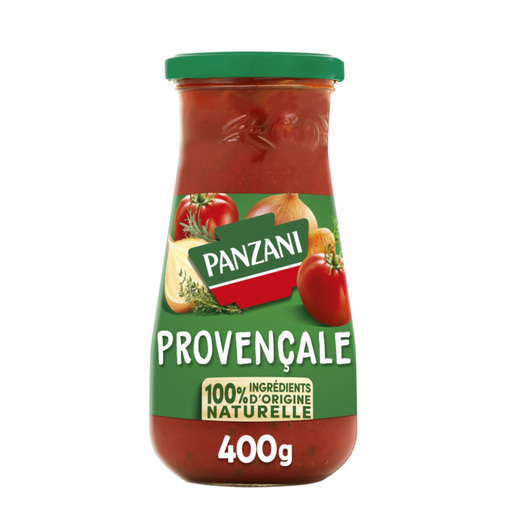 Image unavailable
Serve with pasta at lunchtime. Check the jar for reheating instructions that suit the equipment available at work.
400 g jar. If you don’t use it all, follow the storage instructions on the packaging for after opening.
Follow the instructions on the jar, rather than those that apply before opening. The Ministry of the Economy explains that the manufacturer provides the storage temperature and how long the sauce will keep after opening. Check these details before saving leftovers for another lunch.
A use-by date and a best-before date mean different things. The Ministry of the Economy distinguishes between the date that must be followed for highly perishable foods and the “best before” date. In either case, check the separate instructions for storing your sauce after opening.
Read the full ingredients list and highlighted allergen information on the product you buy. The DGCCRF explains these labelling rules. Also check any specific claim, such as “gluten-free”, on the exact product rather than assuming it applies to every product from that brand.
No. It adds to the nutritional information, but doesn’t replace the ingredients list, allergen information or storage instructions. Santé publique France explains that producers choose whether to display the Nutri-Score. You should also read the nutritional information for the product you’re considering.