People avoiding added sugars
You’re looking for a ‘no added sugars’ claim on the product you buy, while also comparing its ‘of which sugars’ value per 100 g. This claim doesn’t mean there are no sugars at all.


If your priority is avoiding added sugars, look for this claim on the sauce you choose, but don’t confuse it with having no sugars at all: tomatoes naturally contain sugars. To compare total sugars, check the ‘of which sugars’ line per 100 g. To get dinner on the table quickly, also check whether the product is ready to pour or a cooking base.
You’re looking for a ‘no added sugars’ claim on the product you buy, while also comparing its ‘of which sugars’ value per 100 g. This claim doesn’t mean there are no sugars at all.
You want a sauce that’s ready to pour or heat, with simple instructions and a pack size that suits the number of people you’re serving.
You check the ingredients, allergens and nutritional values for the specific product, rather than assuming what it contains from the sauce name.
For a midweek dinner, first distinguish between no added sugars and the total amount of sugars. Then decide whether you want a sauce to serve with pasta or a tomato base to cook with.
| Criteria | What to check | Who it matters to |
|---|---|---|
| Sugars | Check the exact claim and compare ‘of which sugars’ per 100 g on a like-for-like basis. | If I want to avoid added sugars, I also need to know how much sugar the sauce contains in total. Around 36% of consumers would put this need first. |
| Preparation | Check whether the sauce can be poured straight over pasta or needs preparing, then read the instructions for the pack you choose. | In the evening, I prefer to keep sauce preparation to a minimum, while remembering that the pasta still needs cooking. Around 29% of consumers would prioritise this time-saving factor. |
| Ingredients | Read the ingredients, any listed allergens and the nutritional values for the specific product. | If there are ingredients I can’t have, the words ‘tomato sauce’ aren’t enough to make a decision. Around 21% of consumers would put the ingredients first. |
| Pack size and availability | Choose an amount that suits the meals you have planned, and check the options available from your retailer. | For my midweek meals, I look for a pack I can use within the stated period after opening and can get easily. Around 14% of consumers would prioritise this practical need. |
Sugars naturally present in the ingredients are still included in the total. Auchan’s product listing for Italians Do It Better Pomodoro sauce states ‘no added sugars’ and 2.9 g of sugars per 100 g.
To compare two sauces, check their ingredients lists alongside their ‘of which sugars’ values per 100 g.
Carrefour’s published ingredients list for its Tomates Cuisinées Classic' sauce includes sugar. So the category name alone doesn’t tell you what’s in the recipe.
Check the ingredients for the product and pack size you plan to buy.
Auchan’s product listings say to refrigerate and use within 4 days of opening for Italians Do It Better Pomodoro, compared with 5 days for Mutti Provençale.
Compare the pack size with the meals you have planned, and follow the storage guidance on your product.
A pack that’s too large for the meals you have planned could lead to waste.
Panzani offers its Tomates Cuisinées sauce in 210 g, 400 g and 650 g packs.
Barilla offers its Basilico sauce in 200 g and 400 g packs.
Carrefour is a retailer with a range of tomato sauce recipes, including own-brand options.
Depending on the store and area, E.Leclerc offers grocery shopping by drive-through collection, pedestrian collection or delivery.
Auchan’s product listings include Italians Do It Better Pomodoro and Mutti Provençale sauces, both labelled ‘no added sugars’.
Lidl offers Baresa tomato sauce in a 560 g pack.
This selection includes tomato purées and bases for making pasta sauces. If you’re looking for a sauce to pour straight over your pasta, distinguish it from a cooking base and check the instructions for the product you choose.
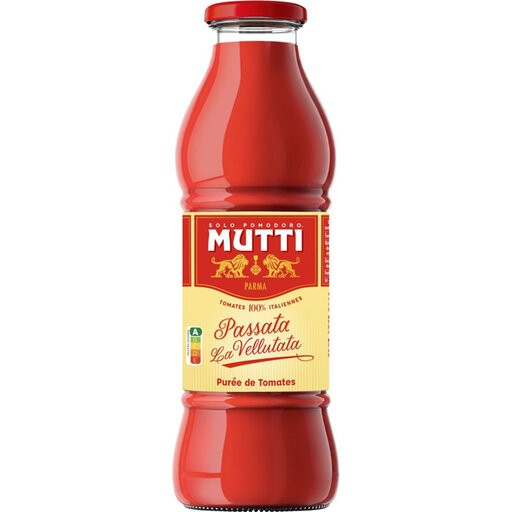 Image unavailable
If you’re making pasta with tomato passata, check which reheating method suits your meal.
Pack size: 700 g. If no added sugars is important to you, check the claim on the packaging.
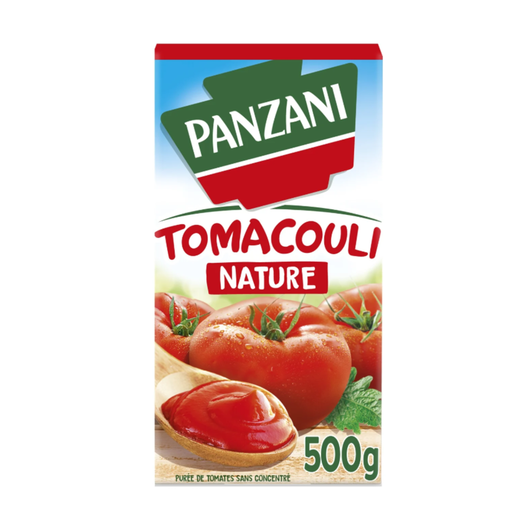 Image unavailable
This purée is a good choice if you want to make your pasta sauce from a tomato base rather than choose a sauce that’s already seasoned.
Pack size: 500 g. Allow time to prepare it before serving.
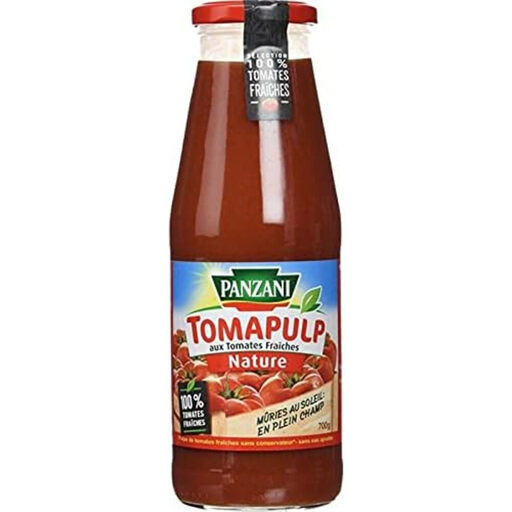 Image unavailable
Consider this tomato base if you plan to make a sauce for your pasta, but don’t assume it’s ready to pour.
Pack size: 700 g. Check the preparation and storage instructions on the product you receive.
 Image unavailable
This tomato purée is for anyone who wants to cook their pasta sauce from a base.
Pack size: 500 g. When comparing sugar content, check the ‘of which sugars’ line per 100 g and look for any claim you’re interested in on the packaging.
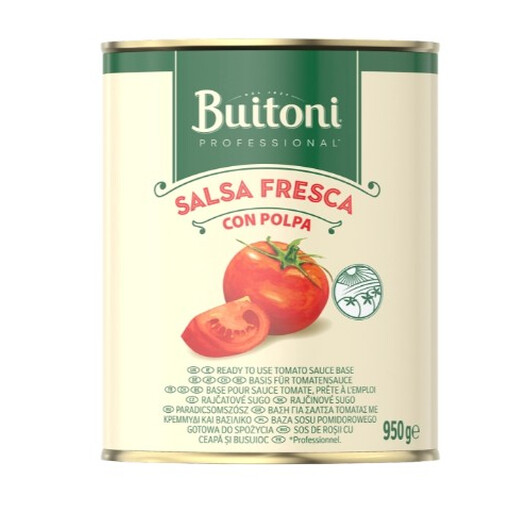 Image unavailable
This tomato sauce base can be used to make pasta sauce if you’d like to create your own recipe.
Pack size: 950 g. Before choosing this quantity, consider the meals you have planned and the storage instructions after opening.
No. Sugars naturally present in the ingredients may still be in a sauce carrying this claim. To find out the total amount, compare the ‘of which sugars’ line per 100 g for the products you’re interested in.
No. The words ‘tomato sauce’ don’t tell you how much sugar a product contains. Sugar is included in the ingredients list for Carrefour Tomates Cuisinées Classic' sauce. Compare ‘of which sugars’ per 100 g and read the ingredients for each sauce.
Check the ingredients list, any listed allergens, the quantity and the nutritional information, especially sugars per 100 g. The DGCCRF states that pre-packed food must carry a nutrition declaration, subject to certain exemptions.
Follow the storage conditions and use-by period stated for the product you buy. Auchan’s product listings say to refrigerate and use within 4 days for Italians Do It Better Pomodoro, compared with 5 days for Mutti Provençale. These instructions don’t apply to other sauces.
Yes. The DGCCRF states that nutrition claims, including ‘reduced sugars’, are covered by European Regulation (EC) No 1924/2006. Check the exact claim on the product rather than treating it as the same as ‘no added sugars’ or as meaning there are no sugars.