If you want the sauce itself to contribute protein to your meal, compare plant-protein recipes with meat bolognese sauces using their nutritional information. If you’re thinking about the whole plate, tomato sauce with high-protein pasta is another option. In either case, use the values per 100 g to work out what you’ll get from your serving, then check the ingredients and storage instructions after opening.
Who are these options for?
If you’re counting on the sauce
You want to know what the jar itself contributes, without counting the pasta or a side dish. As a guide to one specific recipe, Auchan’s listing for Panzani vegetarian bolognese with pea protein states that it contains 5.3 g of protein per 100 g.
If you’re planning the whole meal
You’d rather choose your sauce and pasta separately. Barilla states that Protein+ pasta contains 20 g of protein per 100 g; Panzani lists 20 g per 100 g serving for Les Protéinées. These figures apply to the pasta, not the sauce served with it.
If you’re planning several meals from one jar
You’re looking for a sauce that keeps in the cupboard unopened, while also thinking about how you’ll use any leftovers. For its 390 g vegetarian bolognese, Auchan’s listing says to store it in a dry place before opening, then refrigerate and use within three days once opened.
What should you compare?
Plant-based sauce with pea protein
Worth considering: if you avoid meat and want to know how much protein the sauce itself provides.
Check: the ingredients on the jar, especially if the online listing and packaging describe different recipes.
Meat bolognese
Worth considering: if a recipe containing meat suits your preferences.
Check: the stated amount of meat doesn’t tell you how much protein is in your serving on its own.
Tomato sauce and high-protein pasta
Worth considering: if you’re looking at the whole plate rather than the sauce alone.
Bear in mind: you’ll need to compare and portion two products; the pasta’s stated value doesn’t tell you what’s in the sauce.
| What to compare |
What to check |
Who is it for? |
| Protein in the sauce |
Protein and salt per 100 g, then the amount of sauce you’ll serve. |
I want the jar to contribute directly to the protein in my meal. Around 31% of consumers would prioritise the protein in the sauce itself. |
| What’s on the plate |
The protein listed for the pasta and the amount you’ll actually use; compare the sauce separately. |
I’m happy with tomato sauce if the pasta helps provide the protein I’m looking for in my meal. Around 31% of consumers would prioritise the total on the plate. |
| Source of protein |
The ingredients for the product you’re considering and the allergens listed on its packaging. |
Before comparing the figures, I want to know whether the recipe contains meat or plant-based ingredients that suit me. This would be the main consideration for around 23% of consumers. |
| Storage |
The best-before date and storage instructions for the jar, both before and after opening. |
I might not use the whole jar in one meal, so I choose a size that works for my next meals. Around 15% of consumers would make this a priority. |
Common mistakes to avoid
-
Assuming “bolognese” tells you how much protein it contains
Panzani says its Extra Rich Bolognese Sauce contains 30% more meat. On its own, that figure doesn’t tell you how much protein is in the portion you serve.
Compare the nutritional information per 100 g for the products you’re considering, then take your serving size into account.
-
Trusting the description without checking the ingredients
On Auchan’s listing for a Panzani vegetarian bolognese, the description mentions soya, while the ingredients list refers to pea protein. That difference matters if you need to avoid a particular ingredient.
Check the ingredients and allergens on the jar you buy, especially if they don’t match the online listing.
-
Counting the pasta’s protein as part of the sauce
Barilla’s figures for Protein+ and Panzani’s figures for Les Protéinées apply to the pasta. They don’t describe the tomato sauce served with it.
If you’re comparing meals, look at the serving sizes and nutritional information for each component separately.
-
Choosing a jar size without thinking about leftovers
A sauce that keeps in the cupboard unopened may need to be refrigerated and used quickly once opened. Auchan’s listing for the 390 g Panzani vegetarian bolognese says to keep it in the fridge and use within three days of opening.
Choose a jar size that suits the portions you have planned and follow the instructions on the product you buy.
Brands to compare
Panzani
The range includes bolognese sauces with different ingredients, as well as Les Protéinées pasta. Compare the specific product rather than assuming the same figures apply across the brand.
- Auchan’s listing for the vegetarian bolognese with pea protein states that it contains 5.3 g of protein per 100 g; Panzani lists 20 g per 100 g serving for Les Protéinées pasta.
- The description and ingredients list for the vegetarian sauce don’t agree on the plant-based source of protein, so check the jar.
Barilla
The Protein+ range is an option if you’re looking for pasta with a stated protein content, and want to choose the sauce separately.
- According to Barilla, Protein+ pasta contains 20 g of protein per 100 g and is made with durum wheat semolina and pea protein.
- This figure applies to Protein+ pasta; check the nutritional information for the Barilla sauce you’d like to serve with it.
VEGE (Marque Repère / E.Leclerc)
The 350 g VEGE vegetarian bolognese offers another point of comparison among sauces made with plant-based ingredients.
- E.Leclerc’s listing includes pea protein and red lentil flour in the ingredients, and states that the sauce contains 3.7 g of protein and 0.8 g of salt per 100 g.
- Compare these figures with other sauces using the same serving size, and don’t assume they apply to other VEGE recipes.
A bolognese sauce to consider on Joybuy
This product is an option if you’re looking for a meat bolognese that keeps in the cupboard before opening. To see how it fits into your meal, check the nutritional information and ingredients on the packaging; other ways of putting your meal together should be compared separately.
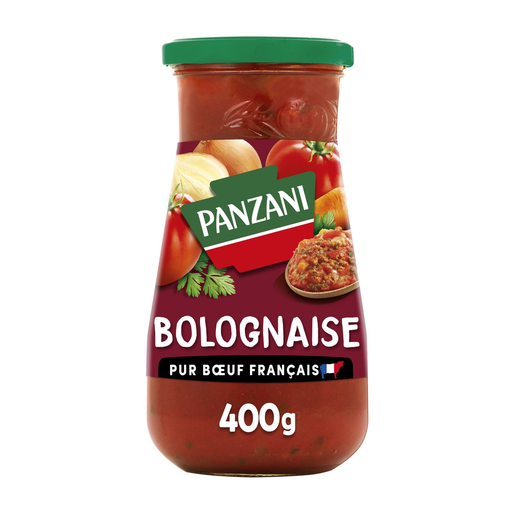 Image unavailable
Panzani Pure Beef bolognese sauce 400 g
An option to consider if you’d like a meat bolognese sauce rather than a plant-based recipe or a simple tomato sauce.
400 g jar. Use the protein and salt figures on the packaging to work out what you’ll get from your serving, and check the ingredients and allergens.
Once opened, refrigerate the sauce and use within three days, following the instructions for this product; also check the date on the packaging.
View on Joybuy
Frequently asked questions
How can you work out how much protein a sauce adds to a meal?
Check the protein per 100 g, then take the amount of sauce you’ll serve into account. Auchan’s listing for Panzani vegetarian bolognese states that it contains 5.3 g per 100 g; Barilla’s figure of 20 g per 100 g for Protein+ applies to the pasta.
Can vegetarian bolognese provide protein?
Yes, but the amount depends on the recipe and serving size. The Panzani vegetarian bolognese listed by Auchan contains 5.3 g of protein per 100 g. Its description and ingredients list differ on the plant-based protein source, so check the jar before choosing.
What should you look for on the label of a pre-packed sauce?
Start with the ingredients, any declared allergens, the protein and salt per 100 g, and the date and storage instructions. The DGCCRF notes that pre-packed food labelling includes, among other things, an ingredients list, a nutrition declaration and a relevant date.
How long can you keep a jar after opening?
Follow the guidance for the product you’ve bought. You can’t work this out from the fact that the unopened jar keeps in the cupboard. Auchan’s listing for the 390 g Panzani vegetarian bolognese says to refrigerate it and use within three days of opening.


