Hosts who want to adjust the quantity
If you’re not sure how much your guests will eat, start with the net weight your recipe requires. Several small containers let you choose how much to open and may make it easier to store any leftovers.


For dinner with friends, choose the total net weight based on your recipe, then decide whether one sauce will suit everyone. Several small packs let you offer different flavours; a larger container makes it easier to serve the same sauce to everyone, provided you have a plan for using any leftovers. A 200 g pack, like any other size, does not automatically equal one portion.
If you’re not sure how much your guests will eat, start with the net weight your recipe requires. Several small containers let you choose how much to open and may make it easier to store any leftovers.
If not everyone wants the same recipe, or some guests need to avoid certain ingredients, compare the specific sauces and their labels rather than relying on the brand name alone.
When comparing sauces from different brands and in different pack sizes, check the net weight, product description and ingredients list. Chopped tomatoes and a ready-made sauce don’t need the same preparation.
For your dinner, first work out how much sauce you need and how many recipes you’ll serve. Then check the ingredients and preparation instructions for each product.
Choose this: if you want to offer a choice of sauces or adjust how much you open.
Bear in mind: add up the net weights; you’ll need to open several containers.
Choose this: if one recipe suits the group and the pack size is right for your dish.
Bear in mind: the weight alone doesn’t tell you how many people it will serve.
Choose this: if you’re making a large quantity of one sauce or have a plan for using the extra.
Bear in mind: once opened, store it according to the product instructions.
| Consideration | What to check | Who this matters to |
|---|---|---|
| Quantity and leftovers | Work out the total net weight your recipe requires; check the storage instructions if you expect to have leftovers. | If I’m not sure how much sauce will be served, I want to be able to adjust the quantity without opening too many containers. Around 36% of consumers would make this a priority. |
| Ingredients and allergens | Read the ingredients and check the highlighted allergens for each product intended for guests with dietary requirements. | If a guest needs to avoid an ingredient, I’d choose a recipe whose ingredients I can check. This would be a priority for around 29% of consumers. |
| Preparation and serving | Check the product description and instructions to make sure it’s a ready-made sauce, rather than accidentally choosing chopped tomatoes or tomato purée. | If I want to serve the same sauce to everyone without any extra preparation, I look for a product that’s suitable for that. Around 21% of consumers would prioritise this convenience. |
| Comparing products | Compare the net weight and ingredients of products in the same category. | If I’m choosing between several containers, I want to know what each one will actually bring to the meal. Around 14% of consumers would put this first. |
The weight shown on a tin or jar doesn’t guarantee a certain amount per person. Your recipe and the other dishes you’re serving matter too.
Work out how much you need in total, then add up the net weights of the containers you choose.
Chopped tomatoes, tomato purée and tomato concentrate won’t meet the same need as a ready-made sauce to serve with pasta.
Check the product description and instructions before you choose.
Starting with chopped tomatoes or purée may mean spending time and adding other ingredients to make the sauce you had in mind.
Ingredients vary from one recipe to another. Carrefour’s Classic’ Cooked Tomato Sauce, for example, lists celery among its ingredients.
For every product you serve, read the ingredients list and check the highlighted allergens on the label.
Panzani offers its Cooked Tomato Sauce in 210 g, 400 g and 650 g packs.
Barilla offers its Basilico Sauce in 200 g and 400 g packs, among other sizes.
The products featured include a 420 g jar of Classic’ Cooked Tomato Sauce and a 390 g tin of SIMPL Vegetable Sauce.
E.Leclerc’s range includes a 180 g Turini Vegetable Sauce, a 420 g Arrabbiata and a meat sauce in 2 × 190 g packs.
The Auchan range includes a 180 g tube of Tomato and Vegetable Sauce, as well as 400 g tomato products.
These two 200 g products are small-pack options to serve with pasta. The net weight helps you work out the total amount for dinner, but doesn’t tell you on its own how many portions you’ll get or what type of container it comes in.
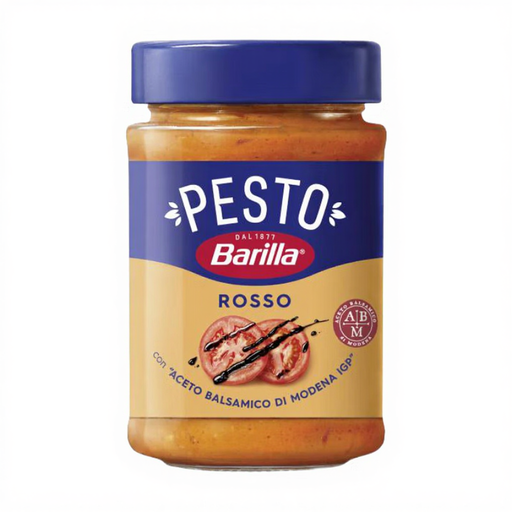 Image unavailable
A small-pack pesto to consider if you’d like to offer another recipe with your pasta. It has a net weight of 200 g. If a guest avoids almonds or milk, check the label carefully before serving.
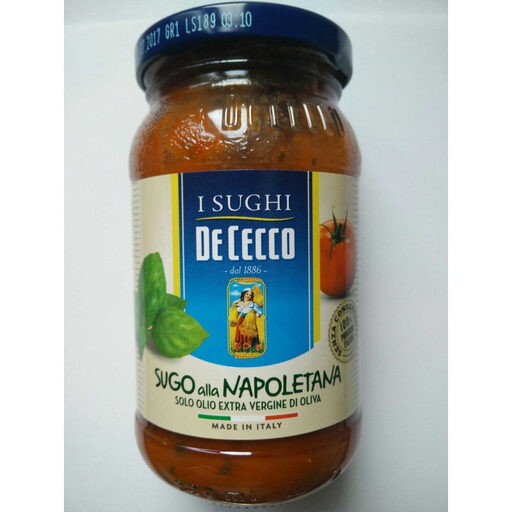 Image unavailable
A small-pack sauce to serve with pasta. It has a net weight of 200 g. Check the label on the exact product for ingredients and allergens relevant to your guests.
Not necessarily: net weight doesn’t determine the number of portions for a dinner. Start with the quantity your recipe calls for, then add up the net weights if you need more than one container.
Read the ingredients list and check the highlighted allergens on the exact product. The DGCCRF recommends checking this labelling; the celery listed in Carrefour Classic’ sauce shows why the words ‘tomato sauce’ alone aren’t enough.
Compare their nutritional values on the same basis, particularly per 100 g. The DGCCRF explains that this makes comparisons easier. Also check the ingredients and how much you plan to serve, rather than drawing conclusions from a single figure.
Always follow the instructions on the packaging of the sauce you’ve bought. Panzani’s general advice on opened tomato sauce doesn’t replace the instructions for another brand or recipe.