Someone who already has pasta
A small jar can be handy with pasta you’ve brought in or prepared at the office. Compare its weight with the amount of sauce you usually use: a small format doesn’t guarantee a single portion.


If you already have pasta for lunch at the office, jars weighing 190 to 210 g are compact options to consider, but their weight doesn’t guarantee an individual portion. If you’re looking for a tin that already contains pasta, that’s a ready meal, not a sauce to add to your own pasta.
Your choice depends mainly on what you already bring to the office and what you can prepare or store there.
A small jar can be handy with pasta you’ve brought in or prepared at the office. Compare its weight with the amount of sauce you usually use: a small format doesn’t guarantee a single portion.
A sauce on its own means you’ll need to have pasta ready or be able to cook it separately. A ready meal brings the components of your meal together, but you can’t choose the pasta and sauce separately.
Recipes, allergens and storage instructions after opening can vary from one product to another. Check the label on the product you buy to see if it suits your needs and whether you can store any leftovers.
Choose this if: you already have pasta and want to decide how much sauce to add.
Bear in mind: the sauce isn’t a pasta meal on its own; check how it needs to be prepared, too.
Choose this if: you want pasta and sauce together in one product.
Bear in mind: the recipe is already set. The individual Panzani meal listed by Carrefour contains spaghetti and beef, among other ingredients.
| Consideration | What to check | Who is this for? |
|---|---|---|
| Amount per meal | Compare the net weight with how much you usually use: Auchan lists a 190 g jar, Barilla a 200 g Basilico format and Panzani a 210 g sauce. None of these weights guarantees an individual portion. | If I’m having lunch on my own, I want an amount that minimises leftovers, without assuming a jar will be exactly right for my plate. Around 27% of consumers would make this their top priority. |
| Preparing it at the office | Check whether the product already contains pasta and follow its reheating instructions, including using a suitable container. | When my break is short, I want to know what I’ll need to do before eating. Around 33% of consumers would put convenience first. |
| Ingredients | Read the product name, ingredients, allergen and nutritional information for the product you choose. | If there are ingredients I can’t have, I check the recipe before choosing between formats. Around 20% of consumers would make ingredients their top priority. |
| Buying and storage | Check which packaging is available at your shop and the storage instructions after opening if you’re planning to use the sauce for more than one meal. | If I plan to use the sauce another day, I need to be able to store the opened container as directed on its label. Around 20% of consumers would put this first. |
The Panzani spaghetti bolognese tin listed by Carrefour already contains pasta and beef. It isn’t the same as a sauce to pour over your own pasta.
If you’re bringing your own pasta, look for a product labelled “sauce”. If you want a ready-made meal, check the recipe of the individual dish.
Formats weighing 190 g, 200 g and 210 g show the net weight, not how much sauce you’ll need for each serving.
Compare the weight with how much you usually use before choosing a compact format.
Storage instructions vary by product. The two Auchan sauces mentioned in this guide say to use them within 48 hours of opening; this doesn’t apply to every sauce.
Before buying, read the instructions on the jar you’ve chosen and make sure you can follow them.
Sauces with similar names can have different ingredients. Auchan also notes that the information on its product listing may vary depending on where and when you buy it.
Check the label for the ingredients, allergens, nutritional information and storage instructions for the product you’ve bought.
These products show a range of sauce formats; the brand alone won’t tell you which amount is right for your lunch.
Panzani offers its Tomates Cuisinées sauce in 210 g, 400 g and 650 g formats.
Barilla offers its Basilico tomato and basil sauce in 200 g and 400 g formats.
AUCHAN offers, among other products, a 190 g jar of cooked tomato sauce.
Lidl France offers BARESA tomato and onion sauce in a 560 g format.
These sauces can be served with pasta you already have. The 200 g formats and the pack of two 190 g containers are worth considering if you’re looking for smaller amounts; the 400 g format is better suited if you’re planning to use some another day. Their weight doesn’t guarantee an individual portion.
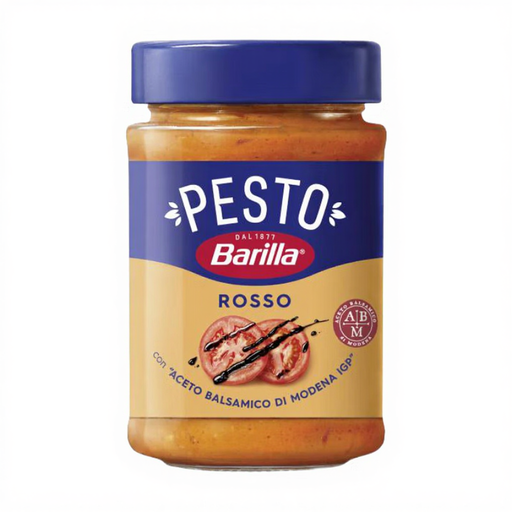 Image unavailable
Worth considering if you already have pasta and are looking for a 200 g sauce.
Check the label for ingredients, packaging and storage instructions after opening.
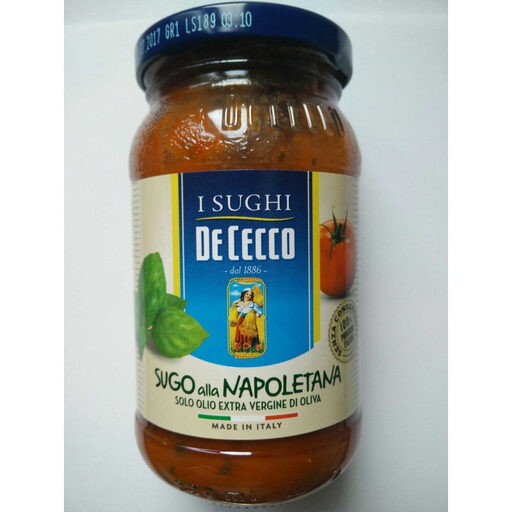 Image unavailable
This 200 g sauce is an option to compare if you’re looking for something to serve with pasta you already have.
Check the preparation instructions on the packaging before planning to heat it at the office.
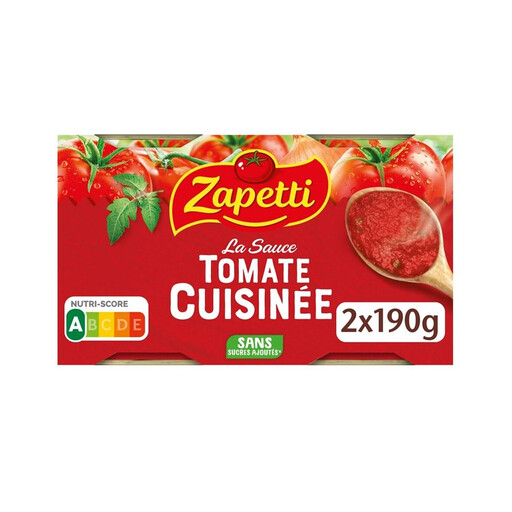 Image unavailable
The pack of two 190 g units could suit someone planning more than one pasta meal.
This offer is for two units, not one 190 g container; check the preparation and storage instructions for each one.
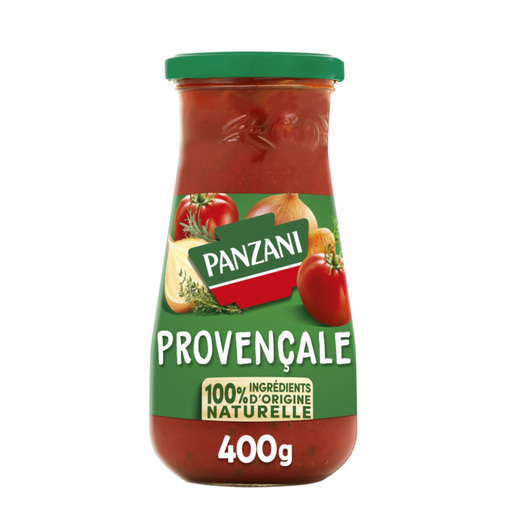 Image unavailable
Consider this 400 g format if you’re planning several pasta meals or can use any leftovers.
If you’re only having it for lunch once, check how much you’ll need and the storage instructions after opening.
No: the individual Panzani Spaghetti Bolognaise meal listed by Carrefour already contains pasta, tomato and beef. If you want a sauce to add to your own pasta, check the product name and ingredients list.
Don’t assume you can. The instructions provided for Panzani and Auchan sauces say to transfer the sauce to a suitable container; always follow the instructions on the product you buy.
It depends on the sauce: the product listing for the 190 g AUCHAN tomato sauce says to keep it refrigerated between 0 °C and +4 °C and use it within 48 hours of opening. Follow the instructions on your own jar rather than applying this timeframe to every recipe.
First, check the product name to distinguish a sauce from a ready meal. Then look at the net weight, ingredients, allergens, nutritional information and storage instructions. The DGCCRF highlights the importance of the product name and ingredients list on food labels.
Don’t eat the contents if you have any concerns about the tin’s condition. The DGCCRF lists dents, rust and bulging among the signs of damage to look out for on tinned food; this check is different from inspecting a glass jar.