What should you look for?
Tomato base with no added salt
Choose this if: you want to decide how your pasta is seasoned; Carrefour France features a Jardin BiO étic passata labelled “no added salt”.
Bear in mind: you’ll still need to season the passata to turn it into a sauce.
Ready-made tomato sauce
Choose this if: you’d rather have a sauce that’s already prepared to serve with your pasta.
The trade-off: check its “salt” figure before buying if this matters to you; being ready to use doesn’t make it comparable with a no-added-salt base.
For your lunch at work, first decide whether your priority is seasoning, preparation time or the freedom to create your own recipe.
| Factor |
What to check |
Who is it for? |
| Salt in your meal |
The “no added salt” label, followed by the “salt” figure per 100 g and for the portion you plan to eat. |
I want to control the seasoning in my pasta without forgetting about salty toppings; around 50% of consumers are said to make salt control their priority. |
| Preparation at work |
The format you choose and the reheating instructions, including which container to use. |
Between meetings, I’d rather have a ready-made sauce I can heat up; nearly 30% of consumers are said to prioritise convenience. |
| A recipe your own way |
The ingredients list and the amount you’ll need for the portions you’re planning. |
I like choosing my herbs and adjusting the sauce to suit my portion; around 20% of consumers are said to put this flexibility first. |
Tomato bases available on Joybuy
These tomato purées can be used as a starting point for a pasta sauce that you season yourself. They’re a different preparation option from a ready-made tomato sauce.
 Image unavailable
MUTTI Zero Pesticides tomato purée, 500 g
A tomato base to choose if you want to make and season your own sauce for pasta at work.
Plan to prepare the sauce before your meal rather than treating it as a ready-to-serve cooked sauce.
View on Joybuy
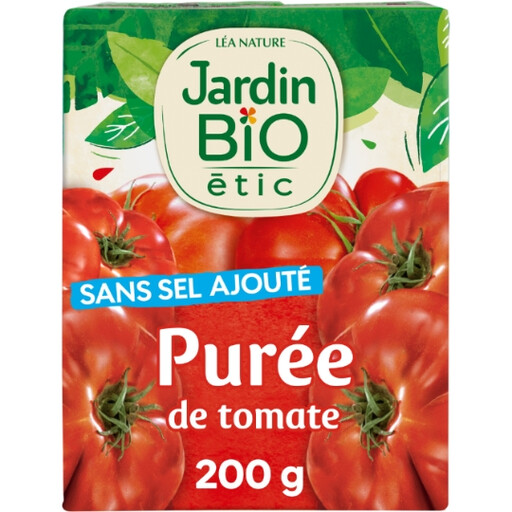 Image unavailable
JARDIN BIO ETIC organic tomato purée, 200 g
This purée is a good choice if you’d rather create your own pasta sauce seasoning from a tomato base.
Allow time to prepare it before serving; if you’re choosing based on salt, check the nutrition information on the pack you buy.
View on Joybuy
Frequently asked questions
Does “no added salt” mean “lower in salt”?
No, the two phrases aren’t interchangeable. To compare the total salt content of two sauces or tomato bases, check the “salt” figure per 100 g on their labels and take the portion you’ll use into account.
How can I season a tomato base without adding salt?
You can use herbs, garlic, pepper, spices or vegetables, depending on the recipe you’re making. Manger Bouger advises tasting before adding more salt and using herbs and spices to bring out the flavour of dishes.
Can you heat a sauce in its jar in the microwave?
Follow the instructions for the product you’ve bought rather than assuming its jar is microwave-safe. For its Tomates Cuisinées sauce, Panzani advises pouring it into a suitable container before reheating.
Should you count only the salt in the sauce at lunchtime?
No, the salt in the other parts of your meal counts too. Manger Bouger and Assurance Maladie give a guideline of no more than 5 g of salt a day for an adult: this applies to the whole day, not just your lunchtime sauce.


