Parents making pasta in a hurry
You’re looking for a sauce that’s suitable for weekday meals, in a pack size that matches how much you serve at dinner.


For children’s dinners, choose a multipack or larger container if you’ll use each opened pack within the time stated on the packaging. Otherwise, a smaller pack will help you avoid leftovers. Before stocking up, compare the recipe, allergens and nutrition information per 100 g: two tomato sauces can differ in these respects, including whether they contain gluten.
You’re looking for a sauce that’s suitable for weekday meals, in a pack size that matches how much you serve at dinner.
You’d like to keep several containers in the cupboard without opening more sauce than you can use once it’s opened.
You check the ingredients and allergen information for each product: not all tomato sauces have the same characteristics.
Start by considering how much sauce you use at a meal, then check whether the recipe is suitable for everyone sharing it. When comparing nutrition information for different pack sizes, the DGCCRF says that it must be given per 100 g or 100 ml.
| Criterion | What to check | Who this matters to |
|---|---|---|
| Pack size and leftovers | Compare the number of containers, their weight and the storage instructions after opening. | I want to keep sauces in the cupboard without having to throw away the contents of an opened jar. Around 42% of consumers put choosing a pack size that suits their meals first. |
| Ingredients and allergens | Read the ingredients list, highlighted allergens and any ‘may contain traces’ statements for the product you’re buying. | If a meal needs to meet a dietary requirement, I need to check the exact recipe before serving the sauce. Ingredients are the top priority for around 33% of consumers. |
| Recipe for the meal | Look for vegetables, pieces and herbs; also compare the salt and sugars per 100 g. | For a weekday dinner, I want an easy-to-serve recipe that suits the children’s tastes. This ease of choice comes ahead of other criteria for around 25% of consumers. |
Recipes vary: Barilla labels its 400 g Cooked Tomato Sauce as ‘gluten-free’, while Auchan’s product information for the Panzani organic vegetable tube lists wheat flour and gluten. Carrefour Classic’ 420 g sauce contains celery.
Check the ingredients, allergens and any ‘may contain traces’ statements on the packaging of the product you’ve chosen. Don’t assume that information for one recipe applies to another.
A multipack lets you keep unopened containers in reserve, but each one has its own storage instructions once opened. Auchan advises keeping its Panzani 2 × 400 g pack in the fridge for three days after opening.
Before you buy, compare the amount in each container with the number of meals you have planned, and follow the storage time given for the product you choose.
These indications don’t replace the ingredients list, allergen information or nutrition values for the specific recipe.
In particular, compare the salt and sugars per 100 g in the nutrition information, then check the ingredients that matter for your meal.
For a child with a food allergy, arrangements for meals at school may be set out in an Individual Care Plan (PAI), according to the Ministry of National Education.
If the meal is for school or an after-school club, check the arrangements agreed with the school or provider and the information on the label before choosing a sauce.
Panzani offers its Cooked Tomato Sauce in 210 g, 400 g and 650 g packs; Auchan also stocks a 2 × 400 g multipack.
Barilla’s 400 g Cooked Tomato Sauce can be served with pasta or used as the base for a recipe.
Carrefour offers a 420 g jar of Classic’ Cooked Tomato Sauce.
E.Leclerc stocks several tomato-based products under these names, including vegetable sauces and different pack sizes.
Here, Auchan is a retailer that stocks products including the Panzani 2 × 400 g multipack and a 180 g Panzani tube, rather than the manufacturer of these sauces.
These products offer tomato sauces in smaller packs, multipacks or larger sizes, as well as a tomato base to prepare to suit your meal. Choose based on how much you’ll actually use, and check the label if you have any dietary requirements.
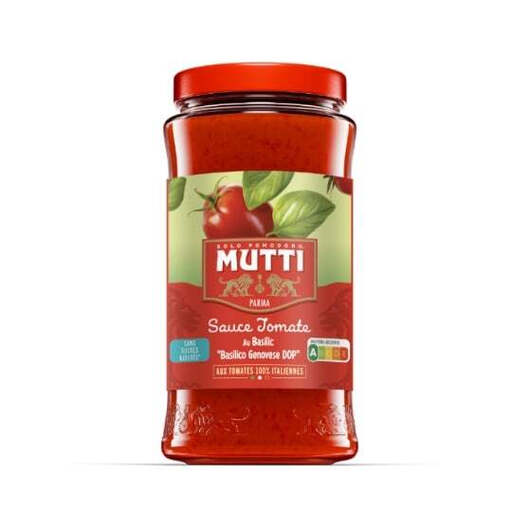 Image unavailable
If you’re planning a pasta dinner and would like a basil recipe, compare the pack size with the amount you’ll be serving. Check the label for allergen information and storage instructions after opening.
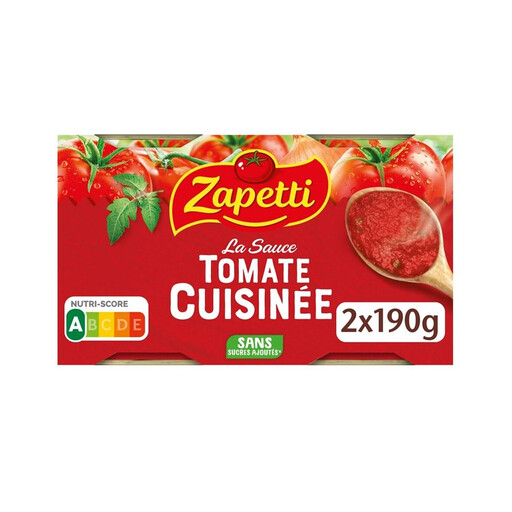 Image unavailable
This multipack could suit you if you’d rather open a small amount at each meal. It contains two 190 g portions; check the allergen information and storage instructions for the one you open.
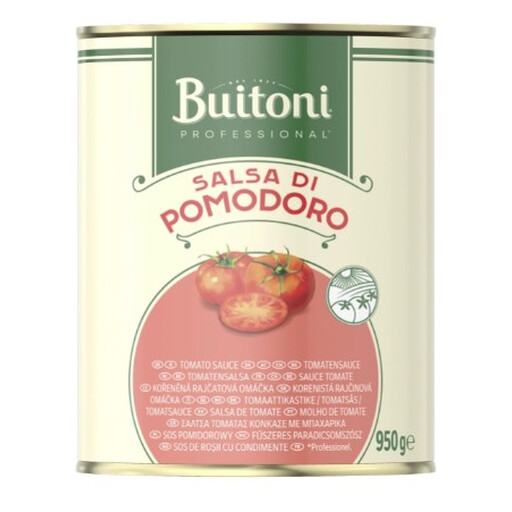 Image unavailable
The 950 g size is worth considering if your household regularly uses tomato sauce with pasta. Plan what you’ll do with the contents after opening, and check the allergen information on the packaging.
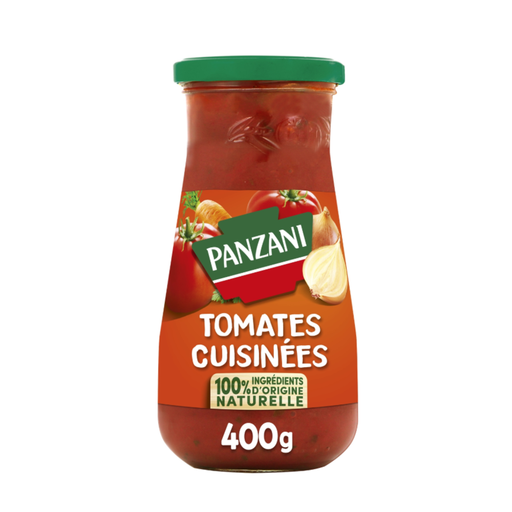 Image unavailable
You can compare this 400 g size with the amount of sauce you use for a pasta dinner. If anyone eating has a dietary requirement, check the ingredients, allergens and any ‘may contain traces’ statements on the packaging you receive.
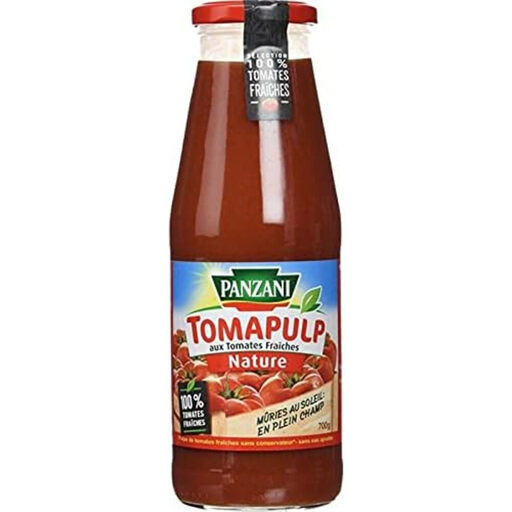 Image unavailable
If you’re looking for a tomato base to make your own pasta sauce, bear the 700 g size in mind before opening the container. This isn’t the same as a ready-to-serve cooked sauce, so check the instructions and allergen information on the packaging.
No, it depends on the product. Barilla labels its 400 g Cooked Tomato Sauce as ‘gluten-free’, whereas Auchan’s product information for the Panzani organic vegetable tube lists wheat flour and gluten. Always check the label of the product you buy.
A large jar is a good option if you can use the contents within the time stated after opening; with a multipack of small containers, you can open one at a time. Compare the amount in each container, not just the total weight of the multipack.
First compare the ingredients and allergens that matter for the meal, then compare the nutrition information on the same basis. The DGCCRF says that nutrition information must be given per 100 g or 100 ml, making it easier to compare the salt and sugars in different pack sizes.
If your child has a food allergy, start with the arrangements agreed with the school rather than relying on a general rule about tomato sauce. According to the Ministry of National Education, an Individual Care Plan (PAI) can set out any necessary adjustments; then check the label of the product you’re considering.
Follow the instructions on the product you’ve bought. As a product-specific example, Auchan says to keep its Panzani 2 × 400 g multipack in the fridge for three days after opening; this storage time doesn’t automatically apply to other sauces.