Shoppers comparing fat content
You check the amount listed per 100 g, then factor in any oil, cheese or other ingredients you plan to add to your dish.


To choose a pasta sauce with less fat, first compare the nutritional values per 100 g for the exact recipe. Carrefour France lists 2.1 g for SIMPL vegetable tomato sauce, compared with 2.6 g for the frozen portioned sauce featured by Picard. A jar is a good choice if you can use its contents in line with the storage instructions after opening. Frozen portions make it easy to use a small amount at a time, provided you have space in your freezer.
You check the amount listed per 100 g, then factor in any oil, cheese or other ingredients you plan to add to your dish.
You want a sauce with a fat content that suits your goals, in a format you can store according to the instructions on the pack.
You only use a little sauce at each meal. Frozen portions can make it easier to measure out what you need, if you have space in your freezer.
Start with the recipe’s nutritional value, then choose a format to suit the amount you use. Finally, check the ingredients and storage instructions for the product you select.
| Criteria | What to check | Who is it for? |
|---|---|---|
| Fat content | The value per 100 g on the label for the exact recipe, as well as any ingredients added to the dish. | If I’m cutting down on fat, I want to compare two sauces in equal quantities before choosing a recipe. Around 42% of shoppers prioritise this comparison. |
| Amount used | The contents of the jar or the number of frozen portions you need, depending on how often you eat pasta. | When I cook pasta often, I prefer a format that lets me use everything without leaving leftovers. This usable quantity comes before other criteria for around 33% of shoppers. |
| Ingredients and storage | The ingredients, allergens and salt content, plus storage instructions after opening or for frozen products. | If I have an allergy or am preparing small portions, I need to know what’s in the sauce and how to store it as directed. These checks are the priority for around 25% of shoppers. |
The word ‘tomato’ doesn’t tell you how much fat a sauce contains. Carrefour France lists 1.4 g per 100 g for its Organic Veggie Bolognese and 2.1 g for its SIMPL vegetable sauce. Auchan France lists 3.2 g per 100 g for the cooked tomato sauce reviewed.
Check the ‘fat’ line for the version you’re choosing, and also consider what you’ll add to your pasta.
Portioning is useful if you only make a small amount of sauce. If you usually use a whole jar, this format may not be as well suited to your needs.
Work out how much you use per meal and check the storage instructions for the format you choose.
Frozen portions also take up space in your freezer.
The SIMPL vegetable sauce featured by Carrefour France contains celery. Ingredients and allergen information can also vary between products.
If you need to avoid an ingredient, check the information on the packaging of the product you buy.
Carrefour offers a range of tomato sauces, including SIMPL, Classic' and Bio. Compare each recipe separately.
Panzani offers cooked tomato sauces and tomato bases that you can season yourself.
Barilla offers a cooked tomato sauce in a 400 g format, among other products.
Auchan and Pouce tomato sauces let you compare different recipes, rather than relying on a single figure for the brand.
These products include tomato sauces for pasta and purées to season yourself. They vary in format and preparation, so start by choosing the type of recipe you want, then check the nutritional information for the exact product.
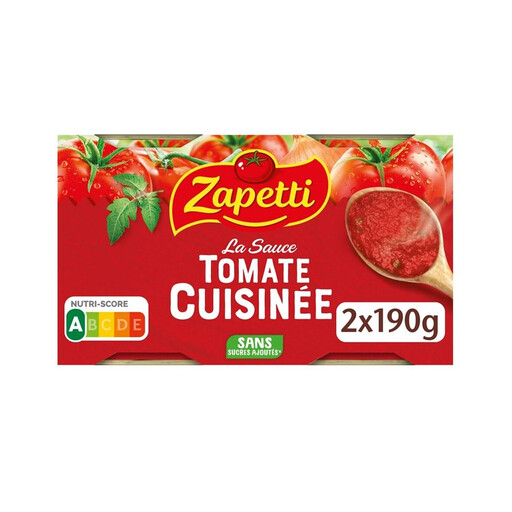 Image unavailable
A pasta sauce in two 190 g jars, worth considering if you use these amounts separately. Check the fat content and storage instructions after opening on the product you buy.
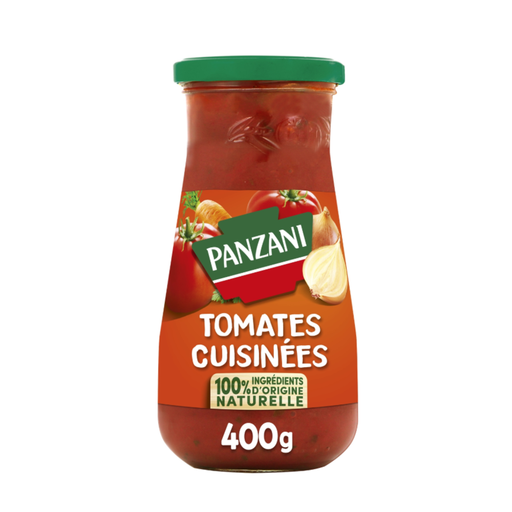 Image unavailable
A cooked tomato recipe for pasta in a 400 g format. Compare its ingredients and fat content per 100 g with other cooked sauces you’re considering.
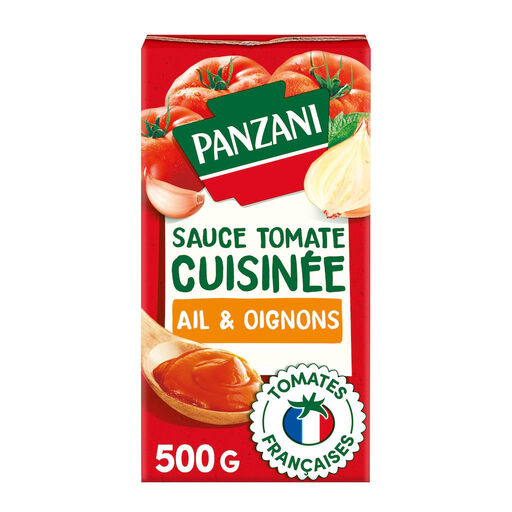 Image unavailable
A ready-seasoned tomato sauce for pasta in a 500 g format. If you’re keeping an eye on what goes into your dish, check the label for this recipe and its instructions for use after opening.
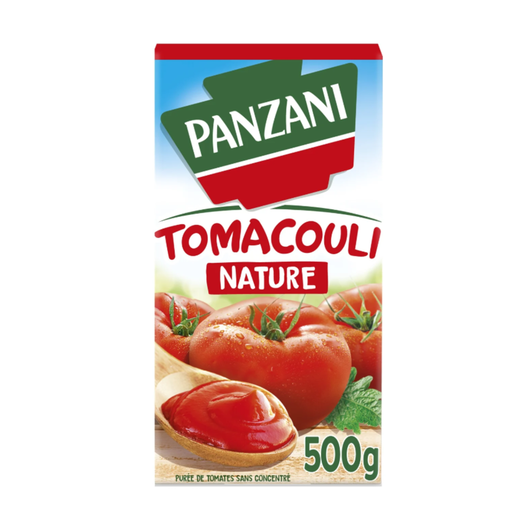 Image unavailable
A 500 g tomato base for making and seasoning your own pasta sauce, rather than a complete cooked sauce. Check the exact label to compare fat content.
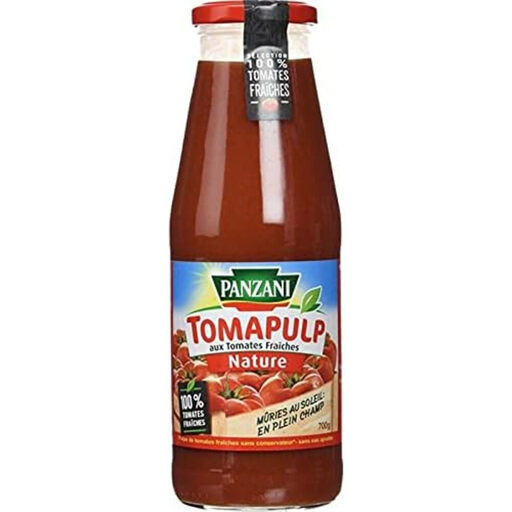 Image unavailable
A 700 g tomato base to use in pasta sauce, seasoned to your taste. Check the fat content on the label for this format, and plan how you’ll use the contents after opening.
Compare the grams of fat per 100 g on the label for each recipe. To illustrate the difference between products, Carrefour France lists 2.1 g per 100 g for its SIMPL vegetable sauce, while Picard lists 2.6 g per 100 g for its frozen portioned tomato sauce.
No. Frozen portions mainly make it easier to use a small amount at a time. The frozen tomato sauce featured by Picard contains 2.6 g of fat per 100 g; compare this with the value for the specific jarred sauce you’re considering.
Follow the instructions for the product you buy. For the cooked sauce reviewed, Auchan France recommends storing it between 0 °C and +4 °C and using it within 48 hours of opening. Picard recommends storing its frozen portions at −18 °C and says not to refreeze the product once defrosted.
Salt is a separate nutritional value from fat, and the amount can vary between recipes. Anses lists sauces among dietary sources of sodium. If this matters to you, compare the ‘salt’ value per 100 g for the products you’re considering.