People who want to control their salt intake
You prefer to season a tomato base yourself. A ‘no added salt’ label may suit you, but remember to check the ‘salt’ value on the label too.


If your priority is to control added salt, a tomato pulp or purée labelled ‘no added salt’ lets you season the sauce yourself, but takes a little preparation. If you’d rather use a ready-made sauce, compare the salt, carbohydrate and sugar values per 100 g, then check them against the amount you actually serve. Neither the Nutri-Score nor the absence of preservatives is a substitute for reading the label.
You prefer to season a tomato base yourself. A ‘no added salt’ label may suit you, but remember to check the ‘salt’ value on the label too.
You want a sauce that’s already prepared for pasta. Compare the salt content of the options you’re considering rather than relying solely on the brand or Nutri-Score.
You consider the amount of sauce served alongside its carbohydrate and sugar content as part of the meal. France’s national health insurance authority (Assurance Maladie) recommends applying the nutrition information per 100 g to the amount you eat.
Choose this if: you want to decide how to season your pasta sauce yourself.
Bear in mind: you’ll still need to prepare and flavour the base. ‘No added salt’ doesn’t mean the ‘salt’ value is zero.
Choose this if: you’d rather have a sauce that’s already prepared and spend less time in the kitchen.
Bear in mind: the recipe is already seasoned, so compare its salt content with that of the other sauces you’re considering.
| What to consider | What to check | Who is it for? |
|---|---|---|
| Added salt | Look for ‘no added salt’, then compare the ‘salt’ value per 100 g on the specific products. | If you want to season the sauce to your taste without starting with an already salted recipe, controlling added salt becomes your priority. Around 42% of consumers would put it first. |
| Carbohydrates and portion size | Check the carbohydrate and sugar values per 100 g, then apply them to the amount of sauce served, as recommended by France’s national health insurance authority (Assurance Maladie). | When putting together a meal with pasta, you want to consider the sauce as part of the meal rather than in isolation. Around 33% of consumers would prioritise keeping track of carbohydrates, sugars and portion size. |
| Preparation and purchase | Check whether the sauce is ready to serve or needs cooking, as well as the pack size and availability of the option you’ve chosen. | If you need to prepare a meal quickly, you’re looking for an option you can actually buy and use without having to cook a base. Speed and convenience would come first for around 25% of consumers. |
Panzani gives its Cooked Tomato Sauce a Nutri-Score A, but this rating alone doesn’t tell you how much salt the product contains.
When comparing sauces for the same use, check the ‘salt’ value per 100 g.
A base with no added salt may still show some salt in its nutrition information. The Jardin BiO étic tomato pulp listed by Auchan, for example, contains 0.02 g per 100 g.
Check the value for the pack you’re buying, then take into account how much you use in your sauce.
The salt in the sauce doesn’t tell you everything about the meal. France’s national health insurance authority (Assurance Maladie) recommends applying nutrition values to the amount you eat.
Also check the carbohydrates and sugars in your portion of sauce, as well as the amount of pasta you serve.
The range includes ready-made sauces and Tomacouli, a tomato base that you cook yourself.
Barilla presents its 400 g Cooked Tomato Sauce as an accompaniment for pasta or as a base for another sauce.
The retailer lists Carrefour Classic’ sauces as well as sauces from other brands.
The retailer lists a ready-made sauce as well as tomato bases from other brands.
The retailer lists, among other products, a 420 g Turini tomato and basil sauce.
The retailer has offered Baresa tomato sauce in a 560 g pack.
These two tomato purées can be used as bases for a pasta sauce that you season yourself. When choosing between the pack sizes, check the nutrition information for each product and how much you plan to use.
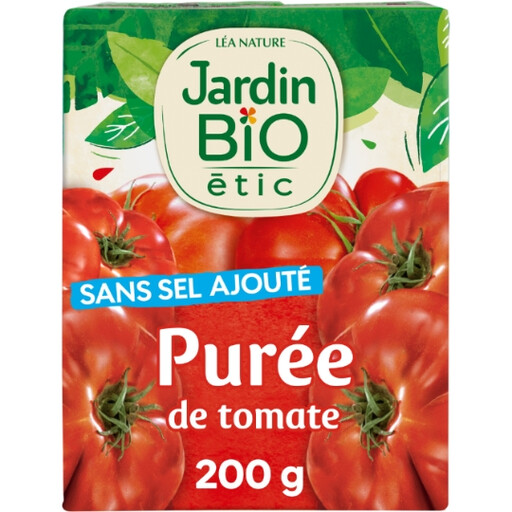 Image unavailable
A purée to prepare and season if you’d rather make your own pasta sauce. Check the salt, carbohydrate and sugar values on the label for the amount you plan to serve.
 Image unavailable
A 500 g pack of purée for making a sauce, rather than serving a recipe that’s already seasoned. Check the nutrition information for the specific product before deciding how much to use.
No. France’s national health insurance authority (Assurance Maladie) describes a varied diet with no foods generally banned, and quantities tailored to the individual. Consider your portion of sauce alongside the pasta and the rest of the meal, taking into account any personalised advice that applies to you.
Compare the salt and carbohydrate values, including sugars, per 100 g, then apply them to the amount you plan to serve. France’s national health insurance authority (Assurance Maladie) recommends this approach when using nutrition information while shopping.
No. The product may still contain some salt. The Jardin BiO étic tomato pulp with no added salt listed by Auchan, for example, contains 0.02 g of salt per 100 g. Check the ‘salt’ value for the pack you’re buying.
You can use herbs, spices, garlic or onion to make your sauce. Manger Bouger recommends using herbs and seasonings to add flavour to dishes without adding more salt.