What should you look for in a sauce?
Start by distinguishing claims about added sugars from the nutrition information, then consider how the sauce fits into the meal. For pre-packed foods, France’s Directorate General for Competition Policy, Consumer Affairs and Fraud Control says that values per 100 g make products easier to compare.
| Criteria |
What to check |
Who this is for |
| Added sugars |
Look for the claim ‘no added sugars’, then check the ingredients and the ‘of which sugars’ figure per 100 g. |
I want to avoid added sugars in the recipe without assuming that tomatoes contain no sugars. Around 42% of consumers would prioritise this above all else. |
| Sauce ingredients and nutrition |
Compare sugars and salt per 100 g; also check the ingredients, allergens and pack size. |
When choosing between several recipes, I’d rather consider salt and ingredients as well as sugars. Around 33% of consumers would make this overall comparison their priority. |
| How it fits into the meal |
If the person has diabetes, consider the portions of sauce and pasta. If they’re losing weight unintentionally, ask for an appropriate assessment. |
If the person has diabetes or seems to be losing weight without meaning to, I can’t assess the sauce separately from their meals. Around 25% of consumers would put this individual approach first. |
Brands to compare
These brands offer sauces or tomato bases that you can check product by product. Their inclusion here doesn’t indicate the sugar content of an entire range or whether it’s suitable for an older person.
Panzani
Panzani’s Cooked Tomato Sauce is available in 210 g, 400 g and 650 g packs.
- Panzani’s website gives this product a Nutri-Score A.
- This score doesn’t replace checking the sugars and salt on the packaging of the pack you buy.
Barilla
Barilla offers a 400 g Provençal Sauce and a 200 g Organic Tomato and Basil Sauce, listed by Auchan.
- Auchan’s listing for the organic tomato and basil sauce gives the sugars and salt per 100 g, which you can use to compare this specific product.
- The values for one Barilla sauce don’t automatically apply to another recipe from the brand.
Carrefour Classic'
The Carrefour range includes tomato and basil sauces, as well as Provençal tomato sauces, under the Carrefour Classic' brand.
- These different recipes give you options to compare based on the ingredients and pack size you’re looking for.
- Check the nutrition information for the specific product before choosing it for its sugar or salt content.
Marque Repère / Turini (E.Leclerc)
E.Leclerc’s range includes a 180 g Turini tomato sauce with vegetables and a 420 g Turini Arrabbiata Sauce.
- You can assess each recipe and pack size separately, depending on how you plan to use it.
- Check the ingredients and values per 100 g for each product. The range name alone doesn’t mean that it has a reduced sugar content.
BARESA (Lidl)
Lidl sells a tomato sauce under the BARESA brand.
- This product gives you another tomato sauce recipe to include in your comparison.
- Check its ingredients and sugar and salt values before deciding whether it meets your priorities.
Pasta sauces and tomato bases on Joybuy
These two Panzani products suit different uses with pasta: Tomacouli is presented as a tomato sauce, while the tomato purée is a base you can use to make your own. To choose between them, check the ingredients, sugars and salt per 100 g on the packaging of the variant you buy, along with any claims about added sugars.
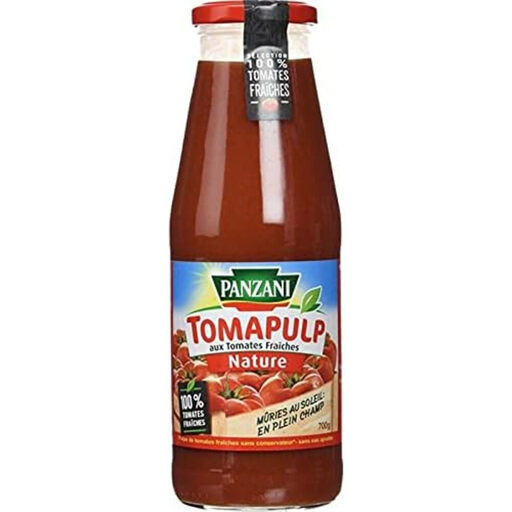 Image unavailable
PANZANI Tomacouli tomato sauce 700 g
A tomato sauce to consider if you’re looking for something to serve with pasta. The pack size shown is 700 g. Check the nutrition information and storage instructions for after opening on the packaging.
View on Joybuy
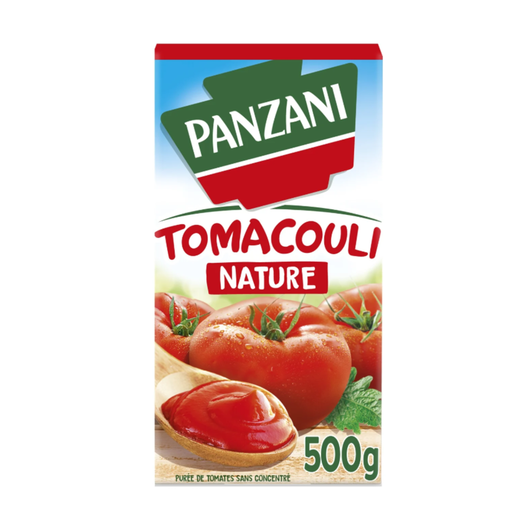 Image unavailable
Panzani fresh tomato purée 500 g
A tomato base to consider if you’d like to make your own pasta sauce rather than use one that’s already seasoned. The pack size shown is 500 g. Check the ingredients and nutrition information for the product you buy.
View on Joybuy
Frequently asked questions
Does ‘no added sugars’ mean ‘sugar-free’ for tomato sauce?
No. In the European Union, this claim doesn’t rule out sugars that are naturally present in the ingredients. It means that no sugars or ingredients used for their sweetening properties have been added. Also check the ‘of which sugars’ amount per 100 g.
What should you compare between two pasta sauces?
First, compare the sugars and salt per 100 g on pre-packed products so you’re using the same basis. Then check the ingredients and allergens, followed by the pack size and portion you plan to serve. France’s Directorate General for Competition Policy, Consumer Affairs and Fraud Control says that showing values per 100 g or 100 ml makes products easier to compare.
Is a lower-sugar sauce automatically suitable for an older person with diabetes?
No. The sugar content of a sauce alone isn’t enough to tell you whether it’s suitable for someone with diabetes. The French national health insurance service, Assurance Maladie, stresses that diets should be tailored to individual needs. If necessary, consider the sauce, pasta and portions with the professional supporting the person.
What should you do if an older person is losing weight without meaning to?
Ask the professionals supporting them to assess their needs, rather than making sugar reduction the sole aim when choosing food. The French National Authority for Health lists unintentional weight loss as one of the signs of malnutrition in people aged 70 or over.
How should you store a jar of sauce after opening?
Follow the storage instructions and use-by period given on the jar you’re using. These vary by product, so check them before choosing a pack size you don’t plan to use all at once.


