
Livraison le jour même ou le lendemain

Qualité garantie

Débloquez vos offres de bienvenue: Livraison GRATUITE | Jusqu'à -80 % | 30 jours d'essai gratuits à JoyPlus
Téléchargez l'application
Making your own fresh homemade pasta? It’s a dreamy idea, conjuring up images of convivial meals and authentic flavours. Except in real life, the adventure can quickly turn sour. The market is flooded with machines making tempting promises, but be warned: not all are created equal. One bad choice and your culinary adventure becomes a chore, relegating your brand-new machine to the back of a cupboard.
Before you take the plunge, it's best to know the most common pitfalls awaiting unwary buyers:
Identifying these hurdles is the first step toward a successful purchase. The second? Understanding the criteria that truly matter.
To avoid disappointment, focus on a few key technical features. They are the guarantee of ease of use, durability, and the enjoyment you'll get from your appliance.
The choice between a manual and an electric machine depends entirely on your priorities and your cooking philosophy.
Build quality is a non-negotiable criterion. For a manual machine, look for models made of heavy stainless steel with a robust and deep vice-like clamp system that can get a firm grip on your countertop. For an electric model, opt for appliances whose components in contact with food are made of durable, food-grade materials and are, ideally, dishwasher-safe.
A good machine should be able to keep up with your culinary ambitions. Check the number of included dies (the moulds that shape the pasta). Some models offer pasta accessories sold separately, opening the door to making ravioli, lasagne, and other more creative shapes.
For those not yet ready to invest, simpler tools can already yield excellent results. A good adjustable rolling pin and a silicone pastry mat are a perfect foundation for starting to work the dough by hand.
Rather than searching for THE perfect machine for everyone, it's better to find the one that matches your way of cooking. Here are our 2026 recommendations, designed for specific needs.
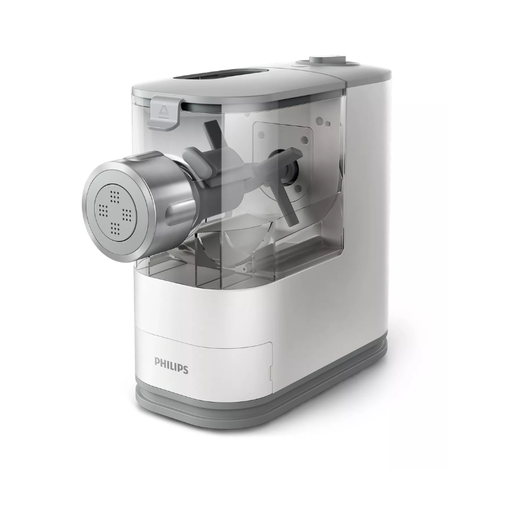
Why we love it: This appliance is designed for those who want homemade food without spending hours on it. Just add the ingredients, and the machine kneads and extrudes 450g of pasta in a record 18 minutes. It delivers on the promise of quick, healthy, and tasty weeknight meals.
It tackles the cleaning problem head-on: its removable parts are dishwasher-safe. No more chores. Its integrated storage drawer for the dies is also an excellent idea, so you'll never have to search for them again.
Fully automated process. Four classic shapes included (spaghetti, penne, fettuccine, lasagne) provide a very welcome baseline versatility.
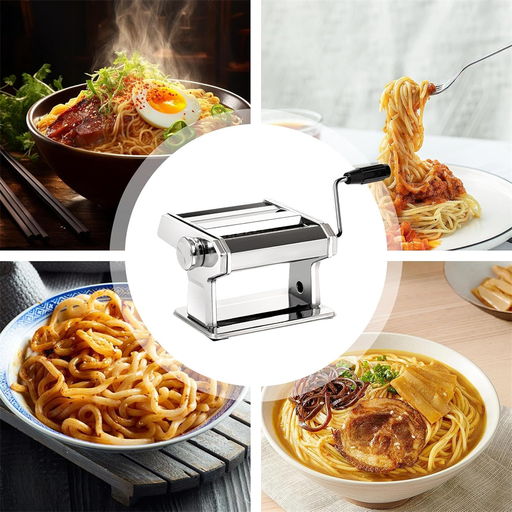
Why we love it: For purists who love to get hands-on and maintain total control. This type of roller is a classic that lets you "feel" the dough and adjust the thickness with great precision. It's the archetype of a simple, nearly indestructible, and budget-friendly tool.
Its 100% mechanical design eliminates any risk of electronic failure and radically simplifies cleaning. Its metal structure, if properly secured, sidesteps the instability trap.
Absolute control over rolling and cutting. A robust construction that, with minimal maintenance, can last you for decades.
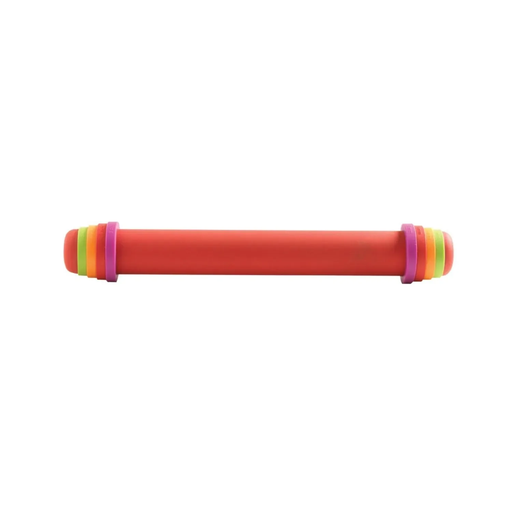
Why we love it: Because it's not a machine, but a true Swiss Army knife for the kitchen. It's perfect for fresh pasta (2mm ring), but also great for cookies (4mm), tart crusts (6mm), or pizza dough (8mm). A smart and versatile investment.
It avoids the "single-task appliance" trap. Its versatility ensures it will be used regularly for a host of preparations, making every square inch it occupies in your kitchen worthwhile.
Precise thickness control for perfectly uniform results. Its non-stick silicone surface reduces the need to flour your work surface.
Discover our full selection of products that meet our quality criteria and current safety standards.
There's a bit of a knack to it, but nothing you can't handle. The most important thing is to ensure the machine is securely fastened to a stable work surface. Once you've mastered that, feeding the dough through the rollers becomes a fairly intuitive motion. Our advice: start with small amounts of dough to get the hang of it.
It really depends on the model. Older generations were a real chore to clean, it's true. Fortunately, recent appliances, like the Philips model featured, were designed with this constraint in mind. Their removable parts are often dishwasher-safe, which makes all the difference. One golden rule: clean everything right after use, before the dough residue dries and turns to cement.
For a result worthy of a trattoria, durum wheat flour (semolina) or Italian "00" flour are unbeatable. Their high protein content gives the dough perfect elasticity and an excellent texture when cooked. That said, a standard all-purpose flour (like T45 or T55 in France) will also do the trick. The texture will be a little different, but the pasta will be no less delicious. One of the great joys of homemade pasta is experimenting with different flours, adding eggs, spinach, or squid ink. Now it's your turn to play