If you can boil water at work, quick-cook dried pasta lets you make your own lunch, as long as you plan what to serve with it. If you only have a microwave, check the instructions for an individual frozen meal instead. A larger pack can work if you can share the portions, keep them chilled and allow enough time to prepare it.
Who are these options for?
Anyone with access to a microwave only
If you can’t use a saucepan, look for a meal with instructions that suit the microwave at work. Check how long it takes to prepare, too: a meal that needs reheating may not be practical during a short lunch break.
Anyone preparing several lunches
If you cook in advance or share a larger dish, think about how many portions you’ll actually eat and how you’ll store the rest. If you’re bringing a frozen meal, transport and cold storage are part of the decision.
Anyone keeping an eye on ingredients
Check the ingredients, allergens and nutritional information for the specific recipe you’re interested in. If there’s a Nutri-Score on the packaging, it doesn’t replace these checks.
What should you check before choosing?
Quick-cook dried pasta
Choose this if: you can cook pasta in water and want to put together your own lunch.
Bear in mind: even quick-cook pasta needs water and suitable equipment, plus a sauce or topping, depending on what you’re having.
Individual frozen meal
Choose this if: you want to heat up a single portion using the microwave at work.
Bear in mind: the product must be stored as instructed on the packaging, and cooking times vary by recipe.
Larger frozen meal
Choose this if: you plan to share the meal or divide it into several portions.
Bear in mind: portioning, storage and cooking time can make it less practical for an individual lunch break.
For lunch at work, start with the equipment you can actually use. Then check which format you’ll be able to eat and read the instructions on the packaging.
| Factor |
What to check |
Who is it most important to? |
| Format and portions |
Compare the weight of the meal with the number of portions you’ll be able to eat or share. |
If I’m planning several lunches, I want to use the whole meal rather than leave portions uneaten; around 33% of consumers would make this a priority. |
| Equipment and lunch break |
Check the cooking method, power required and cooking time for the exact product. |
If there’s only a microwave at work, I need something I can prepare during my lunch break; around 27% of consumers would prioritise this compatibility. |
| Ingredients |
Read the ingredients, allergen information and nutritional values per 100 g and, if provided, per portion. |
If I need to check for a particular ingredient or compare two recipes, I want to be able to read their labels; around 20% of consumers would make ingredients their top priority. |
| Cooking in water |
Check the stated cooking time for dried pasta and whether you can boil water. |
If I can cook at work, I’d rather make my own pasta base quickly; almost 20% of consumers would prioritise this flexibility. |
Mistakes to avoid
-
Choosing a larger meal without planning how to portion it
Carrefour and E.Leclerc offer formats for different needs: a meal made for sharing could leave you with leftovers if you’re having lunch on your own.
Before choosing a format, work out how many meals you’ll get from it and how you’ll store any remaining portions.
Uneaten portions mean food waste.
-
Assuming every frozen meal is quick to microwave
Auchan’s product listing for 1 kg of beef lasagne states a cooking time of 21 minutes at 900 W, without defrosting first. That cooking time applies to this product, not all frozen meals.
Check the cooking time and power required on the packaging before planning to have it during a short lunch break.
-
Breaking the cold chain on the way
Taking a frozen meal to work means planning how you’ll transport and store it. Anses recommends keeping transport time to a minimum and not refreezing food that has defrosted.
Pick up frozen food at the end of your shop, keep it chilled on the way and follow the product’s storage and cooking instructions.
-
Relying on a logo or quick cooking time without reading the label
Nutri-Score and preparation time alone don’t tell you whether a product contains ingredients you need to avoid. The DGCCRF reminds shoppers that allergens must be highlighted on the labels of prepacked food.
Check the ingredients and allergen information for the product you choose, then compare its nutritional information if that helps you decide between recipes.
Brands to know, depending on how you prepare your meal
Panzani
The Les 3 Minutes dried pasta range is suited to lunches you can cook in water at work.
- Panzani says this range cooks in three minutes; check the instructions for the specific product you choose.
- It’s dried pasta to cook, not a ready meal to reheat.
Lustucru Sélection
The range includes pan-fry gnocchi, filled pasta and tagliatelle.
- These products offer alternatives to traditional dried pasta.
- Check the cooking method and storage instructions for each product; something that needs pan-frying won’t necessarily be suitable for the microwave.
Barilla
Its dried pasta, including Penne Rigate, can be used as the base for a lunch served with sauce.
- Barilla describes its Penne Rigate as a shape that works well with sauces.
- Allow time to cook it in water and put your meal together.
Carrefour
Its ranges of frozen pasta dishes and lasagne include larger formats for sharing.
- Carrefour’s range lets you browse different formats of prepared meals.
- Check the number of portions, the recipe and the cooking instructions for the specific meal you’re considering.
E.Leclerc / Marque Repère
The frozen ready-meal range includes lasagne and other pasta dishes.
- The formats available give you the choice of an individual portion or a meal to divide up.
- Choose a format you’ll actually eat, and check the instructions on the product listing for the recipe.
Auchan
The range includes frozen lasagne in larger formats for sharing.
- The product listing for its 1 kg beef lasagne states that it serves four and can be cooked in the microwave without defrosting first.
- The same listing gives a cooking time of 21 minutes at 900 W, so check that it fits your lunch break.
Two products for different ways of preparing lunch
These products suit different needs at work: a portion of frozen lasagne to prepare as instructed, and dried coquillettes that need to be cooked in water.
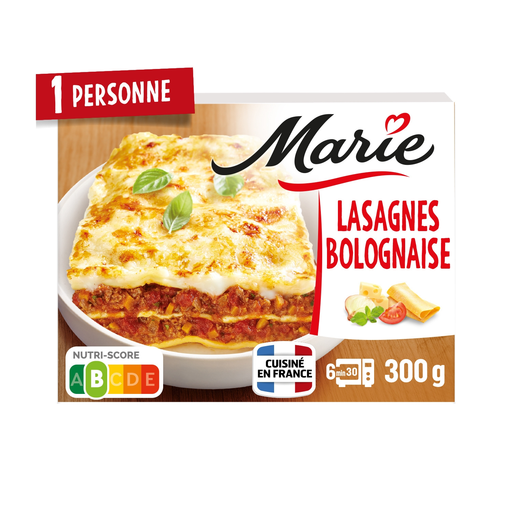 Image unavailable
Marie beef lasagne 300 g
This individual portion could be a good choice if you can keep a frozen meal chilled and follow its preparation instructions at work.
300 g portion. Before taking it with you, check the packaging for the cooking time, power required and allergen information.
View on Joybuy
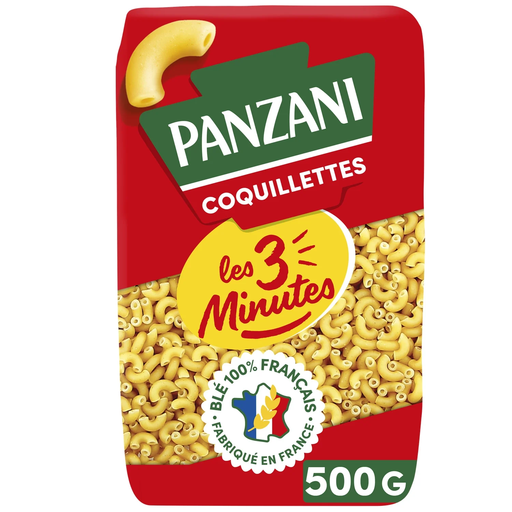 Image unavailable
Panzani Les 3 Minutes coquillettes 500 g
This dried pasta is a good option for lunch at work if you can boil water. Remember to bring something to serve with the coquillettes.
500 g pack. Panzani says the Les 3 Minutes range cooks in three minutes; follow the instructions on the packaging.
View on Joybuy
Frequently asked questions
Dried pasta or a frozen meal: which should I choose for work?
Choose based on what you can prepare at work: dried pasta needs to be cooked in water, while a frozen meal must be kept chilled and prepared according to its instructions. If you’re considering a larger format, plan how you’ll use and store each portion, too.
Can I refreeze a meal that has defrosted on the way?
No. Anses recommends not refreezing food that has defrosted. If you’re taking a frozen meal to work, plan its transport and storage to maintain the cold chain, then follow the instructions on the packaging.
Do I need to defrost frozen lasagne before microwaving it?
Not necessarily: Auchan’s product listing for 1 kg of beef lasagne gives microwave cooking instructions without defrosting first. This applies to that product, so check the instructions for your lasagne, including the power and cooking time required.
Is Nutri-Score enough to compare two pasta dishes?
No. When displayed, Nutri-Score provides a nutritional guide, but it doesn’t replace the ingredients list or checking allergen information. Also look at the nutritional values per 100 g and the portion you plan to eat.


