What should you compare?
To choose between almonds for sharing at a party, start with what matters most to your group, then check the information on the relevant pack.
| Criterion |
What to check |
Who is it for? |
| Protein |
Compare the protein and energy values per 100 g in the nutritional information for the product you choose. |
If I want almonds to contribute to the protein content of the party spread, I need a clear figure to compare different bags. Around 40% of consumers put protein content at the top of their list of criteria. |
| Salt and ingredients |
Read the ingredients list and check the amount of salt per 100 g; distinguish between versions with no added salt and salted versions. |
To offer a choice between almonds with no added salt and salted almonds, I want to know what each product contains. Around 30% of consumers prioritise salt and ingredients. |
| Allergens |
Ask about your guests’ requirements, then check the allergens and any ‘may contain’ warnings on the pack you’re serving. |
When several people are sharing the same bowls, I need to be able to identify ingredients that some guests should avoid. Allergen management is the main consideration for around 30% of consumers. |
Almonds available on Joybuy
These two bags of flavoured almonds come in different sizes for party snacking. If protein content or no added salt is your main priority, compare their labels with those of products that meet your needs.
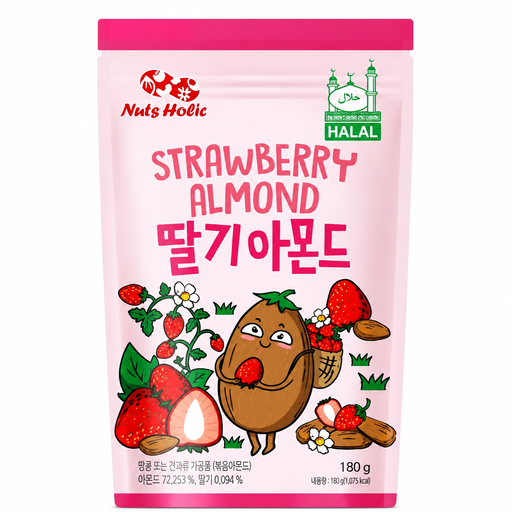 Image unavailable
Nutsholic strawberry-flavoured almonds 180 g
This 180 g bag could be a good choice if you’d like to share strawberry-flavoured almonds. The listed ingredients include sugar and milk; check the label and allergen information before serving them to your guests.
View on Joybuy
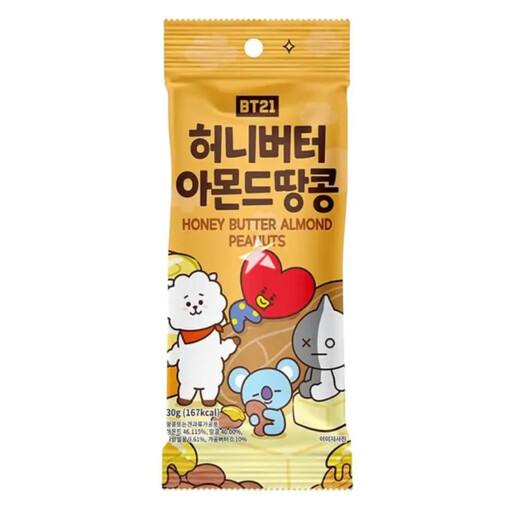 Image unavailable
BT21 honey butter almonds 30 g
The 30 g bag is a handy small size for serving flavoured almonds. The listed ingredients include sugar, honey, milk, soya and salt, among other things; check the pack if any guests need to avoid certain ingredients.
View on Joybuy
Frequently asked questions
How do you compare the protein content of two bags of almonds?
Check the ‘protein’ line per 100 g in the nutritional information on each bag. As product-specific examples, E.Leclerc lists 27.4 g per 100 g for its 250 g Couleurs Vives pack, while Auchan lists 27 g per 100 g for its 400 g product with no added salt. Compare the energy and salt values on the same basis too.
Are almonds on their own enough for a post-workout snack?
The protein figure on a bag isn’t enough on its own to determine whether a snack is right for everyone after exercise. Anses lists almonds among plant-based sources of protein. When choosing almonds for a party, compare the product’s nutritional values and consider them as part of the overall meal.
What should you check when choosing between almonds with no added salt and salted almonds?
Check the ingredients and the amount of salt per 100 g, then choose the option that suits what you want to serve. E.Leclerc’s Couleurs Vives product lists 0.0 g of salt per 100 g; the salted TOKAPI product lists 1.0 g of salt per 100 g and contains sunflower oil. These values apply to these two specific products.
Where can you check the allergens in a bag of almonds?
For pre-packed food sold in France, the DGCCRF states that allergenic ingredients must be highlighted in the ingredients list. Almonds are themselves an allergen; also read any trace warnings on the specific pack, as these may flag other substances that matter to your guests.
How should you store a bag of almonds after opening?
Follow the instructions on the bag you buy. For the Auchan roasted almonds with no added salt listed here, the advice is to keep them away from heat and moisture, seal the bag tightly after opening and eat them within 15 days.


