
Livraison le jour même ou le lendemain

Qualité garantie

Débloquez vos offres de bienvenue: Livraison GRATUITE | Jusqu'à -80 % | 30 jours d'essai gratuits à JoyPlus
Téléchargez l'application
The arrival of warmer weather brings thoughts of gardens, patios, and balconies. To create a shady spot and effectively protect yourself from the sun, a parasol is an indispensable companion. But be warned: faced with an overwhelming selection, it's easy to make a purchasing mistake. A pole that bends in the first gust of wind, a canopy that fades in a single summer, an unstable base… Your investment can quickly turn into a nightmare.
As a product selection expert at Joybuy, I'm here to guide you. Let's skip the marketing jargon and get straight to the point. This guide breaks down the pitfalls to avoid and the essential criteria for choosing a parasol that will live up to its promises, season after season.
An attractive price tag can hide flaws that only reveal themselves once the parasol is set up. Here are the three red flags you should never ignore.
A few technical checks are all it takes to sidestep these pitfalls.
A parasol's durability depends above all on its pole and ribs.
The quality of the canopy determines both your level of protection and the colour's fastness over time.
The choice depends on your space and how you plan to use it.
Let's get practical with a few models that tick all the boxes, each designed for a specific need.
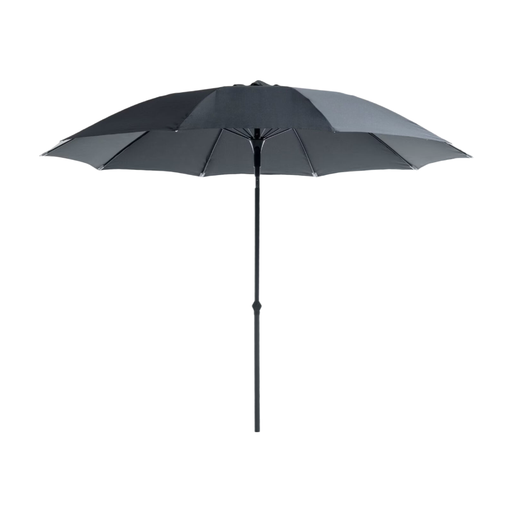
Perfect for : Its 270 cm diameter is ideal for a balcony, a small patio, or a 4-person table. Its tilting head lets you track the sun without moving the base—a real everyday convenience.
Its aluminium pole and 10 fibreglass ribs ensure good resistance to corrosion and wind. The manufacturer recommends a 35 kg base (sold separately), which prevents any guesswork about the weighting.
The combination of a tilting pole and a water-repellent 180 g/m? polyester canopy makes it a safe, versatile, and reliable bet for smaller spaces.
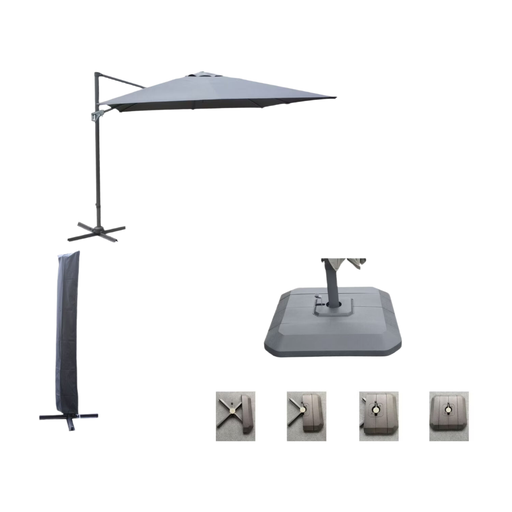
Perfect for : This all-in-one kit is for those who want a complete, hassle-free solution. Its 3x3 m span covers a large garden lounge set, while its 360° rotating base and tilt function let you adjust the shade all day long.
It solves the base weight problem right away by including 4 fillable slabs (for a total weight of 76 kg). Its thick 210 g/m? canopy, equipped with a wind vent, is designed for better resistance to wind and fading.
Peace of mind. The kit includes everything: the parasol, a fillable base, and a protective cover. It guarantees a correct setup and optimal durability from day one.
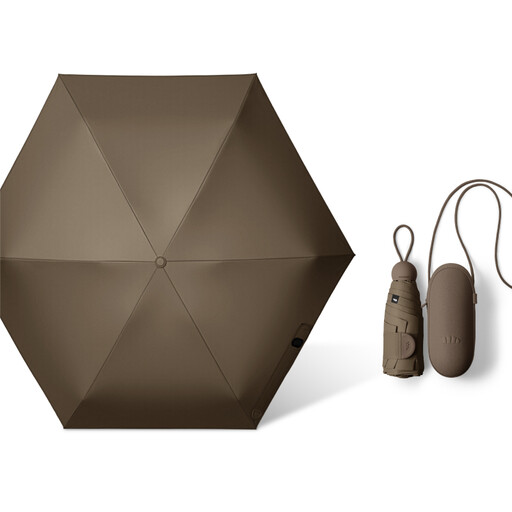
Perfect for : Forget the garden parasol; this is an individual, ultra-portable sun shield. Its compact (5-fold) design slips into any bag. It's the perfect accessory for protection in the city, while travelling, or on a walk.
It takes UV protection very seriously. According to the brand, its L.R.C black coating blocks over 99% of UV rays (UPF 50+ certified). For a pocket-sized model, its 6 reinforced ribs provide very decent wind resistance.
Ultra-portability. Delivered in its capsule case, it's designed to go with you everywhere. Its dual purpose (anti-UV shield and water-repellent umbrella) makes it indispensable, whether it's sunny or raining.
Discover our full selection of products that meet our quality criteria and current standards.
It all depends on the type and span of your parasol.
Regular maintenance is key. Clean the canopy with warm, soapy water and a soft brush, then rinse thoroughly. Act quickly on stains (bird droppings, tree sap…). At the end of the season, make sure the canopy is completely dry before storing it in its cover to prevent mould and mildew.
Not necessarily, but it is more demanding. Its offset structure catches more wind; that's a matter of physics. Its reliability therefore depends on the quality of the pole, the articulated arm, and, above all, the stability of its base. A good cantilever model, correctly weighted, is perfectly safe. However, it is imperative to close it as soon as the wind picks up—a precaution that applies to all parasols.