
Livraison le jour même ou le lendemain

Qualité garantie

Débloquez vos offres de bienvenue: Livraison GRATUITE | Jusqu'à -80 % | 30 jours d'essai gratuits à JoyPlus
Téléchargez l'application
Paper towels, also known as kitchen roll, are a staple in any kitchen. At first glance, nothing seems simpler than picking up a roll. Yet, behind the colourful packaging and marketing promises lie pitfalls that impact your wallet and the environment. A roll that tears at the slightest drop of water or an XXL format that doesn't fit in the dispenser are situations we've all faced. Before you fill your shopping cart, let's review the criteria that separate a good paper towel from a purchase you'll instantly regret.
The first step: outsmarting marketing traps. Here are the most common ones:
paper towel multi-pack might seem like a good deal, but the price per sheet isn't always a win. Not to mention those oversized rolls that are incompatible with standard holders and end up lying around inconveniently on the countertop.decorated paper towel adds a splash of colour, but the dyes must be certified for food contact and, crucially, they shouldn't turn your sheet into a sieve.To stop buying blind, focus on a few technical details, often written in small print on the packaging. They are the real deciding factors for assessing the quality of a kitchen roll and its suitability for your needs.
The number of plies is the primary indicator of a paper towel's robustness and effectiveness.
heavy-duty paper towel with three layers offers incomparably better absorption and strength. It's essential for big messes, cleaning tough surfaces, or tasks that require scrubbing without the paper falling to pieces.The raw material and labels are your guarantee of a safe and more environmentally friendly product.
absorbent paper to blot fried foods or wrap ingredients. Look for the "glass and fork" logo or an explicit statement confirming it is food-safe.To evaluate the true cost of a pack, don't just look at the shelf price. The real calculation is based on the number of rolls and, most importantly, the number of sheets per roll. A 100-sheet roll, even if slightly more expensive upfront, will often be more cost-effective than a 45-sheet roll at a bargain price.
There's a paper towel for every use. We've selected a few standout products, each meeting a specific need, based on our criteria for performance, practicality, and value for money.
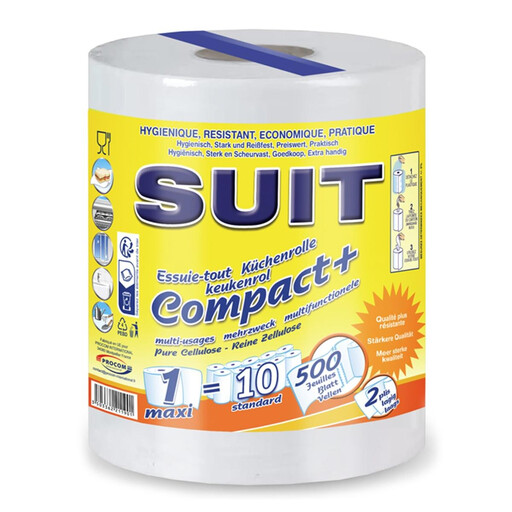
Why we recommend it: With 500 sheets, this XXL roll offers an unbeatable cost-per-use. Ideal for large families or heavy use, it lets you space out your shopping trips.
Instead of multiple small rolls, this format focuses on a single, ultra-dense roll. The cost-per-sheet calculation is crystal clear, and the space savings are a welcome bonus.
A long-lasting format that's perfect for those who want to optimise their budget without sacrificing convenience.
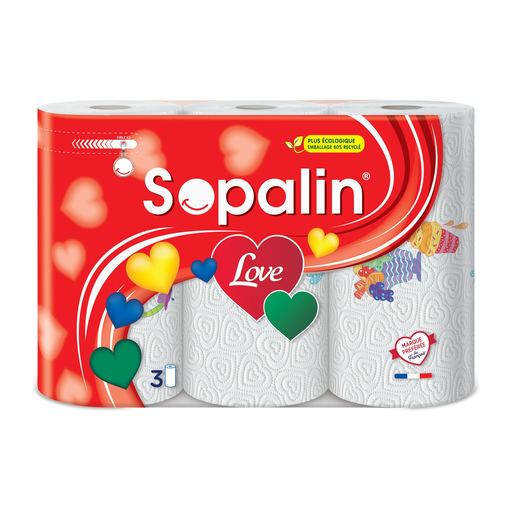
Why we recommend it: This is your ally for tough missions: major liquid disasters, intensive cleaning, and more. Its 3 layers guarantee unfailing absorption and strength.
Here, you're not paying for empty promises. The triple-ply is a true guarantee of performance that prevents over-consumption. Where a 2-ply would require several sheets, one is often enough.
The robustness of 3-ply for heavy-duty jobs. An FSC-certified product made in France, an additional mark of quality.
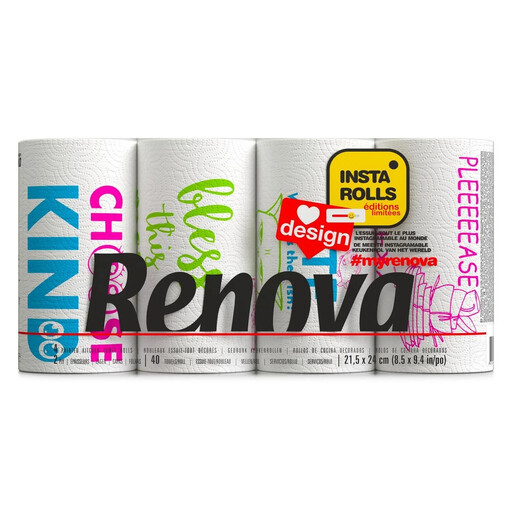
Why we recommend it: Because practical doesn't have to mean plain. Renova offers a paper towel that decorates the kitchen while remaining functional for everyday use.
Unlike some decorative products that sacrifice everything for aesthetics, this one maintains respectable effectiveness. Crucially, it's food-safe, a vital detail.
Original patterns that change from roll to roll, FSC certification, and French manufacturing. Style with substance.
Discover our complete selection of products that meet our quality criteria and current standards.
It's all about thickness and strength. The 2-ply is the everyday standard: drying hands, wiping up a small spill, etc. The 3-ply is the heavyweight category: thicker, much more absorbent, and virtually tear-proof. It's reserved for big messes or cleaning stubborn grease.
Absolutely not! Flushing paper towels is a very bad idea. Unlike toilet paper, it's designed not to break down in water. The risk of clogging your pipes is very real. Its only destination is the bin.
It's simple: look on the packaging for the words "food-safe" or the official logo depicting a glass and fork. This certification is your guarantee that neither the paper nor the pattern's inks will migrate into your food.