
Livraison le jour même ou le lendemain

Qualité garantie

Débloquez vos offres de bienvenue: Livraison GRATUITE | Jusqu'à -80 % | 30 jours d'essai gratuits à JoyPlus
Téléchargez l'application
The paper towel, or kitchen roll, is a staple in our kitchens. Yet, when faced with a shelf overloaded with promises of "maxi rolls," record-breaking absorption, and colourful patterns, making the right choice can be a real headache. The result of a bad purchase: a paper that tears at the first contact with liquid, or a supposedly "economical" format that disappears in the blink of an eye.
To help you see things more clearly, our editorial team has broken down the pitfalls to avoid and the real criteria for making a choice. The goal: to arm you with the knowledge to choose the roll perfectly suited to your needs, whether it's for mopping up a disaster or simply adding a decorative touch to your worktop.
Paper towel marketing is full of claims designed to cause confusion. Here are the two most common pitfalls:
To make an informed choice, forget the slogans and focus on measurable technical features.
The number of paper layers, known as "plies," is a direct indicator of the quality and durability of a paper towel.
Most rolls are made from cellulose wadding. If eco-friendly options are important to you, look for reliable labels that guarantee responsible forest management.
To assess the true cost of a pack, never rely on the shelf price alone. Make a habit of checking the total number of sheets to calculate the real cost-in-use. A compact paper towel roll with 500 sheets will often be better value than a 4-pack of 50-sheet rolls, even if its purchase price is higher.
Rather than an endless list, here is our selection of products that meet specific user profiles, based on the objective criteria we've just detailed.
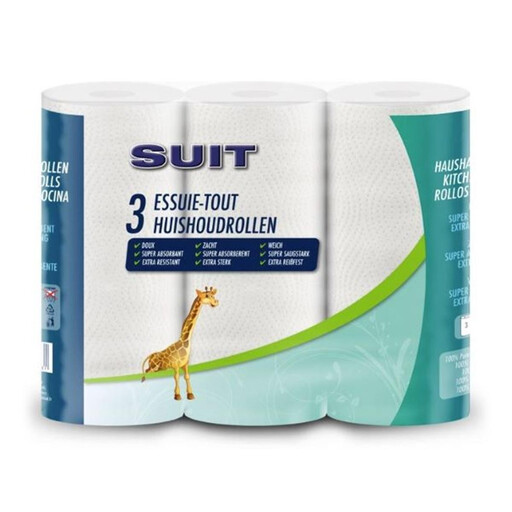
Why we chose it: Ideal for daily use and simple tasks. Its price point makes it a perfect solution for managing your budget without sacrificing the essential: effectiveness for everyday little messes.
This product gets straight to the point: no over-the-top performance promises. Its value lies in its simplicity and controlled cost, making it an honest and transparent choice for essential needs.
Excellent value for money for everyday use. Its 2-ply structure is perfectly calibrated for small cleaning tasks—no more, no less.
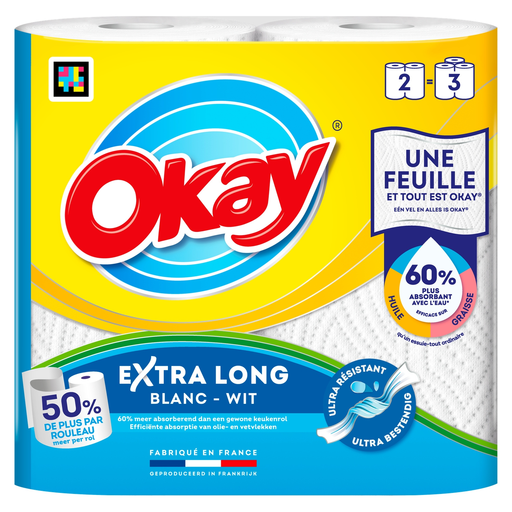
Why we chose it: Perfect for large families or for those who demand maximum absorbency. With 50% more sheets than a standard roll from the same brand, it lasts longer and isn't afraid of major spills.
It justifies its "extra-long" format with a higher sheet count (150 per roll)—a quantifiable value, not just a marketing claim. The absorption is a plus, but the roll's longevity is its real strength.
The manufacturer claims 60% more absorption than an ordinary paper towel. A significant bonus: its sheets are compostable, combining performance with an eco-friendly gesture.
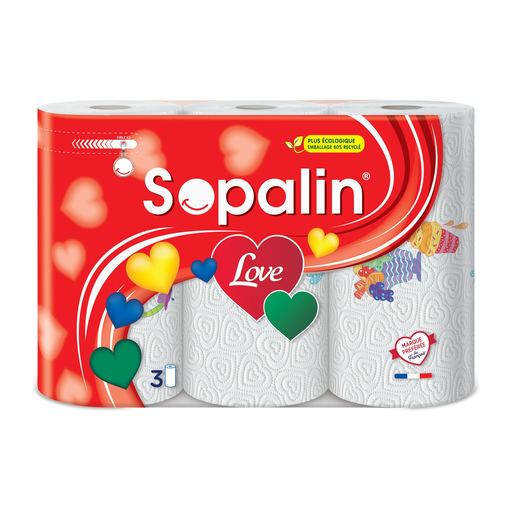
Why we chose it: For those who believe that even everyday objects deserve a bit of style. This **decorated paper towel** adds a splash of colour without compromising on performance (3-ply) or environmental commitment.
It doesn't sacrifice quality for style. With its 3-ply construction, FSC certification, and 80% recycled plastic packaging, it proves you can combine aesthetics, performance, and responsibility.
The successful blend of an original design, heavy-duty durability (thanks to the 3 plies), and concrete environmental commitments (FSC Mix certification, recycled packaging).
We have compiled a complete and up-to-date selection of products that meet our selection criteria and current regulations.
The difference comes down to strength and absorption capacity. A 2-ply paper towel is perfect for everyday use and is more economical. The 3-ply model, being thicker and stronger, absorbs much more liquid, which makes it ideal for big messes or cleaning greasy surfaces.
Yes, some can be, provided they are not soiled with chemical products, oils, or large amounts of grease. Sheets used to mop up water or food scraps can go into a home composter without any problem. Look for the "compostable" mention on the packaging and consult your local council's guidelines.
To judge, don't just look at the pack price. The only calculation that matters is this: divide the total price by the number of sheets to get the cost per sheet. This is the only reliable way to compare different formats (standard, compact, XXL) and find the best long-term deal.