
Livraison le jour même ou le lendemain

Qualité garantie

Débloquez vos offres de bienvenue: Livraison GRATUITE | Jusqu'à -80 % | 30 jours d'essai gratuits à JoyPlus
Téléchargez l'application
A kitchen essential, the humble paper towel isn't as simple to choose as it seems. Between promises of "jumbo rolls" and "extreme strength," it's easy to end up with a product that falls apart at the slightest drop of water or runs out in three days. To avoid paying more for less performance, let's break down the most common pitfalls together.
The first trap is the number of sheets. A roll that promises a high count isn't necessarily a good deal if the sheets are tiny or so thin that you need three to wipe up a simple glass of water. The second trap is the famous superior strength... which often only applies when the paper is dry. But what we expect most from a paper towel is its ability to soak up liquids without disintegrating.
To make the right choice and find the paper towel that truly fits your needs, a few objective characteristics are all you need. These indicators will help you decode packaging jargon and invest in a truly effective product.
This is the easiest technical criterion to check on the packaging. The number of paper layers (the "plies") that make up a sheet has a direct impact on its performance.
The packaging should obviously match your consumption habits and storage space.
Some manufacturers highlight an enhanced "wet strength." This feature, sometimes called wet strength on the packaging, indicates that the paper has been treated to hold up better when soaked with liquid. A wet-strength paper towel will allow you to clean effectively without leaving lint or paper residue on your surfaces.
To help you see more clearly, we've selected a few products that meet specific needs, based on the objective criteria detailed above.
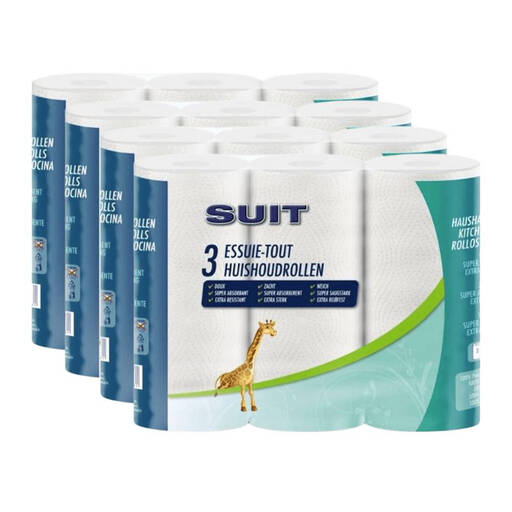
The Editor's Verdict: Perfect for heavy daily use where the quantity-to-price ratio is the number one criterion. This pack covers the whole family's needs for a good while, without breaking the bank.
This 12-roll pack makes calculating the unit cost crystal clear. No promises of an outrageous number of sheets, just a total volume that ensures a very competitive cost per sheet.
An excellent quantity-to-price ratio for everyday household needs. The 2-ply quality is more than enough for small daily accidents.
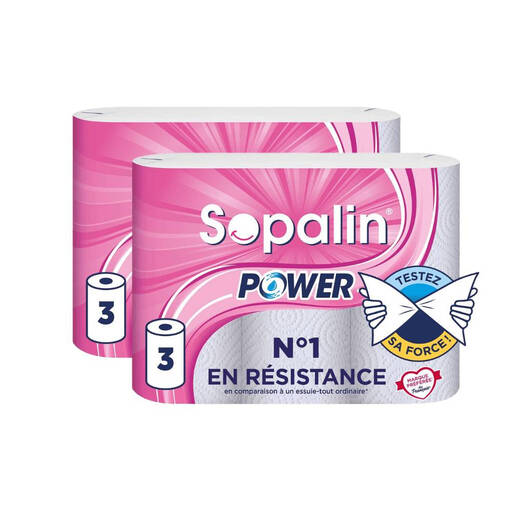
The Editor's Verdict: For those who expect their paper towels to hold up during demanding tasks: cleaning stovetops, mopping up a mini-flood, or even for DIY projects.
It directly tackles the "misleading strength" trap. The manufacturer claims up to 78% more wet strength compared to a standard paper towel: a concrete figure that justifies its use for the toughest jobs.
Its robustness when wet allows you to scrub without it tearing, making it as versatile as it is effective for a deep clean.
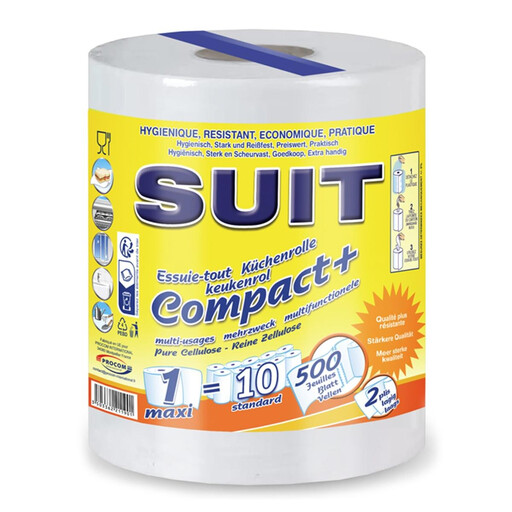
The Editor's Verdict: Perfect for those who are tired of changing the roll every week. This XXL format is also very practical for small storage spaces, since a single roll replaces several.
It doesn't just rely on the "compact" label. With 500 sheets, it offers verifiable density and longevity. A pragmatic choice to space out your shopping trips.
Record-breaking longevity thanks to its very high sheet count. Fewer roll changes, and less packaging to throw away.
We have put together a complete and up-to-date selection of products that meet our selection criteria and current standards.
A 3-ply paper towel has an extra layer of paper compared to a 2-ply one. This additional thickness gives it better absorption capacity and greater strength, especially when wet. The 2-ply remains a versatile and economical choice for everyday use, while the 3-ply is best reserved for more demanding tasks.
No, that's a very bad idea. It is strongly advised not to flush paper towels down the toilet, not even a single sheet. Unlike toilet paper, it is not designed to break down quickly in water and is likely to clog your pipes. It belongs in the household waste bin.
To objectively compare two offers, don't rely on the total price or the number of rolls. The only reliable method is to calculate the cost per unit of measurement. The easiest way: divide the pack price by the total number of sheets (number of rolls × number of sheets per roll) to get the cost per sheet. This is the only true indicator of value for money.