
Livraison le jour même ou le lendemain

Qualité garantie

Débloquez vos offres de bienvenue: Livraison GRATUITE | Jusqu'à -80 % | 30 jours d'essai gratuits à JoyPlus
Téléchargez l'application
A paper notebook or planner can be a useful companion for studying, working, working from home or keeping a journal. But a rushed purchase can sometimes lead to disappointment: pages that are too thin, an impractical size or a binding that makes writing awkward. To avoid any nasty surprises, it’s worth checking a few practical details rather than relying on the cover or marketing claims alone.
Two notebooks with a similar page count can offer very different experiences. First, check whether the product lists pages or sheets, then take a close look at the layout. A lined notebook is suited to continuous writing, while an undated planner or an 18-month planner sets aside some of its space for monthly and weekly planning.
Paper that’s too thin can show ink through to the other side, particularly when you use a fountain pen, felt-tip pen or certain gel pens. Paper weight alone can’t predict how well a notebook will write, but 100 g/m² paper generally feels more substantial than lighter paper. Also consider which writing instrument you use most often.
A large 24 × 32 cm school exercise book gives you plenty of room for lessons and documents, but takes up more space in your bag. By contrast, an A6 notebook slips easily into a pocket or small bag, but offers less room to develop an idea. An A5 notebook is often the best compromise for the office, meetings and journaling.
For a notebook you’ll take with you, also check its weight, fastening and how easily it opens. An elastic closure keeps the pages in place and stops the notebook opening in your bag.
A lined exercise book makes it easier to write neatly, while a blank layout is better suited to drawing, mind maps or a travel journal. Ivory paper offers a softer visual contrast than white paper, but this is ultimately a matter of personal preference.
The models featured here include 100 g/m² offset paper and 90 g/m² Clairefontaine paper. These are objective specifications, but they don’t guarantee that ink won’t show through with every type of pen. If you write frequently, look for a binding that stays open without you having to hold it down.
A hardback cover offers better protection for your pages when you’re out and about, and provides a useful writing surface when you don’t have a desk. A spiral-bound notebook lies flat and can often be folded back on itself, making it handy for lessons or meetings. On the other hand, the spiral can take up more room in a pouch.
A bookmark, pen loop or inner pocket can all be useful extras. Just check that they’re actually included in the product listing and not simply shown in the photos.
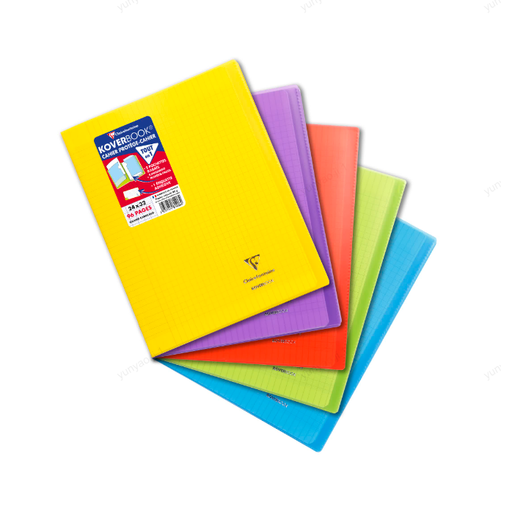
Why it’s a good match for this group : This five-pack is ideal for pupils, students and anyone who wants to keep different subjects or projects separate without buying several notebooks individually.
The size, number of exercise books and paper weight are clearly stated, making it easier to compare with a single school exercise book.
Pack of 5, 24 × 32 cm size, 96 pages per exercise book, 90 g/m² paper and a polypropylene cover with flaps.
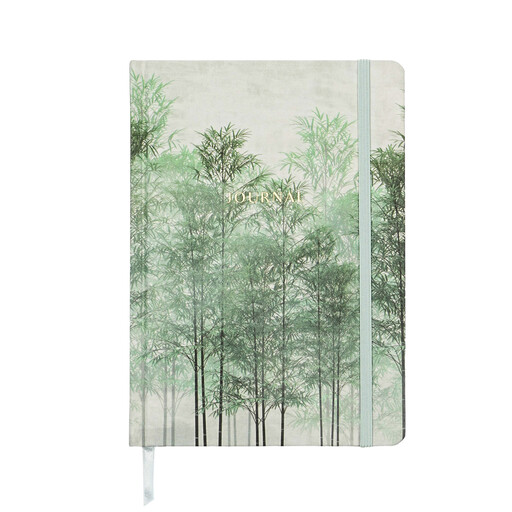
Why it’s a good match for this group : Its fabric cover and decorative details will appeal to anyone who values both appearance and writing comfort, making it a lovely notebook to give as a gift.
The listing specifies the A5 size, fabric cover, 100 g/m² ivory paper and 192-page capacity, so your choice needn’t be based on looks alone.
Fabric hardback cover, 96 sheets, 100 g/m² ivory paper, lined pages and a decorative embossed finish.

Why it’s a good match for this group : Those working from home, professionals and project managers can start whenever they like, without leaving dated pages unused.
The undated layout helps reduce waste when your routine changes, you need to take a break or you start partway through the year.
224 pages, 100 g/m² ivory offset paper, undated monthly and weekly layouts, bookmark and elastic closure.
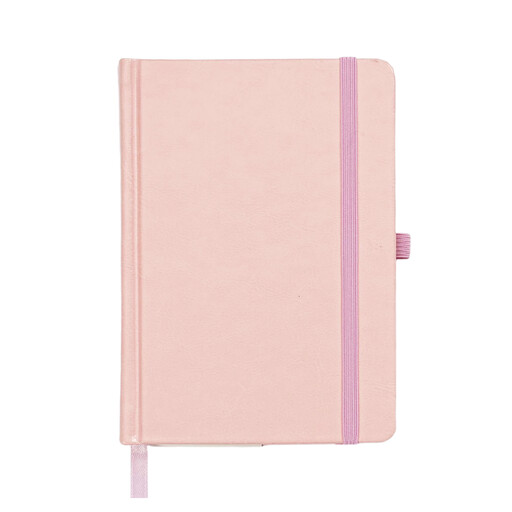
Why it’s a good match for this group : Creatives, travellers and anyone who regularly jots down ideas will appreciate this compact size, with essential accessories always close at hand.
The A6 dimensions are clearly stated, and the built-in accessories mean you don’t need to carry a separate bookmark or pen holder.
80 sheets, 100 g/m² lined ivory offset paper, polyurethane cover, bookmark, elastic closure and pen loop.
We’ve put together a comprehensive selection, updated in real time, of products that meet these exacting criteria as well as European safety standards.
An A6 notebook is ideal for portability and short notes. A5 gives you more room to keep a personal journal, plan your schedule, write meeting notes or sketch. If you’ll use it for different things at home and at work, A5 is generally the more versatile option.
It can be especially useful if your routine changes often or you start projects at different times of the year. Because the pages aren’t tied to fixed dates, you’re less likely to leave whole weeks unused. Before ordering, though, compare the page count and the layout of the monthly and weekly views.
Keep it somewhere dry, protect it from damp and clean the cover with a soft cloth suited to the material. Avoid overloading the elastic closure with bulky items, too : they could warp the cover or binding.